
Institutional Investors Reclaim Market Leadership Amid Rising Yields and AI Focus
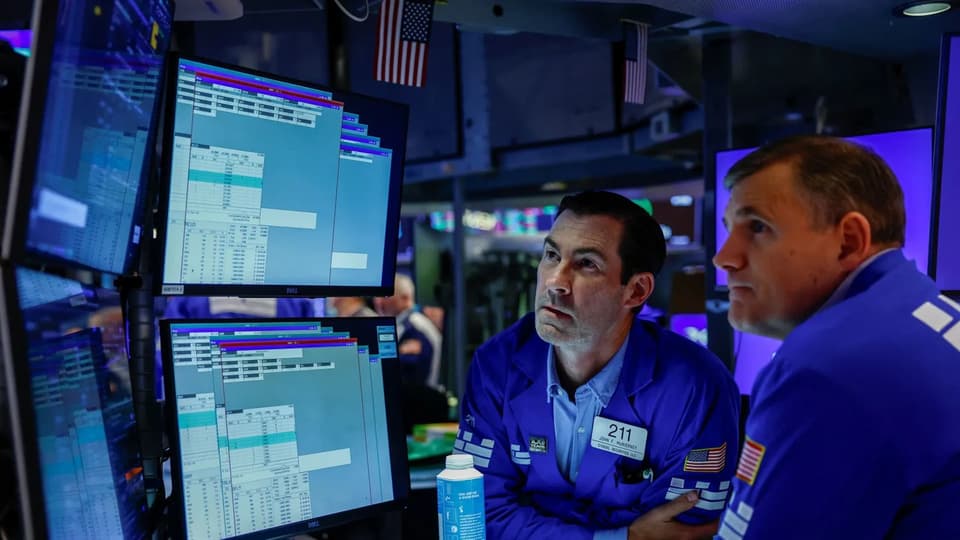
Institutional investors have resumed driving U.S. stock market gains, offsetting a retreat by retail traders. While rising Treasury yields have pressured broad market indices, large investors are selectively buying artificial intelligence (AI) stocks, particularly Meta Platforms, which surged 13% following the launch of its Muse AI agent. This divergence highlights a shift toward selective risk-taking by big money despite macroeconomic volatility.
Key points
- Retail traders have moved to the sidelines, with their share of S&P 500 trading volume falling more than three percentage points below the five-year average, according to Goldman Sachs.
- Institutional investors have maintained steady stock purchases despite 10-year and 30-year U.S. Treasury yields reaching their highest levels in over a decade.
- Meta Platforms shares rose nearly 13% in a single week after the company unveiled its Muse personal AI agent, adding $220 billion to its market capitalization.
- The S&P 500 ended the week more than 1% higher, but excluding AI-related stocks, the index fell approximately 1%, indicating extreme market divergence.
- Goldman Sachs described the current market dynamic as a 'frustrating game of cat and mouse' between equities and interest rates, advising investors to hedge equity positions with short Treasury bets.
Background
This shift follows a period of heightened volatility in late 2026, where AI stock valuations faced scrutiny. In August, AI-related shares pulled Wall Street away from record highs, and in September, analysts warned the AI boom might be peaking. Concurrently, a persistent bond market selloff pushed the 10-year Treasury yield to 5.11% by late September, its highest since 2007, pressuring global equities. The current market behavior represents a departure from the broad-based rally seen in 2025, where retail investors were credited with supporting the market during tariff-related declines.
How outlets are covering it
CNBC and Vanda Research emphasize the resilience of institutional investors, noting that options flows are three times higher than typical for September. They view this as a constructive signal for risk appetite, driven by selective buying in AI sectors. In contrast, Futu highlights the extreme divergence within the market, pointing out that while the Nasdaq outperformed due to AI strength, the broader S&P 500 fell when excluding AI stocks, with new lows on the NYSE exceeding new highs for nine consecutive days. The Tech Buzz frames the resilience of Meta and Microsoft as a 'flight-to-quality' dynamic, where institutional investors are betting on the maturity and cash flow of mega-cap tech firms to withstand rising rates, unlike smaller growth names.
Why it matters
The transition from retail-led to institutional-led market dynamics signals a change in market stability and direction. Institutional investors are demonstrating a willingness to take risks in specific sectors despite high borrowing costs, suggesting that AI fundamentals are being prioritized over macroeconomic headwinds. This selective approach may lead to continued volatility in non-AI sectors while sustaining gains in technology leaders, influencing broader economic sentiment and investment strategies.
What to watch
Investors will monitor whether the selective strength in mega-cap tech can sustain gains as bond yields continue to rise. Upcoming earnings reports for Meta and Microsoft will be critical in determining if AI investments translate into measurable business results. Additionally, the rollout of competing AI products from Google and OpenAI in the coming weeks and months could further influence market dynamics and the 'inference economy' demand for semiconductors.
- Wall Street money takes back over from small investors as driving force of the stock market CNBC
- Here are the 4 big things we're watching in the stock market in the week ahead CNBC
- Weekend Reading | "Agent vs. U.S. Treasuries" — Who Will Lead U.S. Stocks? 富途牛牛
- Meta, Microsoft Defy Bond Yield Surge in Tech Rally The Tech Buzz
- Akamai Jumps on Anthropic Deal, 30-Year Yields Top 5.5%: Stock Market Today (CORRECTED) TradingView
Want the full story? Read the original reporting
Read on CNBC