
Midtown’s Secondary Corridors Absorb Office Demand as Prime Space Fills
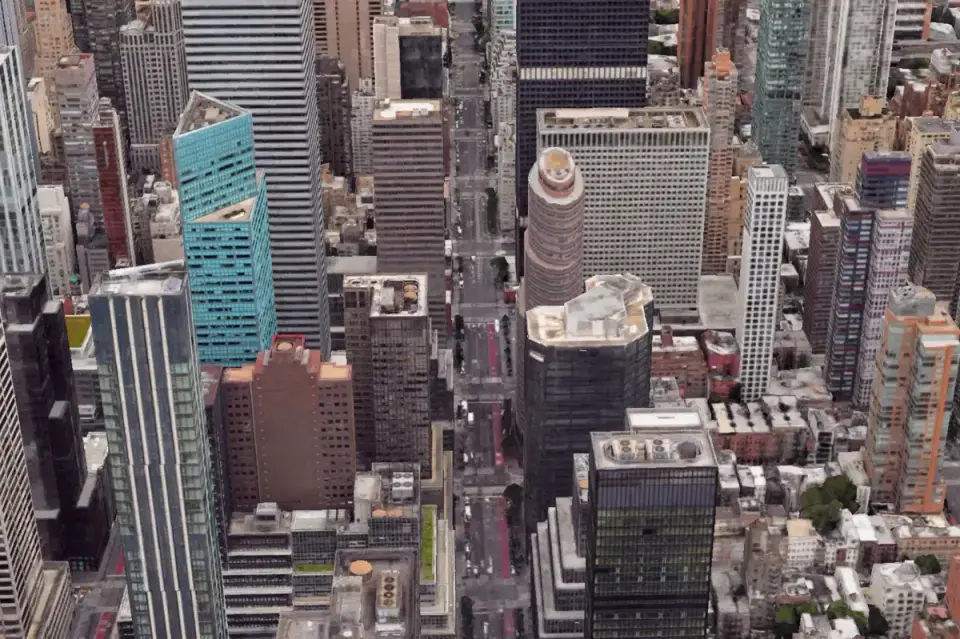
Manhattan’s office leasing activity is shifting from prime corridors to secondary avenues like Third and Lexington due to low availability and high rents in trophy spaces. JLL data indicates Third Avenue is on track to surpass its entire 2025 leasing volume in 2026, driven by major tenant expansions and landlord upgrades. This trend reflects a broader market recovery where companies are broadening their search to find suitable space at different price points.
Key points
- JLL reports that Third Avenue and Lexington Avenue north of 42nd Street posted the fastest annual growth in lease counts from 2021 to 2025, at 18.4% and 28.6% respectively.
- Third Avenue leasing in 2026 is projected to exceed total activity from 2025, driven by deals such as Kirkland & Ellis’s 52,000 square-foot expansion at 900 Third and Industrious’s 28,000 square-foot lease at 857 Third.
- Prime corridor vacancy has dropped to 4.9%, with rents exceeding $200 per square foot, forcing tenants to look at secondary markets for space with comparable amenities.
- Landlords are investing in upgrades, including an $80 million renovation of 850 Third by Waterman Interests and HPS Investment Partners, to attract tenants displaced from prime avenues.
- Lexington Avenue has seen over 110,000 square feet of leasing in 2026, including deals for Marex, SummitTX, and five law firms or financial groups at 370 Lexington.
Background
This development follows the broader recovery of the Midtown office market, which has regained all occupancy losses since the pandemic. Previous coverage noted that while prime corridors remained tight, secondary markets were lagging. The current shift indicates that the recovery is now permeating these previously weaker corridors, driven by sustained demand and landlord investment.
How outlets are covering it
The New York Post emphasizes the specific leasing activity and growth rates on Third and Lexington avenues, highlighting individual deals and landlord investments as evidence of the shift. The secondary source from Yahoo Finance, while largely obscured by technical data, references a broader narrative of the Midtown office market recovering all pandemic occupancy losses, suggesting a market-wide recovery rather than just a shift to secondary corridors. The Post focuses on the 'spillover' effect from prime to secondary, while the broader market context suggests a general rebound.
Why it matters
The shift to secondary corridors indicates a maturing office market where demand is no longer confined to prime locations. This could lead to increased investment and development in previously underperforming areas, potentially stabilizing rents and occupancy across a wider geographic area in Midtown. It also suggests that tenants are prioritizing value and availability over prime location, which could reshape the competitive landscape for office space in Manhattan.
What to watch
Expect continued leasing activity on Third and Lexington avenues as prime space remains scarce. Landlords in secondary corridors may accelerate upgrades and conversions to attract tenants. The market may see further price adjustments in prime corridors as vacancy remains low, while secondary corridors could experience rent increases as demand grows. Monitoring the completion of major upgrades, such as the 850 Third renovation, will be key to assessing the long-term viability of these secondary markets.
- Third Avenue, Lexington seeing faster growth as prime corridors fill up New York Post
- NYC doom loop? More like boom loop — as Manhattan office space fills up New York Post
- Midtown Office Market Recovers All Pandemic Occupancy Losses finance.yahoo.com
- Trophy Isn't the Only Asset Driving 28% Office Rent Growth in Manhattan Globest
- Manhattan office leasing posts strongest first 9 months since 2000 The Business Journals
Want the full story? Read the original reporting
Read on New York Post