
AI Math Controversy: Student 'Mathathon' Sparks Generational Clash and Fields Medalist Protests
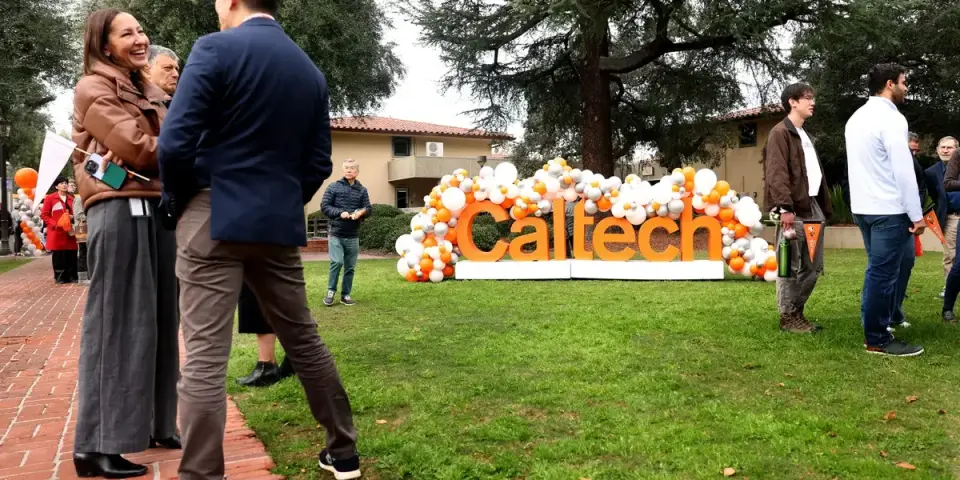
A student-organized 'mathathon' at Caltech, sponsored by AI giants OpenAI and Anthropic, has ignited a fierce debate in the mathematical community. While students argue AI integration is necessary for survival, senior academics and Fields Medal winners condemn the move as 'slop' that undermines human understanding. The dispute escalated after OpenAI solved a major open problem, leading to a withdrawal of sponsorship and a formal declaration against AI's 'misalignment' with mathematical values.
Key points
- Caltech sophomore Caiman Moreno-Earle organized a multi-day 'mathathon' to use AI for solving hard theoretical problems, securing $2 million in computing power from Anthropic and OpenAI.
- An open letter signed by over 700 academics and students denounced the event as promoting 'AI slop,' leading OpenAI to withdraw its $1 million sponsorship.
- The controversy followed OpenAI's claim to have solved the Navier-Stokes equations, a Millennium Prize Problem, which many mathematicians argue was achieved through brute force rather than genuine conceptual insight.
- 25 Fields Medal winners, including Terence Tao, issued a declaration criticizing the 'severe misalignment' between AI companies and the mathematical community, warning against the 'mass production' of proofs.
- The event is scheduled to proceed on October 30 with minor alterations, as organizers argue that canceling would fail to address the fundamental question of AI's role in the discipline.
Background
The tension between AI capabilities and traditional academic methods has been building for months. In August 2026, NYU mathematician Tristan Buckmaster reported being 'rolled over' by OpenAI after the company solved a fluid dynamics problem he was working on. This incident highlighted the growing anxiety among researchers that AI's computational power is outpacing human-led research, prompting a broader discussion about the future of mathematical discovery.
How outlets are covering it
Business Insider emphasizes the generational divide, highlighting how students like Moreno-Earle view AI adoption as a survival strategy against a shrinking job market, while tenured professors like Álvaro Lozano-Robledo argue that AI solutions are often 'quick and dirty' and lack the human progress that defines the field. Scientific American focuses on the high-level academic response, noting the shift in opinion among elite figures like Terence Tao, who moved from optimism to concern, and the formation of the Association for Human Mathematics. The New York Times frames the conflict as a power struggle, detailing how NYU mathematician Tristan Buckmaster felt displaced by OpenAI's resources, illustrating the personal impact of corporate AI dominance on individual researchers.
Why it matters
This dispute serves as a test case for how AI integration will reshape other scientific and creative professions. The conflict reveals a fundamental disagreement on the definition of 'progress' in mathematics: whether it is the speed of solving problems or the depth of human conceptual understanding. The backlash from Fields Medal winners and the formation of new academic bodies signal a potential regulatory or cultural shift in how AI is permitted to participate in high-stakes scientific research.
What to watch
The 'mathathon' is set to begin on October 30, with organizers seeking new AI partners to replace OpenAI's withdrawn tokens. Meanwhile, the Association for Human Mathematics is expected to continue advocating for a more balanced relationship between AI developers and mathematicians, potentially influencing future policies on AI use in academic research.
- We spoke to the organizer of the Caltech AI math event: 'We don't have the luxury of waiting' Business Insider
- An N.Y.U. Mathematician Clashed With OpenAI Over a $1 Million Proof The New York Times
- 25 winners of math’s ‘Nobel Prize’ decry the AI invasion of their discipline Scientific American
- Top mathematicians are outraged by OpenAI’s methods The Economist
- Can AI’s leaders really put aside rivalry for the common good? Financial Times
Want the full story? Read the original reporting
Read on Business Insider