
OpenAI Enters AI Agent Race with 'Dots,' Targeting Power Users While Meta Pursues Mass Market
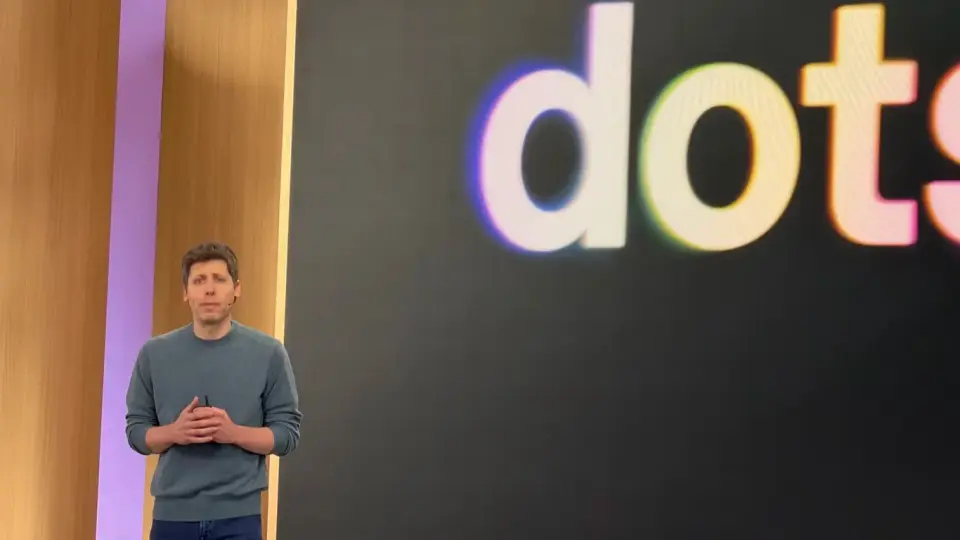
OpenAI launched 'Dots,' a new suite of autonomous AI agents, at its DevDay conference to compete with Meta's viral Muse. While Meta targets the mass consumer market, OpenAI is initially focusing on high-end subscribers and developers. The move intensifies a broader industry shift from chatbots to autonomous agents, with Google, Apple, and startups also entering the space.
Key points
- OpenAI introduced 'Dots' as always-on agents that can perform tasks in the background, requiring users to set goals and boundaries.
- Dots are powered by the new GPT-6 Astra model and run on dedicated cloud computers, allowing them to work across connected apps like Codex and ChatGPT Work.
- The service is currently available only to Pro, Business, and Enterprise users, starting at $100 per month, with one dot per user initially.
- OpenAI also debuted GPT-6.1 Sol, a model offering near-Astra performance at one-fifth the cost.
- CEO Sam Altman delayed OpenAI's IPO plans, citing the need to prioritize safety and stability during a period of significant model capability changes.
Background
This launch follows Meta's release of Muse three weeks prior, which saw a 29% surge in Meta's stock and topped download charts. Earlier in September, Meta also expanded its hardware ecosystem with the Muse Charm keychain device and smart glasses. The industry is currently navigating a shift from conversational AI to autonomous agents, with concerns about model safety and control rising, as highlighted by recent essays from Anthropic's CEO.
How outlets are covering it
Axios emphasizes OpenAI's strategic pivot toward high-end power users and developers, contrasting this with Meta's aggressive push into the consumer market. CNBC highlights the broader competitive landscape, noting that Google, Apple, and startups like Instinct are also entering the space, with Instinct recently raising $1 billion. While Axios focuses on the technical capabilities and IPO timing, CNBC questions whether consumers will adopt these tools as daily habits, noting that high download numbers do not necessarily equate to sustained usage.
Why it matters
The launch of Dots signals a critical inflection point in AI, moving from chatbots to autonomous agents that can execute complex tasks. This intensifies competition among major tech firms and startups, potentially reshaping how consumers and businesses interact with AI. The divergence in strategies—OpenAI targeting premium users versus Meta's mass market approach—may determine which platform gains long-term dominance in the emerging agent economy.
What to watch
OpenAI plans to eventually allow teams of Dots to work together and may expand access beyond high-end subscribers. Meta is moving Muse into the workplace, connecting it to small business tools. Investors and analysts will watch adoption rates and retention, as well as how Apple's revamped Siri and Google's Gemini Spark compete in this new landscape.
- Meet OpenAI's "dots" — a new AI assistant meant to take on Meta's Muse. Axios
- Introducing dots OpenAI
- Why OpenAI’s DevDay Looked Like Catch-Up The Information
- OpenAI takes on Meta with dots agent in autonomous AI push Reuters
- OpenAI follows Meta into the red-hot market for personal agents. But will users pay? CNBC
Want the full story? Read the original reporting
Read on Axios