
May el-Toukhy’s ‘Woman Unknown’ Wins Venice Golden Lion Amid Gender Debate
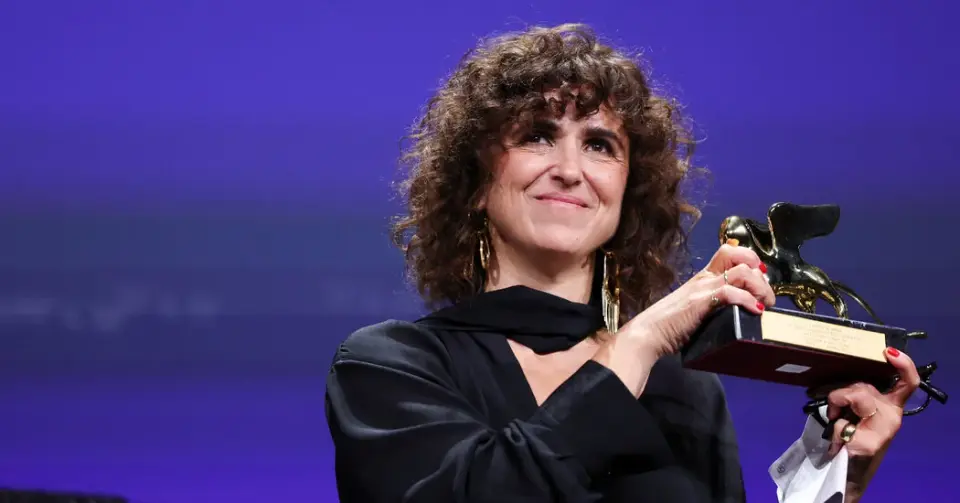
May el-Toukhy’s Danish period drama ‘Woman Unknown’ won the Golden Lion at the 83rd Venice Film Festival, marking the first time a woman-directed film took the top prize in the competition. The jury, led by Maggie Gyllenhaal, awarded the film alongside the Volpi Cup for best actress to Mathilde Arcel. While the win highlighted the scarcity of female directors in the lineup, Gyllenhaal insisted the decision was based on artistic merit rather than gender politics. Other major awards went to Lee Chang-dong’s ‘Possible Love’ and the documentary ‘NAZA’.
Key points
- ‘Woman Unknown’ won the Golden Lion at the 83rd Venice International Film Festival on September 12, 2026.
- The film, directed by May el-Toukhy, is a post-World War II drama set in Denmark about a servant marrying her factory-owner employer.
- Mathilde Arcel won the Volpi Cup for best actress for her performance in ‘Woman Unknown’.
- Lee Chang-dong’s ‘Possible Love’ received the Grand Jury Prize, while ‘NAZA’ won the Special Jury Prize.
- Maggie Gyllenhaal, the jury president, rejected claims that the Golden Lion was awarded solely because the director is a woman.
- John Malkovich won the Volpi Cup for best actor for his role in Martin McDonagh’s ‘Wild Horse Nine’.
Background
The 2026 Venice Film Festival faced criticism for the lack of women directors in its main competition, with ‘Woman Unknown’ being one of only two films led by a woman. Previous coverage noted that el-Toukhy’s film uses a Hitchcockian style to explore postwar sexual shame and political paranoia in Denmark. The festival also awarded the Special Jury Prize to ‘NAZA’, a documentary about AI use in the Gaza conflict, which sparked debate regarding the accuracy of its claims.
How outlets are covering it
The New York Times emphasized the gender disparity in the competition, noting that ‘Woman Unknown’ was one of only two films directed by a woman, and highlighted el-Toukhy’s acceptance speech calling for equal opportunities. Variety reported that jury president Maggie Gyllenhaal explicitly rejected the idea that the award was a 'political statement,' arguing that the film was a 'laser beam' of craftsmanship and that the decision involved complex deliberation. The Guardian praised the choice as a redemption for the festival’s sexism issues, describing the film as a sleek, commercial-friendly thriller, while also noting that some critics might view it as a 'middleweight' compared to other arthouse entries. All sources agreed on the factual outcomes of the awards, but differed on whether the win was primarily a corrective measure for gender representation or a merit-based artistic decision.
Why it matters
The award signals a shift in major festival recognition for female-led projects, though the debate over whether the win was merit-based or corrective remains contentious. The success of ‘Woman Unknown’ may influence future awards season trajectories, particularly for Mathilde Arcel and John Malkovich, while the recognition of ‘NAZA’ continues to highlight the role of documentaries in addressing geopolitical conflicts at major film festivals.
What to watch
‘Woman Unknown’ is expected to seek commercial distribution outside the festival circuit, potentially leading to Oscar nominations for its cast and crew. The controversy surrounding ‘NAZA’ may continue as the Israeli military has rejected the film’s claims, while the broader discussion on gender representation in film festivals will likely persist as other major festivals approach their 2026-2027 seasons.
- ‘Woman Unknown’ Takes Top Prize at Venice Film Festival The New York Times
- ‘Woman Unknown’ wins Golden Lion, Malkovich ‘humbled’ by best actor award at Venice Film Festival NBC News
- Maggie Gyllenhaal’s Venice Jury Didn’t Award ‘Woman Unknown’ the Golden Lion Just Because It Was Directed by a Woman: It ‘Was Like a Laser Beam’ Variety
- Venice Film Festival 2026 Winners List Deadline
- Bold and bravura choices as Venice celebrates A Woman Unknown, Possible Love and NAZA The Guardian
Want the full story? Read the original reporting
Read on The New York Times