
Appeals Court Sends 'The Pitt' vs. 'ER' Reboot Dispute to Jury Trial
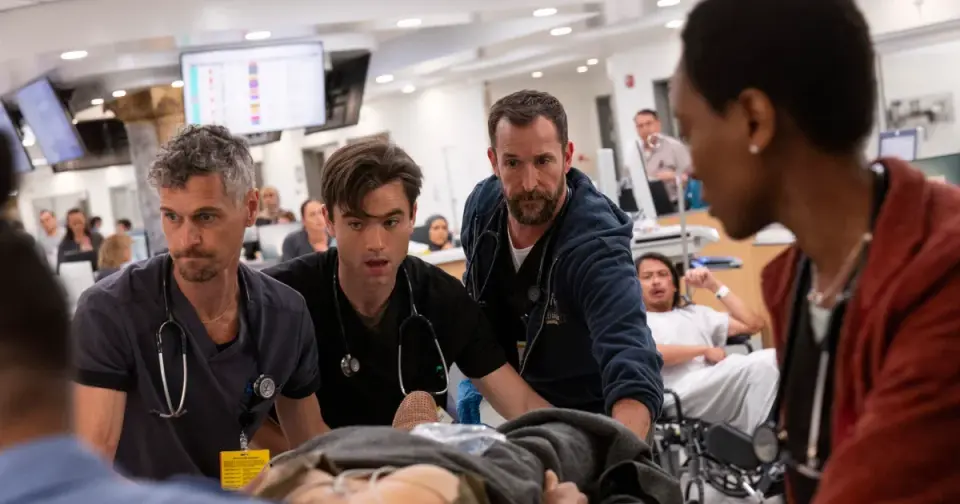
A California appeals court has ruled that HBO’s 'The Pitt' shares enough specific similarities with 'ER' to allow a lawsuit by the estate of 'ER' creator Michael Crichton to proceed to a jury trial. The court affirmed a lower court’s denial of a motion to dismiss against Warner Bros. Television, citing a 1994 'frozen rights' agreement that prohibited unauthorized reboots. However, the court dismissed claims against individual creators Noah Wyle, John Wells, and R. Scott Gemmill, finding insufficient evidence they knowingly violated contractual rights. Sherri Crichton, who controls the estate, expressed satisfaction with the ruling, while Warner Bros. has not commented. The case will move to discovery, with a potential trial in 2027.
Key points
- A three-judge panel in California ruled that 'The Pitt' and 'ER' have 'clear and numerous similarities,' including setting, pace, medical jargon, and character archetypes, sufficient to establish a prima facie case.
- The lawsuit, filed in August 2024 by Sherri Crichton, alleges that Warner Bros. violated a 1994 'frozen rights' provision that barred the studio from creating derivative works without permission from Michael Crichton or his estate.
- The court affirmed the lower court’s decision to deny Warner Bros.’ motion to dismiss under California’s anti-SLAPP law, which protects free speech from frivolous litigation.
- The appeals court reversed the lower court’s decision regarding individual defendants, dismissing claims against Noah Wyle, John Wells, and R. Scott Gemmill due to a lack of evidence they were aware of the contractual restrictions.
- Sherri Crichton stated she is 'deeply gratified' by the decision and looks forward to presenting the case to a jury, which could occur as early as summer 2027.
- Warner Bros. Television, now owned by Skydance, has not publicly responded to the ruling, though it previously called the lawsuit 'baseless' and argued 'The Pitt' is an original work.
Background
The dispute stems from a 1994 agreement between Michael Crichton and Warner Bros. Television that included a 'frozen rights' clause, preventing the studio from producing spin-offs or reboots of 'ER' without Crichton’s consent. Crichton died in 2008, and his widow, Sherri Crichton, now controls the estate. Negotiations for an 'ER' reboot began in 2020 but collapsed in 2022 over credit and financial terms. Warner Bros. subsequently developed 'The Pitt,' which debuted in January 2025 and has won 11 Emmy Awards. The estate alleges that 'The Pitt' is an unauthorized reboot that simply changed the setting from Chicago to Pittsburgh, while the studio maintains it is a distinct, original series. Previous coverage noted that the lower court had already denied Warner Bros.’ anti-SLAPP motion in 2025, setting the stage for this appeal.
How outlets are covering it
NBC News and Yahoo emphasize the court’s finding of 'clear and numerous similarities' between the two shows, highlighting the legal precedent for protecting creators' rights. BBC focuses on the 'frozen rights' provision and the argument that 'The Pitt' is a rebranded reboot, noting the dismissal of claims against individual producers. Deadline provides a more critical perspective, suggesting the case may be a 'sour grapes' reaction from the estate, while also noting the practical implications for 'The Pitt’s' third season. All sources agree that the case will proceed to a jury trial, but they differ in tone regarding the legitimacy of the estate’s claims, with some outlets questioning whether the similarities are merely generic to the medical drama genre.
Why it matters
This ruling sets a significant precedent for intellectual property and 'frozen rights' clauses in the entertainment industry. It could influence how studios negotiate and enforce exclusivity agreements with creators and their estates. The case also highlights the tension between creative freedom and contractual obligations, potentially affecting future reboots and derivative works. For 'The Pitt,' the outcome could impact its commercial viability and reputation, as the show has already achieved critical success and multiple Emmy Awards. The case may also influence how other creators protect their work and how studios approach the development of new series based on existing properties.
What to watch
The case will move to the discovery phase, where both sides will exchange evidence and prepare for trial. A jury trial is expected to take place in Los Angeles Superior Court, potentially as early as summer 2027. The parties may also attempt to settle the dispute before trial, though the bitterness between the principals makes this unlikely. 'The Pitt' will continue production on its third season, which is scheduled to debut in January 2027. The outcome of the trial could have significant implications for the show’s future and the broader industry’s approach to intellectual property rights.
- ‘ER’ creator’s estate can sue over ‘The Pitt’ similarities, appeals court rules NBC News
- The Pitt and ER are similar enough for lawsuit to proceed, judge rules BBC
- ER Creator's Estate Can Sue Over The Pitt, Court Rules Newser
- ‘The Pitt’ and ‘ER’ Are Similar Enough to Allow Crichton Suit, Appeals Court Rules Yahoo
- ‘The Pitt’s Battle With Michael Crichton Estate Heading To Trial As Warner Bros Rebuffed By Appeals Court Deadline
Want the full story? Read the original reporting
Read on NBC News