
Netflix’s 'East of Eden' reimagines Steinbeck’s Cathy as a complex, modern antagonist
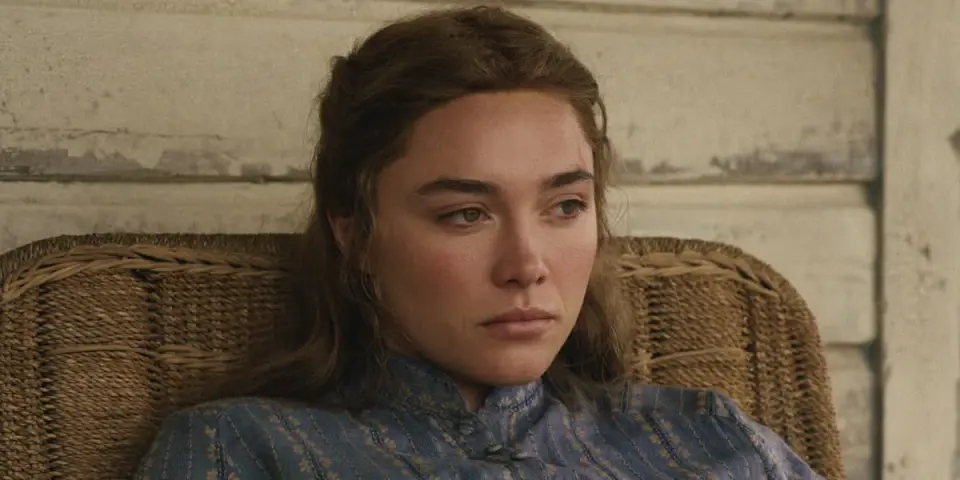
Netflix’s seven-episode limited series 'East of Eden,' written by Zoe Kazan, reinterprets John Steinbeck’s 1952 novel by centering on the character of Cathy Ames, played by Florence Pugh. The series explores the Hebrew concept of 'timshel' (free will) and challenges traditional views of Cathy as a one-dimensional villain. Florence Pugh’s promotional campaign mirrored her character’s transformation from innocence to calculated ruthlessness, while critics debate whether the adaptation justifies or contextualizes her actions.
Key points
- The series premiered on October 1, 2026, and consists of seven episodes covering the entire Steinbeck novel.
- Zoe Kazan, granddaughter of Elia Kazan, wrote the series, with Episode 6 co-written by Alexander Chee.
- Florence Pugh’s press tour wardrobe evolved from period romance to villainous glamour, reflecting Cathy’s character arc.
- The series retains Steinbeck’s non-standard spelling of 'timshel' in English but corrects it to 'timshol' in Hebrew subtitles.
- Critics and audiences debate whether the series justifies Cathy’s actions or provides a nuanced understanding of her motivations.
Background
Netflix’s 'East of Eden' continues the Kazan family’s legacy of adapting Steinbeck’s work, following Elia Kazan’s 1955 film. The series was filmed in New Zealand and features a cast including Christopher Abbott, Mike Faist, and Hoon Lee. Previous coverage highlighted the emotional difficulty of compressing Steinbeck’s 600-page novel into seven episodes and the global audience’s engagement with the Hebrew word 'timshel.'
How outlets are covering it
Esquire emphasizes the cultural impact of the series and Florence Pugh’s performance, while CNN focuses on Pugh’s method dressing and its alignment with Cathy’s character arc. Salon provides a critical analysis of the series’ reinterpretation of Cathy, arguing that it challenges traditional views of her as a monster. Netflix’s own coverage highlights the thematic significance of 'timshel' and the series’ finale. Outlets differ in their emphasis: Esquire and CNN focus on style and performance, while Salon and Netflix focus on narrative and thematic depth.
Why it matters
The series sparks a broader conversation about the portrayal of female antagonists in literature and film, challenging traditional narratives and encouraging viewers to reconsider the motivations behind 'monstrous' behavior. It also highlights the ongoing relevance of Steinbeck’s work and the Kazan family’s legacy in adapting classic literature for modern audiences.
What to watch
The series is currently streaming on Netflix, and viewers are encouraged to watch the finale to understand the full implications of 'timshel' and Cathy’s fate. Future discussions may focus on the series’ impact on how female antagonists are portrayed in media and the continued relevance of Steinbeck’s themes.
- Review: Netflix’s 'East of Eden' Is Breathtaking Beyond Belief Esquire
- Look of the Week: Florence Pugh assumes her villainous final form edition.cnn.com
- Netflix’s “East of Eden” asks if we’ve misread its monster Salon.com
- Opinion | Steinbeck Would’ve Loathed Netflix’s ‘East of Eden’ wsj.com
- East of Eden Ending Explained: What Does Timshel Mean? Inside the Series Finale and What Happens to Cathy? Netflix
Want the full story? Read the original reporting
Read on Esquire