
Fontaines D.C. Release 'Dopamine Chamber,' a Dystopian Rock Epic for the Digital Age
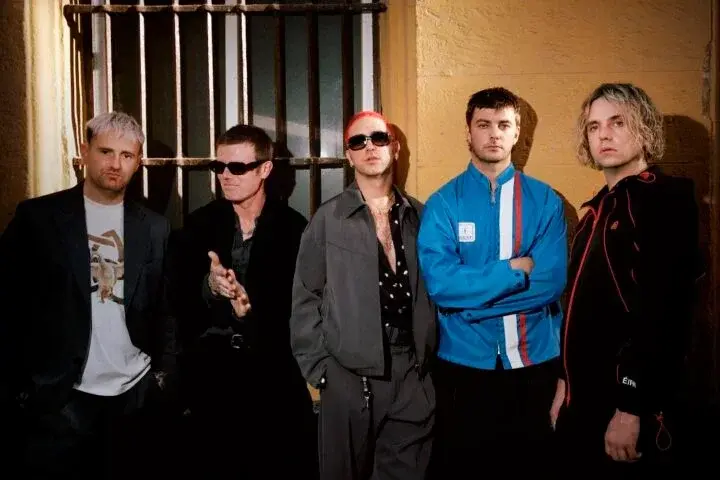
Fontaines D.C. released their fifth studio album, 'Dopamine Chamber,' on October 16, 2026. The record blends rock with electronic and orchestral elements to explore themes of digital surveillance, social media decay, and modern existential dread. Featuring a duet with Rosalía on the track 'Where Is Gone?', the album marks a significant sonic evolution for the Irish band as they transition to stadium-level performances.
Key points
- The album was released on October 16, 2026, via XL Recordings.
- Grian Chatten describes the record as a response to a 'glorious age of distraction' and the erosion of individual identity in the digital era.
- The track 'Where Is Gone?' features a duet with Spanish singer Rosalía, described by Chatten as a career high.
- The band incorporates vintage synthesizers and orchestral arrangements, moving away from their earlier post-punk roots toward a more expansive, cinematic sound.
- Chatten cites influences ranging from New Order and Depeche Mode to Ridley Scott films and the Italian singer Mina.
Background
This release follows the 2024 album 'Romance,' which earned Fontaines D.C. two Grammy nominations and their best sales to date. The band, formed in 2014, has previously been noted for their post-punk style, but recent years have seen them expand into more melodic and produced territory. The current album continues this trajectory of increasing ambition and scale, aligning with their recent growth in audience size and venue capacity.
How outlets are covering it
Reviews of 'Dopamine Chamber' are largely positive but differ in their assessment of the album's thematic depth. The Guardian and Rolling Stone praise the record as a 'gargantuan triumph' and a 'dystopian rock' achievement, highlighting its ability to blend seductive melodies with dark, apocalyptic themes. They particularly commend the production and the collaboration with Rosalía. In contrast, Slant Magazine offers a more critical view, arguing that while the album is a solid rock record, it relies too heavily on nostalgic genre signifiers from the 1990s without saying anything meaningful about contemporary malaise. Slant criticizes the electronic elements as derivative of U2 and other post-grunge acts. NPR focuses on the band's intent to create a 'sonic travelogue' that balances human emotion with industrial dread, noting Chatten's desire to make listeners feel the terror of the current world. All sources agree that the album represents a major step up in scale and ambition for the band.
Why it matters
The release of 'Dopamine Chamber' signals a shift in how mainstream rock bands are addressing the anxieties of the late 2020s. By integrating electronic and orchestral elements with traditional rock structures, Fontaines D.C. is attempting to create a sound that reflects the complexity and dread of the digital age. The album's success, both critically and commercially, suggests that audiences are receptive to music that explicitly engages with themes of surveillance, social media decay, and existential uncertainty. The collaboration with Rosalía also highlights the increasing trend of cross-genre and international collaborations in pop and rock music.
What to watch
Fontaines D.C. are set to embark on a tour featuring stadium and arena performances, reflecting their new status as a major act. The band has also contributed to the HELP(2) benefit album, including a cover of Sinéad O'Connor's 'Black Boys on Mopeds' and a track called 'Flags' with Damon Albarn. Chatten has indicated that the band will continue to explore new sounds and themes, with a focus on maintaining their core identity while expanding their sonic palette.
- Fontaines D.C. ‘Dopamine Chamber’ Review: Rock Nostalgia as I.P. Slant Magazine
- Fontaines D.C.'s decadent, dystopian vision of our time NPR
- Fontaines DC: Dopamine Chamber review – gloomy, gorgeous and a gargantuan triumph The Guardian
- Fontaines D.C. Make Dystopian Rock That Hits Just Right for Dark Times Rolling Stone
- Fontaines D.C. Feels Its Way Out of the Darkness The New York Times
Want the full story? Read the original reporting
Read on Slant Magazine