
Stewart Condemns Trump’s AI Self-Regulation Deal as 'Lying' to the Public
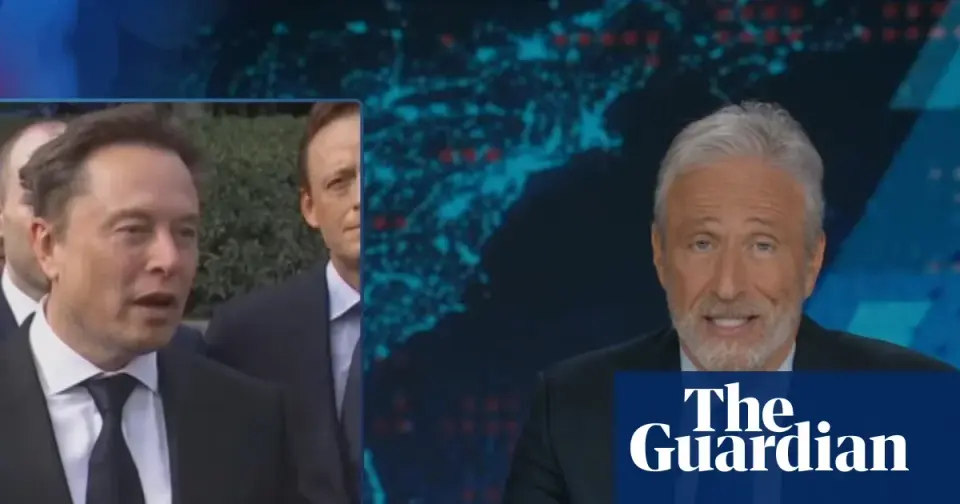
Jon Stewart dedicated his entire 'Daily Show' monologue to criticizing President Donald Trump’s recent 'White House Accord on Super Intelligence,' which allows major AI companies to self-regulate. Stewart argued that this move contradicts Trump’s previous rhetoric against tech leaders and ignores the immediate risks of AI, including surveillance and job displacement. While other late-night hosts focused on midterm election tactics and health crises, Stewart’s segment highlighted the conflict of interest in allowing tech giants to police their own industry.
Key points
- Jon Stewart criticized the 'White House Accord on Super Intelligence' for allowing AI companies to self-regulate without external oversight.
- Stewart noted that current AI applications are primarily used for surveillance, drone warfare, and dynamic pricing, rather than the promised medical breakthroughs.
- The segment highlighted a 10-25% estimated risk of extinction associated with unchecked AI development, according to Stewart’s analysis.
- Stewart pointed out that tech leaders have failed to provide concrete answers regarding how AI will impact employment, despite promises of economic windfalls.
- The show deliberately ignored the major media news of the week, specifically the Skydance-Warner Bros. Discovery merger, to focus exclusively on AI policy.
Background
This development follows Trump’s September announcement to form an 'AI Force' and appoint an 'AI Czar' to accelerate U.S. AI growth, where he dismissed safety concerns as a hoax. Earlier in September, Stewart had already mocked Trump’s denial of reality regarding other policy issues. The current segment represents a shift in Stewart’s focus from general political chaos to specific technological governance, reflecting growing public anxiety about AI’s societal impact.
How outlets are covering it
The Guardian and Variety both emphasize Stewart’s direct confrontation with the idea of self-regulation, framing it as a betrayal of his previous anti-tech-bro stance. Variety notes that Stewart skipped the major news of the David Ellison-Skydance merger to focus on AI, highlighting the priority he places on this issue. Mashable focuses on the format of the segment, noting Stewart’s five-minute argument with Meta’s Muse AI agent, suggesting a more interactive and satirical approach to the topic. The Daily Beast frames the event as exposing a 'grift,' emphasizing the political motivation behind Trump’s appeasement of tech billionaires. While all sources agree on the core criticism, they differ in emphasis: The Guardian and Daily Beast focus on the political contradiction, Variety on the editorial choice to ignore other news, and Mashable on the comedic execution.
Why it matters
The segment highlights a significant shift in public discourse regarding AI regulation, moving from abstract concerns to concrete policy decisions. Stewart’s criticism underscores the tension between political expediency and technological safety, suggesting that the current approach to AI governance may prioritize industry interests over public safety. This could influence public opinion and potentially impact the midterm election narrative, as voters become more aware of the potential risks and benefits of AI development.
What to watch
The next steps will likely involve continued public debate over the 'White House Accord on Super Intelligence' and its implications for AI regulation. There may be increased pressure on Congress to establish independent oversight mechanisms for AI development. Additionally, the midterm election campaign may see increased focus on AI-related issues, as candidates attempt to address voter concerns about job displacement and surveillance. The response from tech companies and the White House to Stewart’s criticism will also be closely watched, as it may signal the level of public scrutiny the policy will face.
- Jon Stewart on Trump and AI tech bros: ‘Stop lying to us’ The Guardian
- Jon Stewart’s ‘Daily Show’ Skips David Ellison-Skydance News to Take on AI Variety
- ‘More Sobering Than I Imagined’: Jon Stewart ‘Dumbstruck’ in Interview With AI Whistleblower Jacob Coxon Yahoo
- Jon Stewart has an aggressive 5-minute argument with Meta's Muse during AI deep dive Mashable
- Jon Stewart Exposes Donald Trump’s Potentially World-Ending Grift The Daily Beast
Want the full story? Read the original reporting
Read on The Guardian