
HBO's 'Pet Cemetery Murders' Unpacks a 40-Year-Old Louisiana Cold Case
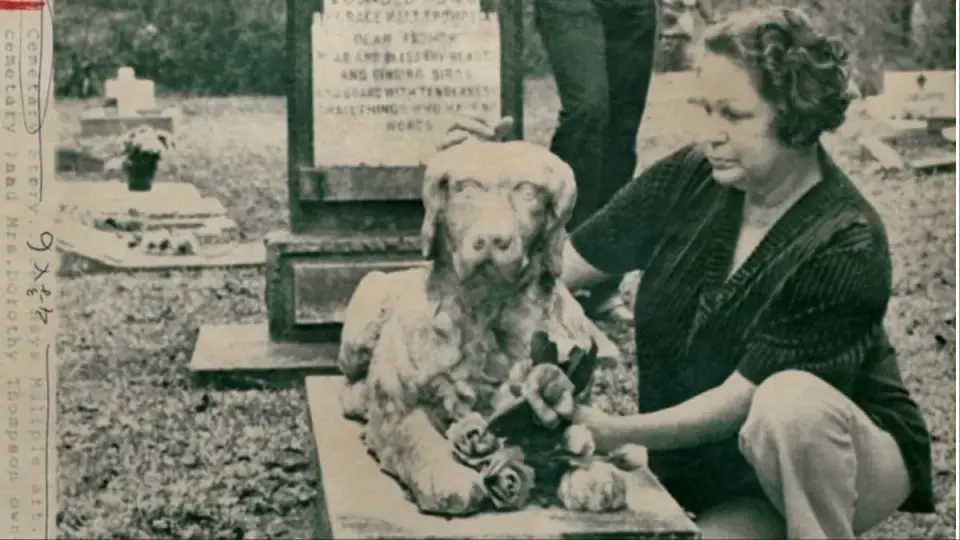
HBO’s three-part docuseries 'The Pet Cemetery Murders: A Ghost Story' investigates the 1985 murder of Dorothy Lou Thompson, a pet cemetery owner in St. Bernard Parish, Louisiana. Directed by Philip Cairney, the series explores how the case went cold for decades due to resource shortages and Hurricane Katrina destroying evidence. It highlights the role of local folklore, including claims that Thompson’s ghost aided the investigation, and examines the region’s deep history of racial violence and injustice.
Key points
- The series focuses on the 1985 killing of Dorothy Lou Thompson, whose body was found in the Mississippi River bound in chains.
- Director Philip Cairney uses archival footage and interviews to explore why the case remained unsolved for over 25 years.
- Hurricane Katrina destroyed physical evidence and case files, forcing investigators to rely on unconventional leads, including a witness who claimed to have been visited by Thompson’s ghost.
- The documentary contextualizes the murder within the broader history of St. Bernard Parish, including the 1868 St. Bernard Massacre and the area’s legacy of racial violence.
- Critics note the series avoids typical true-crime tropes, instead focusing on the atmosphere of the bayou and the complexity of Thompson’s life.
Background
Philip Cairney is known for highbrow documentaries about artists and musicians, such as 'Andy Warhol’s America.' This project marks a shift toward true crime, though it retains his scholarly approach. The story is set in Toca, a rural area of St. Bernard Parish near New Orleans, a region described as 'the end of the country' due to its isolation and history of malfeasance. The title 'A Ghost Story' refers to local beliefs that Thompson’s spirit sought justice, a theme explored in the series alongside the more mundane reasons for the case’s delay, such as lack of resources and an unsympathetic victim profile.
How outlets are covering it
The AV Club praises the series for its engaging multigenerational tale of injustice but notes it lacks the visual innovation of Errol Morris’s 'Gates of Heaven' or 'The Thin Blue Line.' Roger Ebert’s review highlights the atmospheric quality of the documentary, comparing it to a Stephen King novel and noting how the setting of New Orleans lends credibility to the ghost story elements. Decider emphasizes the 'spooky' and 'creepy' nature of the series, recommending it for viewers interested in true crime with a supernatural twist. HorrorFuel.com focuses on the practical aspects of the investigation, such as the loss of evidence due to Hurricane Katrina and the use of a 1985 psychic sketch to identify a suspect. All sources agree that the series effectively uses the local folklore and historical context to deepen the narrative, though they differ on whether the traditional true-crime format limits its potential.
Why it matters
The series sheds light on the systemic failures in rural law enforcement and the impact of natural disasters on criminal investigations. It also highlights the intersection of local folklore and justice, showing how community beliefs can influence the resolution of cold cases. By examining the history of St. Bernard Parish, the documentary provides a broader commentary on racial injustice and the lingering effects of historical violence in Louisiana.
What to watch
The series is currently streaming on HBO Max. Viewers can expect further exploration of the case’s resolution and the impact of the investigation on the local community. The documentary’s success may lead to increased interest in other cold cases in the region and a broader discussion about the role of folklore in true crime narratives.
- Bayou crimes mostly go unpunished in the haunting HBO doc The Pet Cemetery Murders A.V. Club
- The Pet Cemetery Murders: HBO has a haunting true crime doc for you Roger Ebert
- 'The Pet Cemetery Murders: A Ghost Story' HBO Review: Stream It Or Skip It? Decider
- The Pet Cemetery Murder: What Happened to Dorothy Thompson? A&E
- Philip Cairney Joins Us for an Interview About His Docuseries ‘Pet Cemetery Murders’ – Out Today HorrorFuel.com
Want the full story? Read the original reporting
Read on A.V. Club