
WHO approves two new Bundibugyo vaccines for DRC Ebola trial as outbreak exceeds 10,000 cases
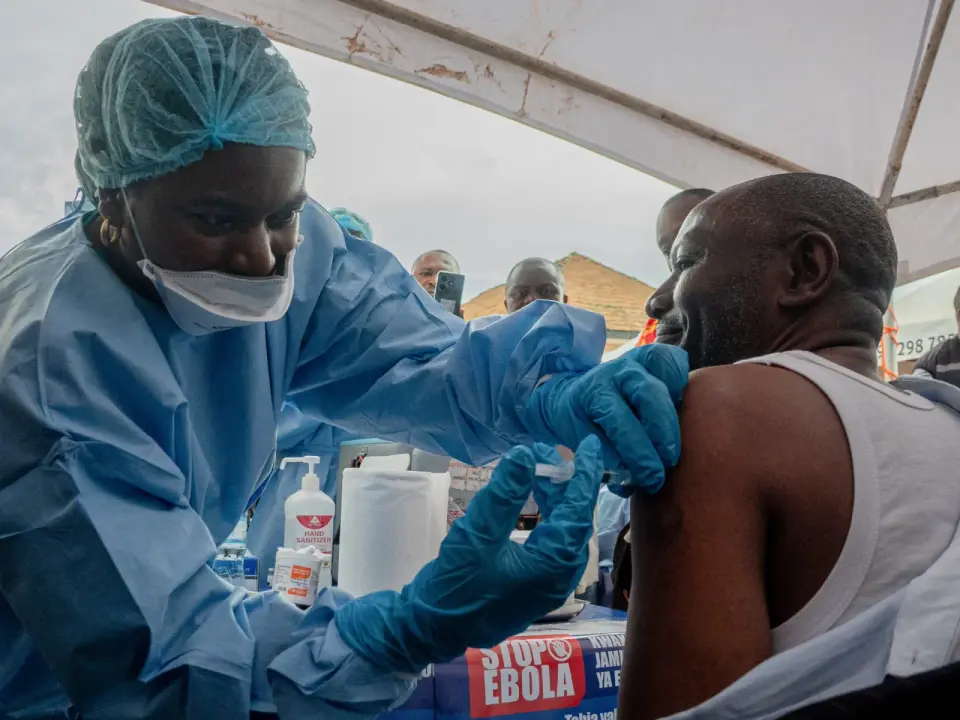
The World Health Organization has approved two new vaccine candidates for clinical trials in the Democratic Republic of Congo to combat the Bundibugyo Ebola strain. The outbreak, which has killed over 5,300 people, is the fastest-growing in the country's history. While trials for the new vaccines are underway, experts emphasize that immediate measures like contact tracing and isolation remain critical. A British healthcare worker infected with the virus is being evacuated to the UK for treatment.
Key points
- WHO expert groups recommended adding two new vaccines, ChAdOx1 and mRNA-1469, to the ongoing Tumaini clinical trial in the DRC.
- The Bundibugyo virus strain has caused over 10,444 confirmed cases and more than 5,300 deaths in the DRC since May 2026.
- The trial is led by the DRC’s National Institute for Biomedical Research, with support from the WHO, University of Oxford, Serum Institute of India, and Moderna.
- Results from the vaccine trials are expected in early 2027, while treatment trials for monoclonal antibodies and antivirals are also underway.
- A British healthcare worker infected with Ebola is being evacuated to the UK for specialist treatment, with the risk to the public assessed as low.
Background
This development follows the launch of the Tumaini trial in late October 2026, which initially tested the existing Ervebo vaccine against the Bundibugyo strain. The current outbreak has been the most severe in the DRC's history, with cases spreading to neighboring countries including Kenya and Nigeria. Previous coverage highlighted the lack of specific treatments for the Bundibugyo strain, which has a fatality rate of up to 50 percent.
How outlets are covering it
Al Jazeera and the WHO agree on the approval of the two new vaccines and the severity of the outbreak, with Al Jazeera emphasizing the 5,300 death toll and the WHO detailing the trial's structure. The Independent provides a broader view of the medical response, highlighting the lack of specific treatments for the Bundibugyo strain and the development of various experimental vaccines and therapies. All sources note the importance of non-vaccine measures like contact tracing and isolation. The Independent also details the evacuation of a British healthcare worker, a point also mentioned by Al Jazeera but not the WHO.
Why it matters
The approval of new vaccines for the Bundibugyo strain is a critical step in controlling the largest Ebola outbreak in the DRC's history. The outbreak has spread to neighboring countries, posing a regional health crisis. The development of specific treatments and vaccines could significantly reduce the fatality rate and prevent further spread. The evacuation of a British healthcare worker highlights the international impact of the outbreak and the need for global cooperation in responding to such emergencies.
What to watch
The next steps include the entry of the two new vaccine candidates into the Tumaini trial following national approvals. Results from the vaccine trials are expected in early 2027, while initial findings from treatment trials are anticipated in the coming months. The WHO is supporting neighboring countries to prepare for potential cross-border spread. The British healthcare worker is expected to arrive in the UK by Thursday for specialist treatment.
- WHO approves trials for two new Ebola vaccines Al Jazeera
- Two new candidate vaccines to join Ebola trial as treatment research advances World Health Organization (WHO)
- Moderna Ebola vaccine picked for Phase 2/3 trial (MRNA:NASDAQ) Seeking Alpha
- Vaccines for the 2026 Bundibugyo Ebola disease outbreak: access gaps and recommendations ReliefWeb
- The treatments being developed for the Bundibugyo strain of Ebola The Independent
Want the full story? Read the original reporting
Read on Al Jazeera