
California High Court Orders Sheriff to Return Seized Ballots, Citing Unlawful Election Interference
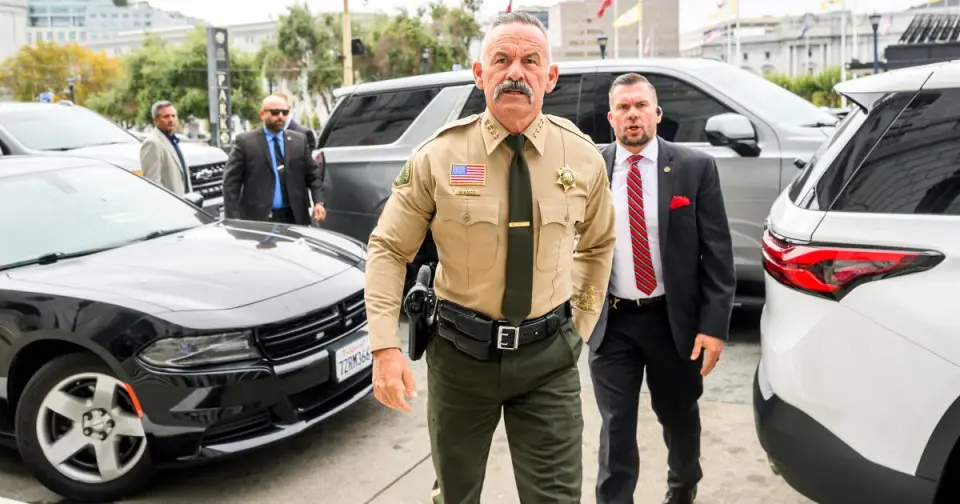
The California Supreme Court unanimously ruled that Riverside County Sheriff Chad Bianco violated state law by seizing over 650,000 ballots from the November 2025 Proposition 50 special election. Chief Justice Patricia Guerrero ordered Bianco to immediately return all materials to the county registrar, stating that his actions compromised election integrity. The court also affirmed that Attorney General Rob Bonta had the authority to halt the sheriff’s investigation, rejecting Bianco’s claim that the state’s chief law enforcement officer could only advise local sheriffs. The decision comes weeks before the November 2026 midterm elections, prompting new state legislation to protect ballot custody.
Key points
- The California Supreme Court ruled that the seizure of more than 650,000 ballots by Riverside County Sheriff Chad Bianco was unlawful and ordered their immediate return to the Riverside County Registrar of Voters.
- Chief Justice Patricia Guerrero stated that the Elections Code contains established mechanisms for investigating misconduct that do not require the physical removal of ballots from election officials' custody.
- The court affirmed that Attorney General Rob Bonta had the authority to direct Bianco to stand down, rejecting the sheriff's argument that the attorney general's role was limited to 'advise and consent.'
- The seizure was triggered by a discrepancy in a voluntary hand-count pilot program, which Bianco claimed indicated voter fraud, despite election officials explaining the variance as a misinterpretation of preliminary data.
- Governor Gavin Newsom signed new legislation following the ruling, making it a felony to seize ballots or election records before results are certified, aiming to prevent similar interference in the upcoming November 2026 midterms.
Background
In August 2026, the California Supreme Court heard oral arguments in two related cases regarding Bianco's seizure of ballots from the November 2025 Proposition 50 special election, which established a new congressional map. Bianco, a former gubernatorial candidate, had dispatched armed deputies to seize the ballots after a citizen group claimed fraud based on a discrepancy between a hand tally and the official count. Attorney General Rob Bonta and the UCLA Voting Rights Project challenged the seizure, arguing it violated state laws protecting ballot custody. The court's September 24, 2026, decision followed a period of legal uncertainty and public debate over the limits of local law enforcement authority in election administration.
How outlets are covering it
The Los Angeles Times and The Guardian emphasized the court's scathing tone, noting that Chief Justice Guerrero described Bianco's actions as creating a 'substantial risk to election integrity.' CalMatters highlighted the political implications, framing the ruling as a victory for voting rights advocates who feared the seizure could serve as a playbook for other right-wing law enforcement officers ahead of the 2026 midterms. The Washington Post focused on the legal precedent, noting the court's unanimous decision that Bianco lacked authority to review ballots based on a 'thin allegation of fraud.' Bianco, however, released a statement expressing disappointment, claiming the investigation was lawful and that the court's ruling was an attempt to prevent a legitimate probe. While Democrats and election officials viewed the ruling as a safeguard for democracy, Bianco's supporters and the 'constitutional sheriff' movement argued that local lawmen should have the power to investigate election irregularities without state interference.
Why it matters
The ruling establishes a clear legal boundary that prevents local law enforcement from seizing ballots or election materials from election officials, reinforcing the principle that election integrity is protected by specific statutory mechanisms rather than ad hoc criminal investigations. It also clarifies the authority of the state attorney general to supervise and direct sheriffs in matters of statewide significance, a question that had rarely been tested in California. With the November 2026 midterm elections approaching, the decision aims to deter similar attempts to interfere with vote counting and to reassure voters that their ballots will be secure from physical seizure by rogue officials.
What to watch
Bianco has indicated he is considering options to appeal the decision, potentially to federal courts, though the court's order for immediate return of the ballots is in effect. The new legislation signed by Governor Newsom will take effect, making the seizure of ballots a felony. Election officials and advocates will monitor the November 2026 midterm elections closely for any attempts to replicate the tactics used in the Riverside County case, while the state attorney general's office will likely remain vigilant in enforcing the court's rulings and new laws.
- Ballot seizure by Riverside County sheriff was ‘unlawful,’ California Supreme Court rules Los Angeles Times
- California sheriff ordered to return ballots he confiscated in voter ‘fraud’ inquiry The Guardian
- California Supreme Court orders sheriff to return 650,000 ballots Yahoo
- California sheriff broke election law by seizing ballots, state Supreme Court rules CalMatters
- California Supreme Court rules sheriff must return seized ballots The Washington Post
Want the full story? Read the original reporting
Read on Los Angeles Times