
Hurricane Lowell’s Aftermath: Kauaʻi Faces Iniki-Level Damage as Niʻihau Remains Isolated
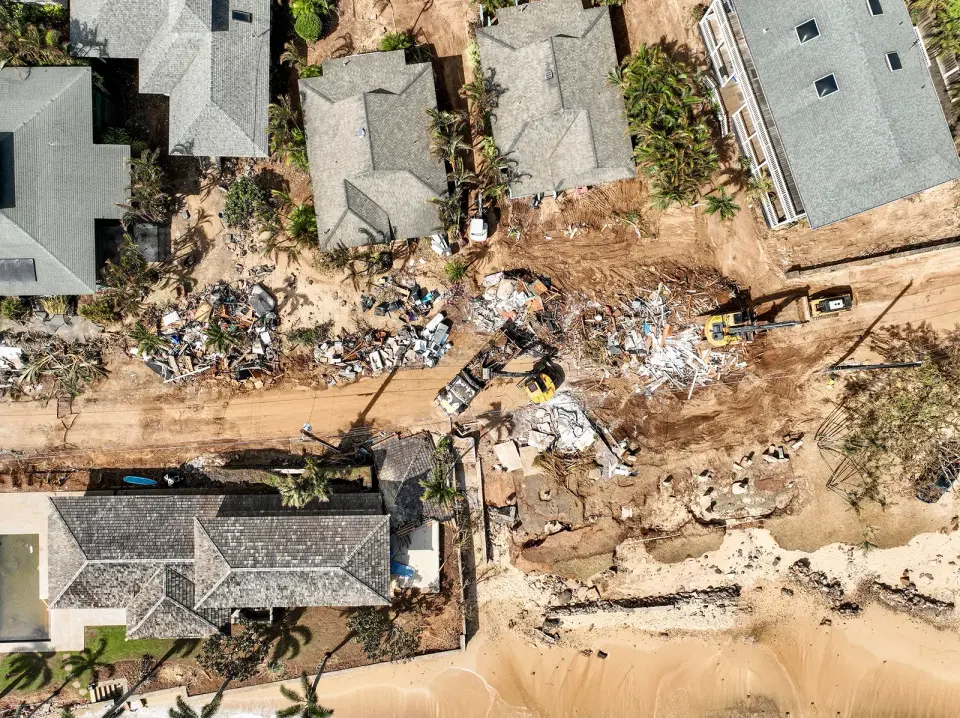
Hurricane Lowell has left Kauaʻi, Lānaʻi, and Niʻihau in a state of emergency, with Governor Josh Green comparing the destruction to the 1992 Hurricane ʻIniki. While Kauaʻi struggles with power outages and airport delays, Lānaʻi’s harbor is blocked by sinkholes and shipping containers, and Niʻihau remains cut off from public information. Federal disaster assistance has been requested to address the scale of the damage.
Key points
- Gov. Josh Green compared Hurricane Lowell’s impact to the 1992 Category 4 Hurricane ʻIniki, which caused $3 billion in damage, and submitted an expedited request for federal disaster assistance.
- On Kauaʻi, more than 12,000 of 36,000 utility customers remain without power, and airport security delays have caused hours-long waits for departing travelers.
- Lānaʻi’s only commercial harbor is closed due to sinkholes and washed-away shipping containers, with repairs estimated at $2–$3 million; barge shipments are expected to resume by Sunday.
- Niʻihau, a privately owned island with fewer than 100 residents, has no official damage assessment, and the Robinson family, which owns the island, has not released detailed information.
- At least two deaths have been linked to the storm: a 74-year-old man found on Kauaʻi’s shoreline and another killed on Oʻahu by a falling tree in Waimānalo.
Background
Hurricane Lowell first made landfall on Kauaʻi on September 9, 2026, causing widespread power outages and flooding. Prior to the storm, a tornado watch was issued for Kauaʻi, which The Guardian noted may have been the first in Hawaii’s history, though no tornado was documented. The storm’s impact has been severe, with the governor now comparing it to the 1992 Hurricane ʻIniki, one of the most destructive storms in Hawaii’s history.
How outlets are covering it
Civil Beat emphasizes the human impact and community resilience, highlighting local efforts to clear debris and the emotional toll on residents. The Guardian focuses on the meteorological context, noting the unprecedented tornado watch and the role of El Niño in the active hurricane season. Big Island Now, while not directly covering Lowell’s impact on Kauaʻi, reported on a flood advisory for the Big Island, indicating the storm’s broader regional effects. The AP News article, though largely obscured by technical code, suggests officials are urging visitors to avoid Kauaʻi during recovery.
Why it matters
The scale of Hurricane Lowell’s damage has prompted a federal disaster declaration, signaling a prolonged recovery effort. The isolation of Niʻihau and the closure of Lānaʻi’s harbor highlight vulnerabilities in Hawaii’s infrastructure and supply chains. The comparison to Hurricane ʻIniki underscores the potential for long-term economic and social impacts, particularly for tourism-dependent communities like Kauaʻi.
What to watch
Federal disaster assistance is expected to accelerate recovery efforts. Lānaʻi’s harbor is slated to reopen by Sunday, with barge shipments resuming. Kauaʻi schools are preparing to reopen Monday, though some campuses may remain closed due to power and water issues. Niʻihau’s damage assessment is pending, with the Robinson family’s first visit to the island scheduled for Thursday.
- ‘You Just Want To Cry’: Kauaʻi Takes Stock Of Lowell’s Damage Honolulu Civil Beat
- Tourists should skip Kauai for now as it recovers from Hurricane Lowell, officials say AP News
- Weather tracker: Hurricane Lowell pounds Hawaii’s western islands The Guardian
- Flood advisory issued east, southeast portions of Big Island Big Island Now
- Kauai residents, business assess destruction after Hurricane Lowell batters south shore Hawaii News Now
Want the full story? Read the original reporting
Read on Honolulu Civil Beat