
ICE Shooting of Bronx Father Sparks Legal Battle Over Detention and Medical Care
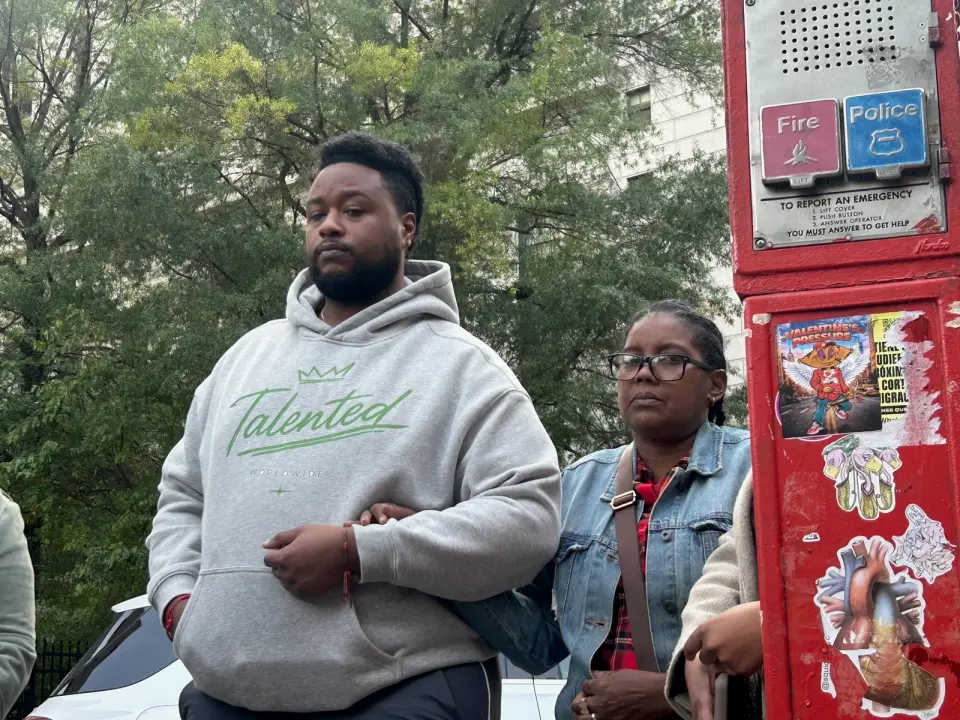
Oscar Belgal, a 28-year-old father of two, remains detained with a bullet lodged in his neck after being shot by ICE agents in the Bronx on October 8. His lawyers argue he was moved out of state without notice, hindering medical care and legal representation. ICE officials justify the shooting by citing Belgal’s criminal history and alleged resistance, while New York officials condemn the use of force and demand transparency.
Key points
- Oscar Belgal was shot in the neck on October 8 in Marble Hill, New York, while his 5-year-old son was in the backseat; he remains detained at the Metropolitan Detention Center in Brooklyn with the bullet still in his body.
- Belgal’s attorneys, representing him through Make the Road New York, filed a habeas corpus petition seeking emergency relief to prevent deportation and ensure access to his medical records, noting they were unable to locate him for nearly 24 hours after the incident.
- ICE officials, including Marcos Charles, stated that Belgal, an undocumented immigrant from the Dominican Republic with a criminal history including grand larceny and assault, 'weaponized' his vehicle against agents, prompting the use of lethal force.
- DHS chief Markwayne Mullin claimed officers were unaware of the child’s presence and that Belgal put his son in danger, while New York Mayor Zohran Mamdani criticized the agents for wearing masks and construction vests that obscured their identity.
- A federal judge ordered the government to keep Belgal detained in New York or New Jersey, but jurisdictional issues remain as Belgal was briefly moved to an undisclosed location in New Jersey before being returned to New York City.
Background
This incident follows a pattern of ICE-related shootings in 2026, including the case of Wilber Rafael Garces Perez in Austin, Texas, where a Venezuelan delivery driver was shot in the back with a bullet lodged near his spine. In that case, similar issues arose regarding the transfer of detainees to out-of-state facilities without notice to lawyers and the lack of body camera footage. The current case mirrors those concerns, with advocates highlighting the difficulty of accessing detainees and medical records after rapid transfers by ICE.
How outlets are covering it
Courthouse News Service and BBC both report the core facts of the shooting and subsequent detention but differ in emphasis. Courthouse News Service focuses heavily on the legal proceedings, the habeas corpus petition, and the logistical challenges lawyers faced in locating Belgal. It highlights the government’s claim that Belgal was moved out of state due to his criminal history and flight risk. BBC, on the other hand, places greater emphasis on the political fallout, detailing the public statements from New York officials like Mayor Zohran Mamdani and Governor Kathy Hochul, who condemned the incident and criticized ICE’s operational opacity. BBC also notes the discrepancy between ICE’s claim that officers identified themselves and the mayor’s assertion that they were unidentifiable due to masks and vests. Both sources agree on the basic timeline and the presence of the child in the vehicle, but BBC provides more detail on the political reactions and the specific allegations regarding Belgal’s gang affiliation and knowledge of a prior CBP officer shooting.
Why it matters
The case highlights ongoing tensions between federal immigration enforcement and state/local authorities regarding the use of force, transparency in operations, and the rights of detainees to medical care and legal representation. It also underscores the broader public concern over ICE’s methods, particularly in cases involving families and children, and the potential for political intervention in high-profile immigration cases.
What to watch
A federal judge must determine the correct jurisdiction for Belgal’s habeas corpus petition, as his physical location at the time of filing is disputed. His legal team will continue to seek access to his medical records and witnesses to build their case against the detention and shooting. The outcome of this case could set a precedent for how ICE handles detainees with serious injuries and the transparency of their operations.
- NYC man shot by ICE still has bullet in body, lawyers say Courthouse News
- ICE shooting NYC: Judge blocks deportation of Oscar Belgal shot by agents in Marble Hill ABC7 Eyewitness News
- US immigration officials defend ICE agents who shot man while his child was in the car BBC
- ICE agent fires 7 rounds, shoots man in neck in NYC's Marble Hill, NYPD says Gothamist
- ICE agents' shooting of a man in NYC provokes fury among city, state officials Newsday
Want the full story? Read the original reporting
Read on Courthouse News