
Greer Signals No Imminent India Deal as Goyal Pushes for Interim Agreement
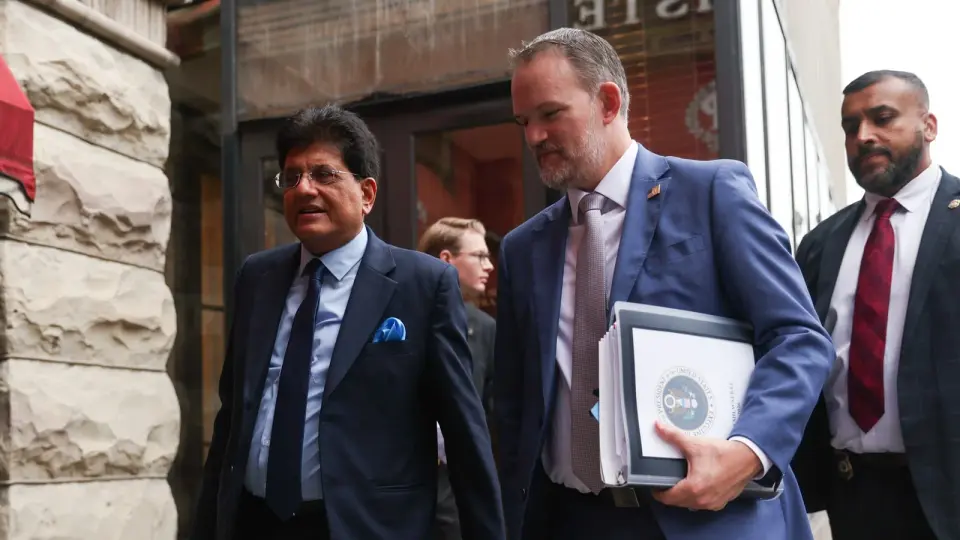
U.S. trade representative Jamieson Greer stated that a trade deal with India is not imminent, despite recent high-level talks. While Indian Commerce Minister Piyush Goyal expressed optimism about an interim agreement, Washington remains focused on India’s continued purchase of Russian oil. The two sides met in Milwaukee for the G20 trade ministers’ meeting, where they discussed steel overcapacity and the Most-Favoured-Nation principle, but core disagreements persist.
Key points
- Greer told Indian news agency ANI that a deal is not imminent, noting that sticking points have been identified.
- Goyal described talks as productive, aiming for an early conclusion of an interim agreement under the India-US Bilateral Trade Agreement.
- The U.S. views India’s Russian oil purchases as funding the Ukraine war, while India cites energy security due to the Iran conflict.
- Greer called Goyal a 'trade minister for life' during the G20 meeting in Milwaukee, highlighting the long-term nature of trade negotiations.
- Current U.S. tariffs on India stand at 10%, down from 50% in August, though Washington threatens up to 100% if Russian oil purchases continue.
Background
U.S.-India trade relations have been strained for over a year, with tariffs fluctuating based on India’s energy sourcing. In February 2026, duties were reduced to 18% after Trump claimed India agreed to stop buying Russian oil, a claim New Delhi did not endorse. The broader U.S. trade strategy, as seen in recent Canada and Venezuela negotiations, emphasizes aggressive tariff leverage and supply chain restructuring, often leading to protracted disputes over red lines.
How outlets are covering it
CNBC highlights the gap between Greer’s caution and Goyal’s optimism, noting that experts see the remaining issues as the hardest to resolve. The Times of India focuses on the diplomatic tone, emphasizing Greer’s praise for Goyal and the progress on the interim deal, while also detailing the G20’s new framework on steel overcapacity. The Indian Express source was inaccessible, so its perspective cannot be compared. CNBC and The Times of India agree on the timeline but differ in emphasis: CNBC stresses the friction over Russian oil, while The Times of India highlights the constructive bilateral dialogue and broader G20 agenda.
Why it matters
The outcome of these talks will determine whether India secures preferential tariffs, making its exports more competitive against peers. Failure to resolve the Russian oil issue could trigger up to 100% U.S. tariffs, severely impacting Indian exports. Additionally, the G20’s new stance on steel overcapacity and MFN rules could reshape global trade norms, affecting how countries respond to distortive policies and supply chain imbalances.
What to watch
Negotiations will continue as Goyal and Greer work toward an interim agreement. The U.S. may impose higher tariffs if India does not reduce Russian oil purchases. The G20 leaders’ summit later this year will likely address the Milwaukee Framework on steel overcapacity and the MFN principle, potentially setting new precedents for trade remedies and supply chain monitoring.
- U.S. trade representative Greer says deal with India not 'imminent' after Modi-Trump call CNBC
- G20 trade chiefs to denounce food trade coercion but not excess factory capacity Reuters
- U.S.-India trade deal not imminent, says trade chief Jamieson Greer qz.com
- Piyush Goyal gets a ‘trade minister for life’ tag from US trade chief at G20 The Times of India
- ‘Universe of sticking points’: India-US deal not ‘imminent’, says US trade chief The Indian Express
Want the full story? Read the original reporting
Read on CNBC