
Federal judge halts DHS visa caps one day before implementation
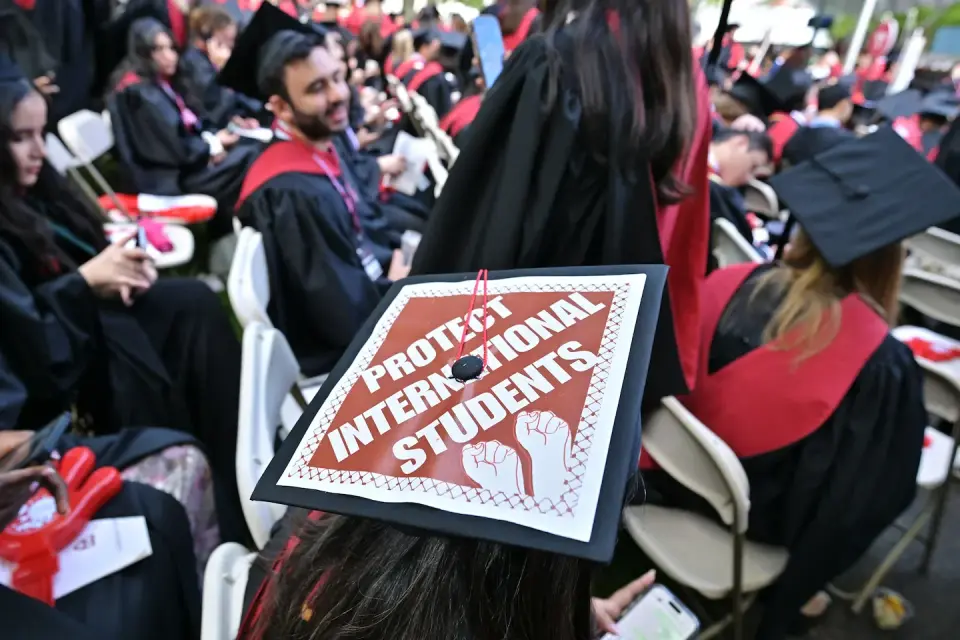
A federal judge in Boston issued a preliminary injunction blocking the Department of Homeland Security from enforcing a rule that would cap stays for foreign students, journalists, and exchange visitors. The decision arrived one day before the regulation was set to take effect, preserving the 'duration of status' policy that has allowed international scholars to remain in the U.S. for the length of their training since 1979. While the judge found the government’s national security justification weak, he did not permanently strike down the rule, leaving the legal battle ongoing.
Key points
- Judge F. Dennis Saylor IV blocked the DHS rule, citing violations of the Administrative Procedure Act and insufficient public comment periods.
- The blocked policy would have limited F-1 student visas to four years and I-1 journalist visas to 240 days, affecting approximately 1.6 million students and 500,000 exchange visitors.
- The judge questioned the government's national security rationale, noting only a handful of security incidents over 50 years to justify such a sweeping change.
- Separately, 22 states and D.C. sued to block a related DHS rule expanding 'public charge' criteria for green card applicants, which was set to take effect the following Friday.
- International researchers comprise nearly 25% of life science PhDs and 60% of postdocs, with experts warning the policy could harm U.S. biomedical competitiveness.
Background
In August 2026, unions and higher education groups filed suit in Massachusetts to block the DHS rule, arguing it violated administrative procedures and would harm U.S. talent competitiveness. The rule was part of a broader Trump administration immigration agenda that also included attempts to formalize high H-1B fees and revoke visas for asylum seekers. This latest ruling follows a pattern of legal challenges against federal immigration and voting regulations, including recent Supreme Court blocks on mail ballot restrictions.
How outlets are covering it
The Washington Post focused on the immediate legal block and the timing of the ruling. Al Jazeera highlighted this as part of a 'double legal setback' for the administration, pairing the visa cap block with a separate state-led lawsuit against a new public charge rule that would penalize green card applicants for using non-cash benefits like Medicaid. STAT emphasized the scientific impact, noting that international researchers make up a significant portion of the U.S. life science workforce and that the judge’s skepticism of the national security argument suggests plaintiffs are likely to succeed in the long term. While the Post and Al Jazeera reported the facts of the injunction, STAT provided deeper analysis on the procedural failures cited by the judge, such as the lack of substantive response to public comments.
Why it matters
The ruling preserves the 'duration of status' framework, which is critical for the U.S. higher education and research sectors. If the cap had been implemented, it could have forced millions of students and researchers to leave the country or apply for extensions, potentially disrupting long-term training programs and reducing U.S. competitiveness in global talent and biomedical research. The decision also signals that courts may scrutinize the administrative process behind major immigration policy shifts, requiring agencies to provide robust justifications and adequate public input.
What to watch
The DHS may appeal the preliminary injunction, and the case will proceed to full arguments on the merits. The separate lawsuit challenging the public charge rule is also pending, with the regulation set to take effect in late September. The outcome of these cases will determine whether the Trump administration can enforce its broader immigration restrictions or if they will be blocked by the courts.
- Judge blocks DHS rule limiting foreign students to four-year stays The Washington Post
- US judge blocks Trump limits on how long foreign students, journalists can stay Reuters
- Trump administration suffers double legal setback over immigration rules Al Jazeera
- Judge blocks Trump administration plans to limit visa length for grad students, postdocs STAT
- Rule Limiting Foreign Students’ Time in US Blocked by Court (1) Bloomberg Law News
Want the full story? Read the original reporting
Read on The Washington Post