
Christa Pike Survives Tennessee Lethal Injection, Sparking National Scrutiny of Execution Protocols
Christa Pike, the first woman in Tennessee to face execution in 200 years, survived two doses of pentobarbital during a failed lethal injection attempt on October 2, 2026. She remains unconscious on a ventilator in a Nashville-area hospital. Governor Bill Lee has ordered a third-party review of the case and paused another scheduled execution. The incident has intensified scrutiny of state execution protocols, with attorneys citing difficult vein access and degraded chemicals as factors in the failure.
Key points
- Pike, convicted of the 1995 murder of Colleen Slemmer, was scheduled for execution on October 2 but survived the administration of two lethal doses.
- Her legal team filed an emergency motion to preserve evidence from the failed attempt and requested an expedited hearing.
- Governor Bill Lee announced a comprehensive review of Pike’s case and paused the December execution of Gary Sutton.
- Attorneys claim Pike’s difficult vein access and the state’s secret protocols contributed to the failure, while the Department of Correction insists it followed established procedures.
- The case raises legal questions about double jeopardy, as Pike is the first person to survive the actual administration of lethal drugs in a modern execution attempt.
Background
Tennessee had not executed a woman in over 200 years. Pike had been on death row for three decades, with her lawyers arguing that her childhood trauma and mental health issues were not adequately considered during her 1996 trial. The state had previously paused executions in 2022 and failed to carry out a lethal injection earlier in 2026 due to vein access issues. This incident follows a trend of 'botched' executions in other states, such as Arizona, where Tennessee Corrections Commissioner Frank Strada previously served.
How outlets are covering it
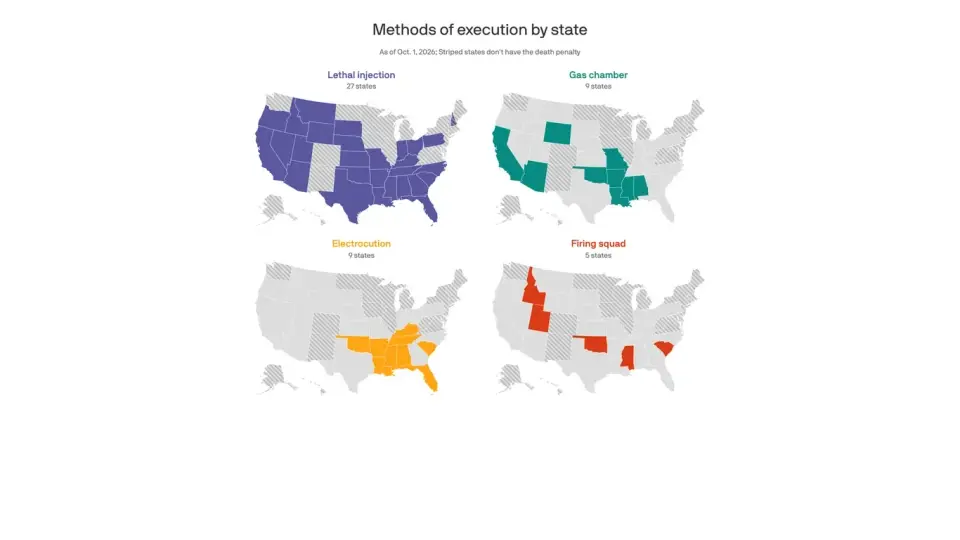
CNN emphasizes the medical and legal uncertainty surrounding Pike’s condition and the governor’s decision to pause other executions. It highlights the family of the victim, Colleen Slemmer, who is 'devastated' and 'mad' at the state for lack of communication. NBC News focuses on the pre-execution context, detailing Pike’s claims of 'peace' despite nervousness about the process, and the state’s decision to use an all-female execution team. It also notes the controversial inclusion of a male physician, Dr. Mark Walton Fowler, who was involved in a previous failed execution. Axios provides a broader national context, noting that lethal injection accounts for 89% of executions since 1976, and highlights that methods vary by state, with some allowing prisoners to choose between lethal injection, electrocution, gas, or firing squad. The outlets differ in focus: CNN on the immediate aftermath and legal battles, NBC on the human element and procedural details, and Axios on the comparative state-by-state landscape.
Why it matters
The survival of a prisoner during a lethal injection challenges the legal and ethical foundations of the death penalty in the US. It forces a re-evaluation of state protocols, the competence of corrections officials, and the potential for 'cruel and unusual punishment' under the Eighth Amendment. The case may set a precedent for future legal challenges regarding double jeopardy and the right to a humane execution method.
What to watch
Governor Lee’s third-party review will determine if Pike’s sentence is commuted or if a new execution attempt is scheduled. The legal team is seeking to preserve evidence and may argue that a second attempt violates constitutional protections. The outcome will likely influence policy discussions in other states regarding the reliability and ethics of lethal injection protocols.
- Christa Pike survived lethal injection. How your state carries out executions Axios
- Christa Pike is on a ventilator and unconscious after surviving lethal injection. What happened? CNN
- How a Failed Execution Left Christa Pike Hovering Between Life and Death The New York Times
- America’s grim record of failed executions The Economist
- Christa Pike: What to know about the case of Tennessee death row inmate NBC News
Want the full story? Read the original reporting
Read on Axios