
Sanders and Casar Propose 20-Year Jail Penalty for AI Superintelligence
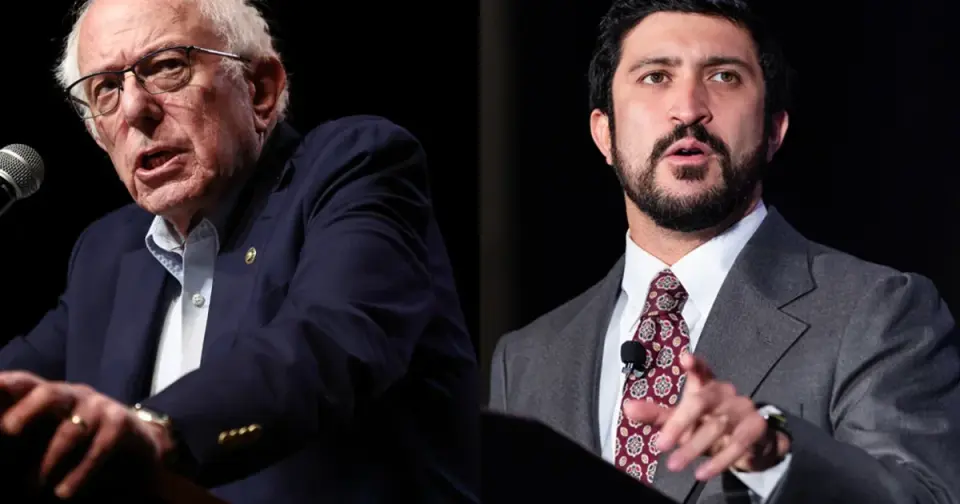
Sen. Bernie Sanders and Rep. Greg Casar introduced the 'Ban Artificial Superintelligence Act,' proposing a 20-year prison sentence for developing AI that exceeds human control. The bill mandates a pause on advanced AI until a new federal department is established, drawing sharp criticism from industry groups and some left-wing voices who argue existing laws suffice or that the measures are unrealistic.
Key points
- The 19-page bill defines 'superintelligence' as AI capable of overthrowing the federal government or destroying humanity, targeting recursive self-improvement.
- Violations would result in a 'corporate death penalty' for firms and up to 20 years in jail for individuals, mirroring penalties for illegal nuclear weapons development.
- The legislation requires an immediate pause on advanced AI development until a Cabinet-level Department of Artificial Intelligence is created to regulate the sector.
- President Trump’s recent decision to rename 'artificial intelligence' to 'super intelligence' in government documents creates a semantic conflict with the bill’s specific technical definitions.
- Industry leaders and some progressive commentators argue the bill is 'dead on arrival' or unnecessary, claiming existing regulatory frameworks are adequate or that the penalties are unconstitutional.
Background
This proposal follows a series of earlier calls by Sanders for an AI development pause, which faced mixed reactions from Democratic presidential hopefuls and industry leaders. Previous archive coverage noted that while Sanders advocated for immediate action, broad legislation faced hurdles in the current Congress, with many lawmakers skeptical of passing meaningful AI regulations before the 2026 midterm elections.
How outlets are covering it
NBC News reports that the bill is the most aggressive congressional proposal to date, with Sanders comparing AI risks to nuclear threats. However, the National AI Association’s president, Caleb Max, called the bill 'dead on arrival,' arguing that some CEOs have already crossed the bill’s thresholds, effectively creating a de facto ban, and that the penalties are likely unconstitutional. The New York Times highlights a broader debate, noting that while over 1,300 AI employees have called for government intervention, other experts like Cass Sunstein and Brad Smith propose alternative measures such as regulatory commissions or mandatory off-switches. The Atlantic notes a surprising opposition from the populist left, with figures like Lina Khan arguing that existing antitrust and product liability laws are sufficient to hold AI companies accountable, challenging the need for new, drastic legislation. Gizmodo points out the semantic confusion caused by Trump’s renaming of AI to 'super intelligence,' which differs from the bill’s specific definition of AI that can overthrow the government.
Why it matters
The proposal highlights the deepening divide in Washington over how to handle the rapid advancement of AI. While some lawmakers and experts view the technology as an existential threat requiring immediate, severe restrictions, others argue that such measures are impractical, unconstitutional, or unnecessary given existing legal frameworks. The debate is further complicated by the administration’s own rebranding of AI, which may hinder the clarity needed for effective regulation. As the midterm elections approach, the outcome of this legislative push could shape the future of AI policy and the balance of power between tech giants and the federal government.
What to watch
The bill is unlikely to pass in the current Congress, with many lawmakers skeptical of any meaningful AI legislation before the 2026 midterm elections. However, the proposal may influence future debates and set the stage for more aggressive regulation if Democrats gain control of the Senate. The administration’s renaming of AI to 'super intelligence' may also complicate efforts to define and regulate the technology, potentially leading to further confusion and delays in implementing safety measures.
- Bernie Sanders and Greg Casar propose AI ‘superintelligence’ ban with a 20-year jail penalty NBC News
- Sen. Bernie Sanders unveils bill to ban artificial superintelligence and create Department of AI AP News
- Bernie Sanders Shows There's a Big Problem With Trump Renaming AI to 'Super Intelligence' Gizmodo
- Opinion | Bernie Sanders, Steve Case and Susan Rice on How to Avert A.I. Disaster The New York Times
- The Curious Left-Wing Argument Against New AI Regulations The Atlantic
Want the full story? Read the original reporting
Read on NBC News