
Blanche defends White House media ban as 'privilege' after Air Force One exclusion
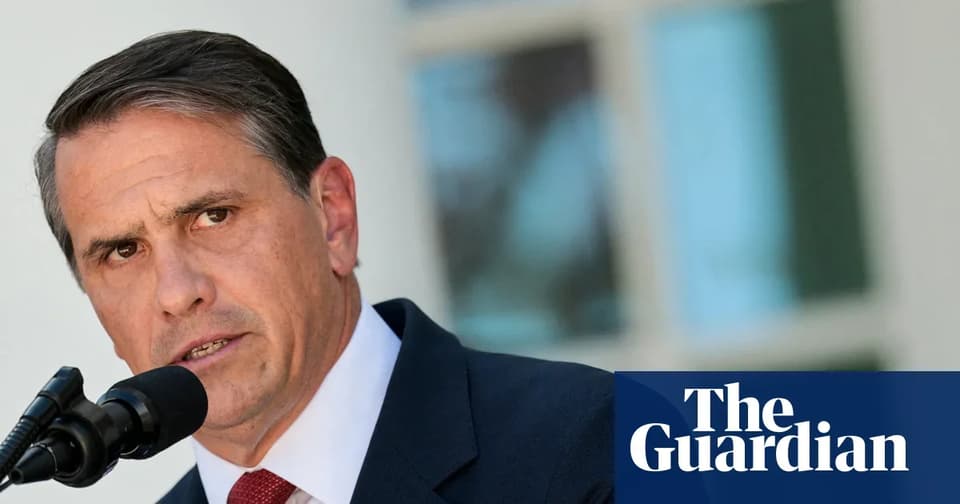
Attorney General Todd Blanche defended the White House's exclusion of CNN, MS NOW, and Politico, arguing that access is a privilege rather than a right. On Sunday, Blanche appeared on ABC News to justify the administration's decision to bar CNN from Air Force One pool coverage, citing national security concerns regarding 'inaccurate' reporting. This move followed a temporary restraining order by Judge Timothy Kelly, which had briefly restored credentials but did not resolve the dispute over pool access. The conflict has intensified ahead of the November midterms, with Blanche asserting that the president has a duty to ensure the public receives accurate news, despite a federal judge finding no evidence that the ban was motivated by national security.
Key points
- Attorney General Todd Blanche stated on ABC News that White House access is a privilege, not a right, and that the president has the right to decide who flies on Air Force One.
- Blanche claimed that CNN, MS NOW, and Politico provide 'wholly and completely, almost 100 percent negative' reporting, which he characterized as a national security issue.
- CNN was barred from providing TV pool coverage during Trump's trip to Tennessee on Saturday, leading other major networks to refuse to fill the rotation in solidarity.
- U.S. District Judge Timothy Kelly issued a temporary restraining order on Thursday, ruling that the ban was not motivated by national security concerns, but the dispute over pool access remains unresolved.
- Blanche refused to provide specific examples of inaccurate reporting when pressed by interviewer Martha Raddatz, stating that the outlets' coverage is consistently negative toward the president.
Background
This dispute follows a series of escalating media restrictions in September 2026. On September 19, Trump announced the ban on CNN, MS NOW, and Politico, citing 'fake news' and negative coverage. Major TV networks withdrew from the White House pool in solidarity, and the Justice Department filed a legal brief on September 23 arguing the ban was lawful under the First Amendment. Secretary of State Marco Rubio defended the move on September 22, stating that outlets were not being closed but simply denied a White House workspace. The current conflict represents the latest phase of this ongoing legal and political battle over press access.
How outlets are covering it
The Guardian and HuffPost emphasized the heated nature of Blanche's interview, highlighting his refusal to cite specific examples of inaccurate reporting and his assertion that negative coverage is inherently inaccurate. CNN and MS NOW focused on the operational impact of the ban, noting that CNN's exclusion from Air Force One led to a halt in independent TV pool coverage, with other networks refusing to replace CNN. MS NOW highlighted the disconnect between Blanche's national security argument and Trump's public statements about 'fake news,' while CNN noted the legal uncertainty surrounding the pool's status despite the temporary restraining order. All sources agreed that the dispute has intensified the administration's conflict with the press corps ahead of the November midterms.
Why it matters
The White House media ban and the subsequent legal challenges raise significant questions about press freedom and the First Amendment in the United States. The administration's assertion that access is a privilege, rather than a right, could set a precedent for future restrictions on media access. The dispute also highlights the growing polarization between the executive branch and the press, with potential implications for the integrity of news coverage and public trust in the media. As the November midterms approach, the outcome of this legal battle could influence the political landscape and the administration's ability to control the narrative.
What to watch
The three outlets have until Monday to file a request for a preliminary injunction to extend the temporary restraining order. The legal battle is expected to continue, with potential hearings on the merits of the ban. The administration may further restrict media access, while the press corps may continue to protest the ban through solidarity actions. The outcome of the legal dispute could have broader implications for press freedom and the relationship between the executive branch and the media in the United States.
- Blanche defends Trump’s White House media ban: ‘It is a privilege, not a right’ The Guardian
- White House bars CNN from covering Trump on behalf of major TV networks as he travels to Tennessee cnn.com
- White House Blocks CNN From Covering Trump’s Trip to Tennessee The New York Times
- 'You Cannot Be Asking Me That!': Trump’s AG Goes Nuclear On Live TV Over Press Ban HuffPost
- Blanche defends White House’s banning CNN from Air Force One, citing national security MS NOW
Want the full story? Read the original reporting
Read on The Guardian