
UK PM Burnham exchanges brief texts with impostor posing as Trump aide
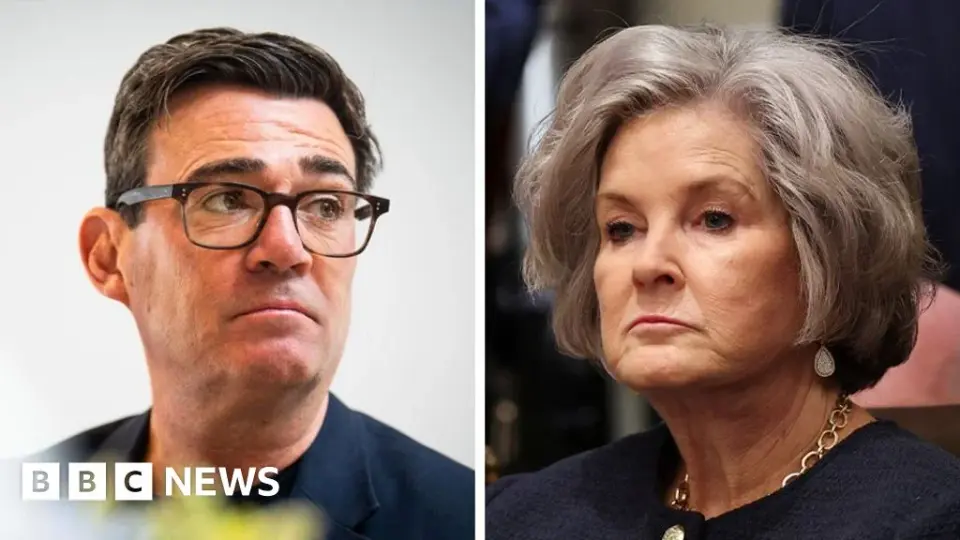
UK Prime Minister Andy Burnham exchanged a few non-significant text messages with an individual impersonating US Chief of Staff Susie Wiles. The incident, first reported by Politico, prompted the British embassy to alert the White House. Downing Street declined to comment, citing national security, while officials confirmed the suspicious contact was quickly reported to authorities. The breach highlights ongoing concerns about the security of high-level political communications, following previous impersonation attempts targeting Wiles and other UK ministers.
Key points
- Burnham communicated with an impostor claiming to be Susie Wiles before suspecting the contact was illegitimate.
- Officials described the exchange as a 'few messages' of 'no significance,' with no substantive conversation taking place.
- The British embassy in Washington raised the incident with the White House, which stated it had nothing to do with Wiles' phone being hacked.
- Downing Street refused to comment on the timing, platform, or number of messages, citing national security protocols.
- The UK government is removing the personal mobile numbers of three cabinet ministers from public websites following the incident.
Background
This incident follows a 2025 FBI investigation into an impersonation of Wiles, where her contacts were used to message US senators and business executives. In 2024, UK Foreign Secretary David Cameron was targeted by a similar hoax involving a fake call from former Ukrainian President Petro Poroshenko. The current breach underscores persistent vulnerabilities in high-level diplomatic and political communications.
How outlets are covering it
Politico emphasized the diplomatic response, noting the British embassy raised the issue with the White House. The Guardian highlighted the broader security failure, pointing out that personal mobile numbers for three cabinet ministers were publicly available online. The New York Times focused on the official confirmation that the messages were of 'no significance' and that Burnham quickly reported the interaction to security authorities. The BBC noted that Downing Street declined to specify whether the messages were sent via WhatsApp or another system.
Why it matters
The incident exposes potential vulnerabilities in the communication channels of top world leaders, raising concerns about the security of high-level diplomatic contacts. It also highlights the need for stricter protocols regarding the public availability of personal contact details for senior government officials.
What to watch
The UK government is in the process of removing the personal mobile numbers of Defence Secretary Wes Streeting, Justice Secretary Alex Norris, and Northern Ireland Secretary Chris Bryant from public websites. Further security reviews of communication protocols for senior officials are expected.
- Burnham exchanged messages with person posing as Trump's chief of staff BBC
- Burnham exchanged messages with impersonator of top Trump aide politico.eu
- New UK leader Andy Burnham exchanged messages with a Susie Wiles impersonator The Hill
- Burnham exchanged messages with individual impersonating Trump chief of staff The Guardian
- British Leader Exchanged Texts With Someone Posing as Trump’s Chief of Staff The New York Times
Want the full story? Read the original reporting
Read on BBC