
Carney Confirms Ottawa Prepared for 'Extreme Tail Risk' of US Military Action
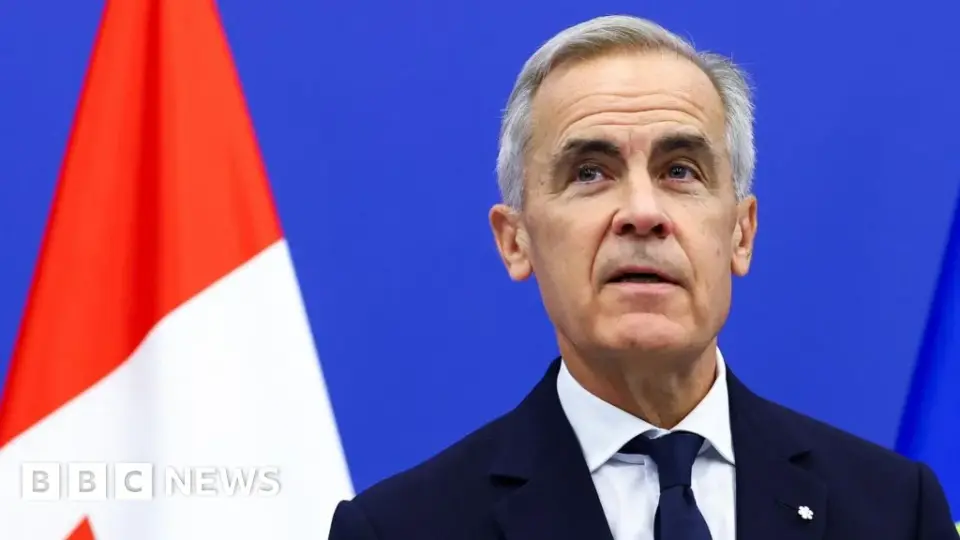
Canadian Prime Minister Mark Carney confirmed in a New York Times interview that his government has analyzed the remote possibility of US military action against Canada, framing it as a necessary 'extreme tail risk' assessment rather than a base-case scenario. While Carney declined to detail specific preparations, he emphasized that such risk management is a duty of office. This disclosure comes amid escalating tensions, including a collapsed trade deal and Trump’s rhetoric about annexing Canada. Despite the friction, Carney stated he maintains frequent communication with President Trump and remains optimistic about resuming trade negotiations, while simultaneously pursuing strategies to reduce reliance on US technology and defense contracts.
Key points
- Carney stated that assessing the risk of US military action is a standard responsibility for leaders, describing it as 'extreme tail risk' rather than a likely outcome.
- The Prime Minister declined to provide details on the specific preparations made by his administration in response to this scenario.
- Carney noted that he speaks 'frequently' with Donald Trump, characterizing their relationship as direct and efficient despite ongoing disputes.
- Canada is actively reviewing its reliance on US systems, including a potential shift away from Starlink satellite internet and a political review of the F-35 fighter jet procurement.
- The US military advantage is significant, with over 2 million troops compared to Canada’s fewer than 200,000, and 65 submarines versus Canada’s four.
Background
This development follows a period of intense diplomatic and economic friction. In late August 2026, trade negotiations between the two nations collapsed, leading to the imposition of 50% US tariffs on $28 billion in Canadian goods and retaliatory measures from Ottawa. Prior to this, Carney had advocated for diversifying trade away from the US, including pursuing deals with India and strengthening EU ties. The current military risk assessment is part of a broader strategy to enhance Canadian autonomy and defense capabilities, including a recent surge in military recruitment and a major submarine deal with Germany.
How outlets are covering it
BBC and CBC both report that Carney framed the military assessment as a routine risk management exercise, emphasizing that it is not a 'base case' scenario. Politico highlights the broader context of Trump’s previous social media posts about making Canada the '51st state' and notes that Carney is simultaneously reducing reliance on US technology like Starlink and reviewing F-35 purchases. While all outlets agree on the existence of the risk assessment, they differ in emphasis: BBC focuses on the military imbalance and Carney’s diplomatic tone, while Politico and CBC emphasize the economic and technological decoupling efforts. CBC notes that Defence Minister David McGuinty described such risk analysis as 'normal' for all militaries, whereas the BBC highlights the specific numerical disparity in military strength between the two nations.
Why it matters
The confirmation that Canada has prepared for potential US military action signals a significant shift in the security posture of the world’s two largest neighbors. It underscores the severity of the current trade and diplomatic crisis, moving the discourse from economic tariffs to existential security concerns. This move may accelerate Canada’s efforts to diversify its defense and technology partnerships, potentially reshaping North American alliances and influencing global perceptions of US-Canada relations.
What to watch
Canada is expected to continue its review of US defense contracts, particularly the F-35 fighter jets, and may finalize alternatives for satellite internet services. Trade negotiations remain stalled, but Carney’s indication of frequent communication with Trump suggests potential channels for de-escalation. The government will likely continue to bolster its own defense capabilities, including the recently ordered German submarines, to mitigate the identified 'extreme tail risks.'
- Mark Carney says he has considered possibility of US military action against Canada BBC
- Carney says he’s prepared for ‘extreme tail risk’ of US invading Canada The Hill
- Canada’s Carney says he studied risk of US invasion politico.com
- PM Carney prepared for ‘risk’ that Trump might order U.S.-led military invasion of Canada: report CP24
- Carney tells NYT he studied risk of U.S.-led military action in Canada CBC
Want the full story? Read the original reporting
Read on BBC