
DOJ threatens emergency court action against California over 48-hour demand to verify voter citizenship
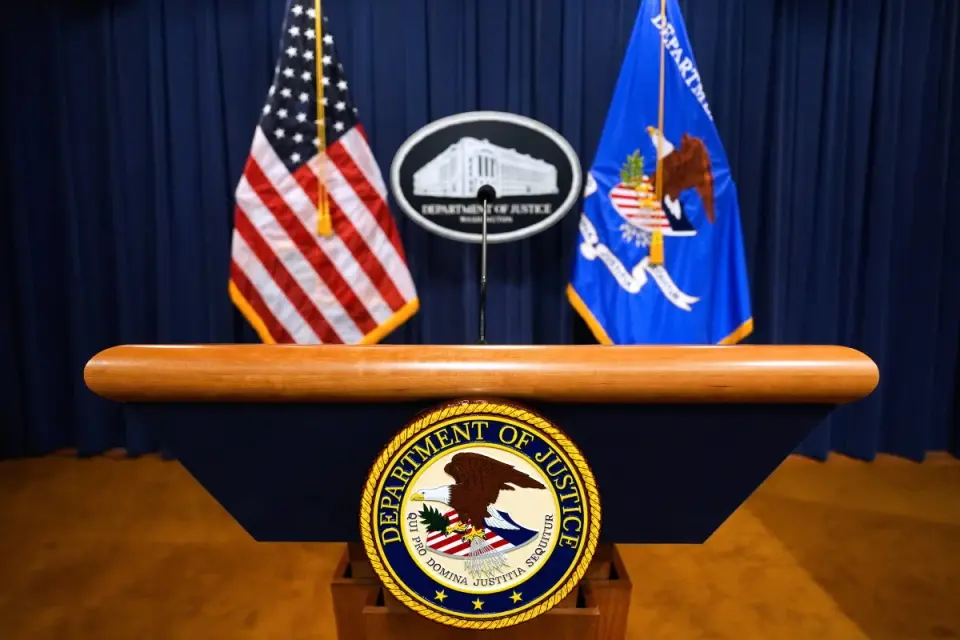
The U.S. Department of Justice has issued an ultimatum to California election officials, demanding they verify the citizenship of voters flagged as potential noncitizens within 48 hours or face emergency legal action. Acting Deputy Attorney General R. Trent McCotter sent letters to California Secretary of State Shirley Weber and Los Angeles County Registrar Dean Logan, providing a password-protected list of names and threatening to withhold or segregate ballots if citizenship cannot be confirmed. This move escalates federal pressure ahead of the November 3 midterms, despite concerns that similar lists in other states have proven highly inaccurate. Legal experts argue the demand violates the National Voter Registration Act’s 90-day pre-election freeze and risks disenfranchising eligible voters during a critical period when ballots are already being processed.
Key points
- DOJ Acting Deputy AG R. Trent McCotter sent letters to CA Secretary of State Shirley Weber and LA County Registrar Dean Logan on Tuesday.
- The letters demand a 48-hour response to verify citizenship for voters on a federal list, threatening to segregate or withhold their mail ballots.
- DOJ provided a password-protected thumb drive with names it believes are likely noncitizens who received mail ballots for the Nov. 3 election.
- McCotter warned that failure to comply would force the DOJ to seek 'emergency relief' in court.
- Election experts, including David Becker and Rick Hasen, called the move legally questionable, noting that similar federal lists in Nevada were largely inaccurate.
- The National Voter Registration Act generally prohibits systematic voter purges within 90 days of an election, a rule currently under Supreme Court review in an Arizona case.
Background
This escalation follows a series of federal actions aimed at purging voter rolls ahead of the 2026 midterms. In early September, the DOJ announced five voter-fraud prosecutions, while in late September, the Supreme Court upheld expanded citizenship data checks, raising fears of widespread purges. However, a federal judge in Florida recently struck down a noncitizen voting statute as unconstitutional, challenging the legal foundation of the DOJ’s enforcement strategy. Additionally, the administration has faced court losses in attempts to force states to share unredacted voter data and to implement stricter proof-of-citizenship requirements. The current threat against California represents a shift from broad data requests to direct, time-sensitive demands on specific state officials during the active voting period.
How outlets are covering it
The Justice Department, represented by Acting Deputy AG R. Trent McCotter and spokesperson Kiersten Pels, frames the demand as a necessary measure to protect election integrity, asserting that federal law clearly prohibits noncitizens from voting and that states must cooperate to verify citizenship. They argue that allowing potential noncitizens to vote dilutes the votes of citizens. In contrast, the Los Angeles Times and CNN highlight the legal and practical risks, noting that the DOJ’s previous claims regarding noncitizen voters in states like Nevada were significantly overstated and often incorrect. Election experts cited by these outlets, such as David Becker and Rick Hasen, argue that the 48-hour deadline is legally questionable under the National Voter Registration Act and risks disenfranchising eligible voters due to the inaccuracy of federal data tools. The Guardian’s coverage, while focused on broader midterm campaigning, notes the administration’s inconsistent approach to mail voting, having previously sought to curtail it while now demanding its use for verification. California officials, including Secretary of State Shirley Weber, have previously questioned the basis for federal claims of large-scale noncitizen voting, rebuffing offers to purge rolls without additional information.
Why it matters
The DOJ’s ultimatum tests the limits of federal power over state-run elections in the final weeks before a major election. If the DOJ succeeds in forcing ballot segregation or withholding, it could disenfranchise thousands of voters and set a precedent for federal interference in state election administration. Conversely, if courts block the action, it could reinforce state sovereignty over voter registration and limit the administration’s ability to pursue aggressive voter purge strategies. The outcome will also influence the legal landscape for the National Voter Registration Act’s 90-day pre-election freeze, a rule currently under Supreme Court review, and may impact the credibility of federal claims regarding voter fraud in the 2026 midterms.
What to watch
California election officials, including Secretary of State Shirley Weber and LA County Registrar Dean Logan, must respond to the DOJ’s 48-hour deadline. If they do not comply, the DOJ may file for emergency court relief to force compliance. Legal experts expect a swift legal challenge, with the case potentially reaching the Supreme Court, where the validity of the 90-day pre-election freeze and the constitutionality of federal noncitizen voting laws are already under review. The outcome will depend on whether courts prioritize election integrity and federal authority or state sovereignty and the risk of voter disenfranchisement. The DOJ may also continue to pursue other states with similar demands, though previous attempts to obtain unredacted voter data have been blocked in court.
- Justice Department threatens California with legal action over claim of noncitizens on voter rolls AP News
- Exclusive-US Justice Department threatens California over alleged noncitizen voters, letters show Yahoo
- Justice Dept. demands California prove citizenship for lists of voters or withhold ballots Los Angeles Times
- DoJ threatens California over alleged noncitizen voting as Trump tries to rally support for Republicans – US politics live The Guardian
- Trump administration escalates voter roll fight with threats against California election officials CNN
Want the full story? Read the original reporting
Read on AP News