
DOJ Voter Data Campaign Hits 25-0 Record After Washington State Ruling
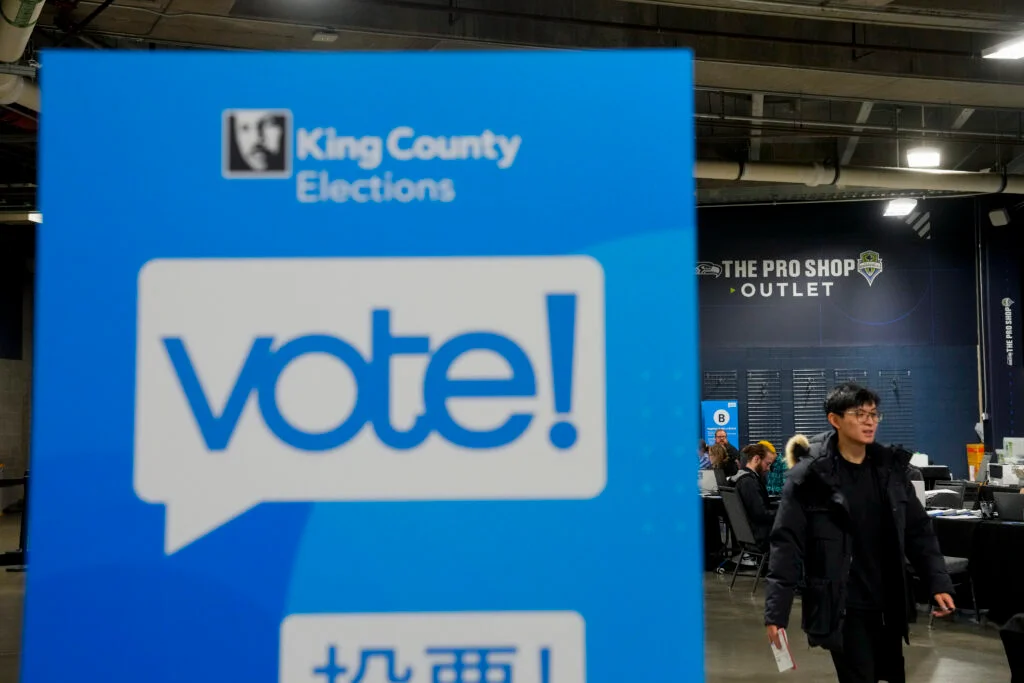
A federal judge in Washington state dismissed the Department of Justice’s lawsuit demanding unredacted voter registration data, marking the agency’s 25th consecutive district court loss in this nationwide legal campaign. Judge Kymberly Evanson ruled that the DOJ’s interpretation of the Civil Rights Act of 1960 is legally flawed and that the state’s voter database is not subject to federal inspection demands. The ruling, which was dismissed with prejudice, prevents the DOJ from re-filing the same claim in district court, though appeals remain possible. This decision adds to a growing consensus among federal courts that states retain authority over their election records, including sensitive personal information like driver’s license numbers and partial Social Security numbers.
Key points
- Judge Kymberly Evanson ruled that the DOJ’s demand for Washington’s complete voter file violates federal law, citing a unanimous consensus among courts rejecting similar lawsuits.
- The court dismissed the case with prejudice, barring the DOJ from amending the complaint and retrying the case in district court, though the department can still appeal.
- The ruling marks the 25th consecutive loss for the DOJ in its nationwide effort to compel states to surrender unredacted voter registration data containing sensitive personal information.
- Judge Evanson rejected the DOJ’s argument that the Civil Rights Act of 1960 grants the attorney general authority to demand state voter lists, calling the interpretation 'strained' and inconsistent with the statute's purpose.
- The DOJ has appealed nearly all previous defeats, with the 9th Circuit Court of Appeals currently reviewing cases from California and Oregon, which could impact pending cases in Idaho and Hawaii.
Background
This ruling is part of a broader federal campaign that began in September 2025, when the DOJ demanded unredacted voter data from nearly all 50 states and Washington, D.C. The effort has faced consistent resistance, with the DOJ losing 22 cases by August 2026 and considering Supreme Court intervention. Recent developments include a first arrest in a Trump-era voter-fraud crackdown in California and ongoing disputes over mail ballots and DHS audits, highlighting the tension between federal election integrity claims and state control over election administration.
How outlets are covering it
Democracy Docket emphasizes the legal precedent set by Judge Evanson, noting that the DOJ’s own attorney conceded during oral arguments that Washington’s case was factually indistinguishable from other losses. The outlet highlights the 'with prejudice' dismissal as a significant barrier to the DOJ’s efforts. Lynnwood Times frames the ruling as a victory for voter privacy, quoting Attorney General Nick Brown’s statement that the DOJ is '0 for 25 nationwide' in its attempts to 'plunder' private voter information. Campaign Legal Center focuses on the constitutional argument, stating that states and Congress, not the executive branch, hold the power to set election rules. All three sources agree on the 25-0 record but differ in emphasis: Democracy Docket focuses on the legal reasoning, Lynnwood Times on the political implications for state sovereignty, and Campaign Legal Center on the protection of voter privacy and the rule of law.
Why it matters
The 25-0 record in federal district courts signals a strong judicial consensus against the DOJ’s interpretation of the Civil Rights Act, potentially limiting the federal government’s ability to access sensitive voter data. The 'with prejudice' dismissal in Washington state creates a legal barrier that the DOJ must overcome through appeals, adding to the uncertainty surrounding the 9th Circuit’s pending decisions. This outcome reinforces the principle that states retain primary authority over election administration and voter data, a key issue in the ongoing debate over federal vs. state control of elections. The ruling also highlights the risks of federal overreach in election administration, as states continue to resist demands for unredacted voter files that include personal information like driver’s license numbers and partial Social Security numbers.
What to watch
The DOJ is expected to appeal the Washington state ruling, as it has done in nearly all previous cases. The 9th Circuit Court of Appeals is currently reviewing cases from California and Oregon, with decisions pending that could influence the outcomes of related cases in Idaho and Hawaii. The DOJ has not indicated any intention to abandon its broader effort to access voter data, and it may continue to press cases in Delaware, Georgia, and Utah, which remain actively moving toward rulings. The outcome of the 9th Circuit appeals could set a precedent for other circuits and potentially lead to a Supreme Court challenge if the DOJ pursues further appeals.
- Washington state hands Trump DOJ its 25th straight voter roll loss Democracy Docket
- DOJ loses 25th lawsuit seeking voter records as judge tosses WA case The Seattle Times
- Trump administration’s WA voter roll lawsuit dismissed Washington State Standard
- WA successfully defends private information of voters as federal government loses another case Lynnwood Times
- Victory for Washington State Voters: Federal Court Dismisses DOJ Lawsuit Seeking Private Voter Data Campaign Legal Center
Want the full story? Read the original reporting
Read on Democracy Docket