
El-Sayed prioritizes economic unity over identity politics in Michigan Senate race
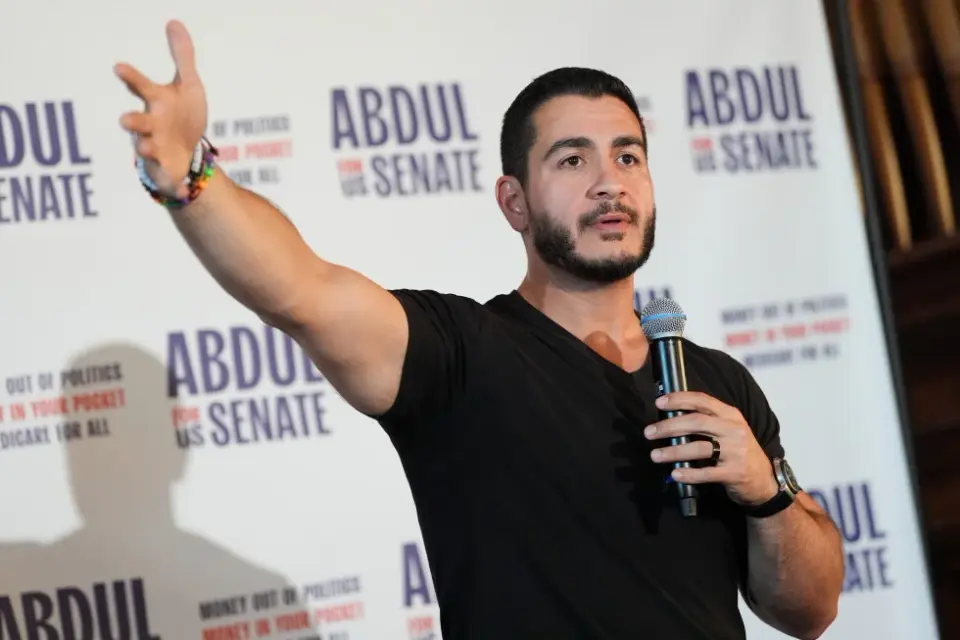
Michigan Democratic nominee Abdul El-Sayed is campaigning on economic issues like healthcare and corporate influence, aiming to win by a large margin to prevent election denial. He faces Republican Mike Rogers, who has distanced himself from President Trump on trade and war issues. El-Sayed also seeks to bridge divides with Jewish voters and fellow Democrat Elissa Slotkin, emphasizing shared values despite foreign policy differences.
Key points
- El-Sayed argues Democrats must win by 'massive numbers' to ensure results are unquestionable, citing concerns about Trump and Rogers denying 2020 election outcomes.
- The candidate focuses on 'Medicare for All' and reducing corporate influence, claiming to attract former Trump voters through economic messaging.
- Rogers has broken with Trump on Canada tariffs and the Iran conflict, focusing on lowering consumer prices to appeal to independent voters.
- El-Sayed and Slotkin held a joint town hall in Macomb County, highlighting their ability to cooperate despite differing views on Israel and foreign policy.
- The race has exceeded $200 million in spending, making it the most expensive in Michigan history, with El-Sayed facing attacks regarding his initial comments on a synagogue attack.
Background
The Michigan Senate race is a pivotal contest for the 2026 midterms, with the outcome potentially determining the balance of power in the U.S. Senate. Recent polling indicates that 26% of 2024 Trump voters support Republican candidates distancing themselves from the president due to economic frustrations. El-Sayed, a former public health official, has positioned himself as a moderate Democrat, while his opponent, former Rep. Mike Rogers, has adopted a more independent stance on trade and foreign policy to counter Trump's unpopularity.
How outlets are covering it
AP News frames the race as a test of democratic institutions, highlighting El-Sayed's concerns about election denial. NBC News emphasizes El-Sayed's strategy to win by a large margin and his efforts to appeal to Jewish voters and former Trump supporters through economic policies. 9and10News focuses on the high cost of the race and El-Sayed's grassroots appeal in Traverse City, noting his criticism of corporate influence. MS NOW highlights the symbolic significance of El-Sayed and Slotkin's partnership, portraying their cooperation as a model for bipartisan and interfaith dialogue in Michigan politics.
Why it matters
The Michigan Senate race is a bellwether for the 2026 midterms, reflecting broader tensions between economic populism and identity politics. El-Sayed's strategy to prioritize healthcare and economic issues over foreign policy disputes may influence how Democrats approach other competitive states. The race also tests the viability of cross-ideological cooperation within the Democratic Party, as El-Sayed and Slotkin attempt to unify voters despite their differences.
What to watch
El-Sayed and Rogers will hold a second televised debate on October 21, with Rogers campaigning in Northern Michigan on October 23. The outcome of the race will likely depend on El-Sayed's ability to maintain his economic messaging while countering attacks on his identity and foreign policy views. The high spending in the race suggests that both parties are investing heavily in the outcome, which could have implications for the broader midterm landscape.
- Republicans want Abdul El-Sayed to be the main character of the midterms. He's happy to oblige AP News
- Abdul El-Sayed says Democrats must ‘win by massive numbers’ to fend off GOP election denial NBC News
- U.S. Senate candidate Abdul El-Sayed holds rally at packed State Theater in Traverse City 9and10News.com
- ‘Don’t be a wuss’: Democrat tries to goad Trump into holding rally for opponent AL.com
- Abdul El-Sayed and Elissa Slotkin have their differences — and argue their common ground is more important MS NOW
Want the full story? Read the original reporting
Read on AP News