
FBI Bribery Probe Into Collins Collapsed After Trump Purge, ProPublica Reveals
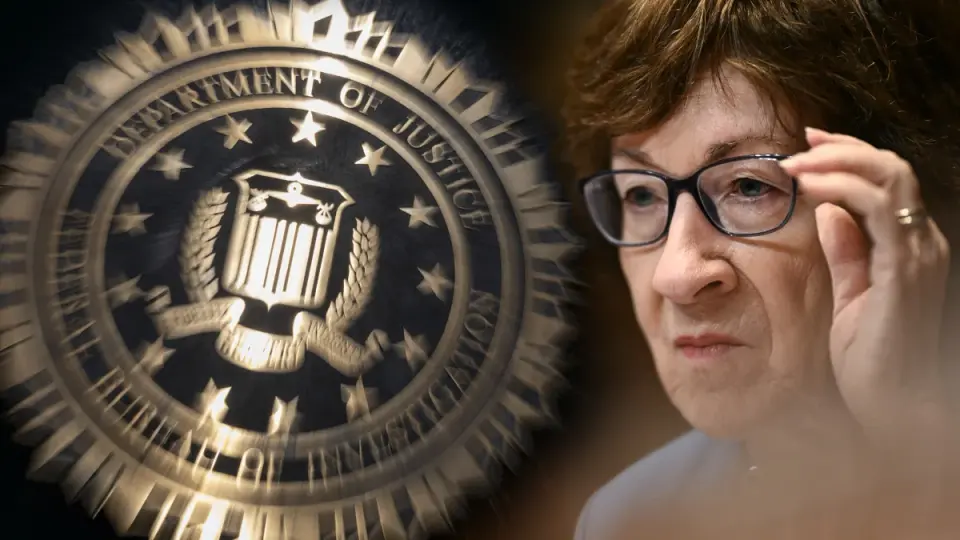
ProPublica revealed that the FBI had sufficient evidence in late 2024 to launch a bribery investigation into Sen. Susan Collins and defense contractor Navatek, but the probe was terminated after the Trump administration dismantled anti-corruption units. The case centers on allegations that Navatek CEO Martin Kao funneled nearly $900,000 to politicians, including Collins, to secure over $40 million in annual government contracts. While Collins’ office denies the claims as a 'smear job,' Democrats have launched a $3.4 million ad campaign linking her to the allegations and unrelated Epstein file votes, intensifying pressure in her tight 2026 re-election race against Democrat Troy Jackson.
Key points
- FBI investigators had enough evidence in late 2024 to probe a bribery scheme involving Sen. Susan Collins and Navatek CEO Martin Kao, but the case died after the Trump administration purged the relevant DOJ and FBI units.
- Kao, who was indicted in 2022 for illegal campaign contributions, claimed he used shell companies to send $150,000 to a pro-Collins super PAC in 2019 and that Collins promised $32 million in naval contracts in return.
- Navatek and its associates donated nearly $900,000 to dozens of politicians, allowing the company to secure over $40 million in annual government funds across half a dozen states, with Collins described as its most important patron.
- Collins’ office 'vigorously' denies the bribery allegations, calling ProPublica’s reporting a 'smear job' based on the words of a 'twice-convicted felon,' while the FBI stated it 'ultimately found nothing implicating' the senator.
- Democratic super PACs have spent $3.4 million on ads attacking Collins, misleadingly connecting her to the Epstein files controversy and claiming she accepted $3 million from an alleged Epstein 'business partner,' a claim FactCheck.org found to be inaccurate.
- The controversy has intensified Collins’ 2026 re-election race against Democrat Troy Jackson, with polls showing a narrow lead for the incumbent but significant undecided voters in Maine.
Background
This story follows earlier coverage from September 2026, which first reported the existence of the FBI probe and its collapse after the Trump administration’s purge of anti-corruption units. Previous reports noted that Collins’ office had denied wrongdoing and that the controversy was already impacting her campaign in Maine, particularly in Bath, where she is credited with securing Navy contracts. The current development adds new details from ProPublica’s investigation, including specific evidence of the shell company scheme and the timeline of the probe’s termination, as well as the launch of a major Democratic ad campaign and FactCheck.org’s analysis of misleading claims in those ads.
How outlets are covering it
ProPublica, the primary source, emphasizes the existence of a concrete FBI investigation that was actively pursuing evidence against Collins before being dismantled by the Trump administration, framing the collapse as a direct result of political interference. They highlight Kao’s detailed account of the bribery scheme and the specific amounts involved, while noting that the FBI’s final statement did not address the new phase of the investigation prompted by Kao’s testimony. In contrast, Collins’ office and the FBI spokesperson present a defensive narrative, with Collins’ staff calling the allegations a 'smear job' and the FBI stating that it 'ultimately found nothing implicating' the senator, though the FBI did not clarify whether this referred to the initial or the later phase of the investigation. FactCheck.org offers a critical perspective on the Democratic ad campaign, arguing that the ads misleadingly connect Collins to the Epstein files and mischaracterize the relationship between Epstein and donor Stephen Schwarzman, while Axios and the Portland Press Herald focus on the political and legal implications of the pay-to-play allegations in the context of the 2026 election. The Portland Press Herald also notes that while the laws against pay-to-play are 'crystal clear,' enforcement is limited to federal agencies, which were purged, creating a gap in accountability.
Why it matters
The collapse of the FBI bribery probe into Susan Collins raises significant questions about the integrity of federal anti-corruption efforts and the potential for political interference in ongoing investigations. The allegations, if substantiated, could have serious implications for the balance of power in the 2026 Senate race and the broader credibility of the legislative process. The misleading nature of the Democratic ad campaign, as highlighted by FactCheck.org, also underscores the risks of misinformation in high-stakes political contests, potentially distorting public understanding of key issues like the Epstein files and campaign finance laws. Ultimately, the story highlights the tension between political accountability and the erosion of institutional safeguards against corruption, with direct consequences for voters in Maine and the national political landscape.
What to watch
The immediate next steps will likely involve continued scrutiny of the FBI’s decision to terminate the investigation and whether any new evidence or legal action will emerge from the case. Collins’ re-election race against Troy Jackson will be closely watched, with the outcome potentially influenced by the public perception of the bribery allegations and the effectiveness of the Democratic ad campaign. FactCheck.org and other media outlets may continue to analyze the accuracy of the claims made in the ads, while legal experts may weigh in on the implications of the purged anti-corruption units for future investigations. The case may also prompt calls for legislative or administrative reforms to protect the independence of federal anti-corruption agencies from political interference.
- Watch: We Uncovered Bribery Allegations Involving Susan Collins ProPublica
- Democrats put $3.4M behind Susan Collins allegations Axios
- Democratic Ads Misleadingly Connect Susan Collins to Epstein FactCheck.org
- The laws tied to the Susan Collins-Navatek allegations are ‘crystal clear.’ Enforcing them is another matter. Portland Press Herald - Maine Sunday Telegram
- How Mainers are weighing the pay-to-play allegation involving Susan Collins Maine Morning Star
Want the full story? Read the original reporting
Read on ProPublica