
Michigan Senate candidates clash over policy shifts and credentials in first debate
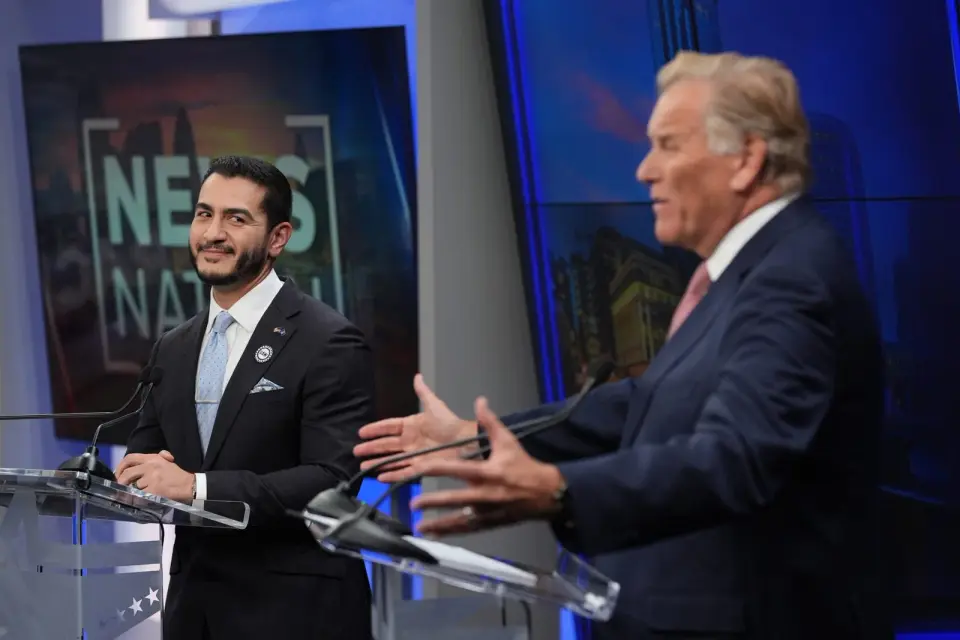
In their first general election debate, Michigan Senate candidates Abdul El-Sayed and Mike Rogers traded sharp attacks over shifting stances on tariffs and the Iran war, personal finances, and policy credentials. While El-Sayed criticized Rogers for flip-flopping to match Trump’s unpopular policies, Rogers questioned El-Sayed’s medical licensure and financial transparency. Fact-checkers found mixed evidence: Rogers did pivot on tariffs and war, but claims about El-Sayed’s credentials and foreign ties were largely unfounded or misleading.
Key points
- El-Sayed accused Rogers of being 'cowardly' for reversing his support for Trump’s tariffs and Iran war, while Rogers labeled El-Sayed a 'lightweight' and questioned his medical license.
- Fact-checkers confirmed Rogers shifted from supporting tariffs and the Iran war to calling for their end, but found little evidence that tariffs 'saved' Michigan’s cherry industry.
- Rogers claimed El-Sayed is not a licensed physician and has ties to the Muslim Brotherhood; fact-checkers noted El-Sayed holds a medical degree but not a license, and found no evidence linking his major funders to the Muslim Brotherhood.
- The candidates sparred over personal wealth, with Rogers citing El-Sayed’s mutual fund investments and El-Sayed pointing to Rogers’ $14 million post-Congress earnings and Florida home.
- A second debate is scheduled for October 21 in Detroit, with the race considered a toss-up that could determine Senate control.
Background
This debate follows a tight 2026 Michigan Senate race to replace retiring Democrat Gary Peters. Recent polling shows El-Sayed leading, but internal Democratic concerns persist regarding his ability to retain support among Black and Jewish voters. Prior coverage highlighted Rogers’ recent break from President Trump on Canada tariffs and the Iran conflict, a move aimed at appealing to moderate voters in a competitive state.
How outlets are covering it
Bridge Michigan provided a detailed fact-check, confirming Rogers’ policy shifts but debunking claims about El-Sayed’s credentials and foreign ties. The Detroit News focused on El-Sayed’s perceived evasiveness on Israel, arguing he lost Jewish voters by refusing to clarify his stance, and gave the debate to Rogers for being more substantive. WWMT emphasized the fiery tone, noting both candidates traded personal attacks and accusations, with El-Sayed focusing on affordability and Rogers on economic failures under Democrats.
Why it matters
The outcome of this race could determine which party controls the U.S. Senate for the final two years of Trump’s term. The debate highlighted deep divisions over economic policy, foreign affairs, and candidate credibility, which may influence undecided voters in a close election.
What to watch
The candidates are scheduled for a second debate on October 21 in Detroit. Voters will cast ballots in the November general election, with the race expected to remain competitive through the final weeks of the campaign.
- Fact check: Abdul El-Sayed and Mike Rogers debate Trump, tariffs, war, more Bridge Michigan
- Michigan Senate debate goes off the rails: 4 takeaways The Hill
- 5 Key Moments From Hostile Michigan Senate Debate Between El-Sayed and Rogers The New York Times
- Finley: Abdul says Israel not a U.S. ally; how will Jewish voters react? The Detroit News
- Attacks, accusations fly between Abdul El-Sayed and Mike Rogers in US Senate debate WWMT
Want the full story? Read the original reporting
Read on Bridge Michigan