
Pritzker and Bailey Clash in Final Illinois Debate Over Bears, Trump, and Bail
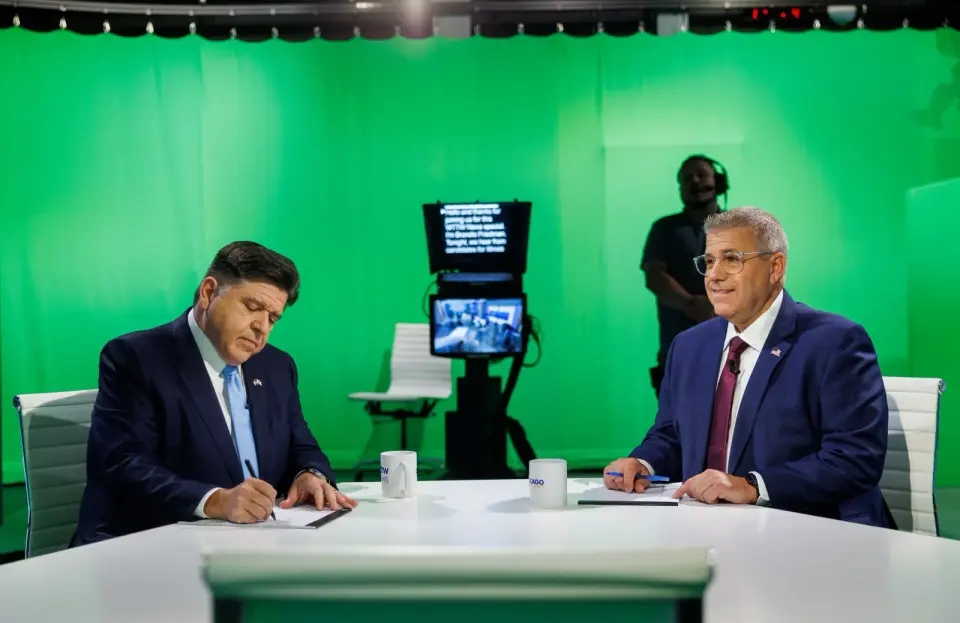
The sole gubernatorial debate between incumbent JB Pritzker and challenger Darren Bailey ended in a heated exchange, with Pritzker linking Bailey to President Trump and Bailey criticizing the governor’s record. Key topics included the potential relocation of the Chicago Bears to Indiana, the repeal of the SAFE-T Act, and federal funding cuts. Pritzker expressed confidence in retaining the Bears in Illinois, while Bailey claimed the move to Indiana was already assured by state officials.
Key points
- The debate, held at WTTW studios, was the only face-to-face meeting between the candidates before the November 3 election.
- Pritzker repeatedly accused Bailey of being a 'conservative extremist' and a follower of Trump, particularly regarding Medicaid and food aid cuts.
- Bailey urged viewers to take a drink each time Pritzker mentioned Trump, framing the president as a diversion from Illinois’s local problems.
- The candidates disagreed on the Chicago Bears, with Pritzker promising a deal to keep the team in Illinois and Bailey claiming Indiana Governor Mike Braun had assured him the move was complete.
- Bailey called for the repeal of the SAFE-T Act and reduced state oversight of public schools, while Pritzker defended his education spending and criminal justice reforms.
Background
This debate marked the final major campaign event before the 2026 general election. Pritzker, seeking a historic third term, has faced a well-funded campaign against Bailey, who has struggled to gain traction in northern Illinois. Previous coverage noted Bailey’s attempts to distance himself from Trump’s unpopular policies, though the president’s endorsement remained a focal point. The race also follows recent federal denials of disaster aid to Illinois, which Pritzker has used to highlight federal inaction.
How outlets are covering it
The Chicago Tribune emphasized the debate’s contentious nature, noting Bailey’s interruptions and Pritzker’s focus on Trump. NPR Illinois highlighted Bailey’s strategy to blame Pritzker for cost-of-living issues, while WTTW News focused on policy disagreements over taxes and the Bears. WFIW provided a brief summary, noting the trade of barbs but offering less detail on specific policy positions. Independent candidate Collin Corbett, excluded from the debate, criticized both candidates for failing to address affordability and property taxes.
Why it matters
The outcome of this race will determine the direction of Illinois’s policies on education, criminal justice, and economic development. Pritzker’s victory would secure a third term and potentially influence his 2028 presidential ambitions, while Bailey’s win would signal a shift toward conservative policies in a state that has historically favored Democrats. The debate also highlighted the impact of federal policies on state-level issues, such as Medicaid cuts and the Bears’ potential relocation.
What to watch
The general election is scheduled for November 3, 2026. Pritzker and Bailey are expected to continue campaigning in the final weeks, with a focus on downstate and suburban voters. The outcome of the Bears’ relocation negotiations and the fall veto session on legislation to keep the team in Illinois will also be closely watched.
- In lone debate for Illinois governor, Darren Bailey gets testy as JB Pritzker links challenger to Trump Chicago Tribune
- 6 takeaways from the only gubernatorial debate between Gov. Pritzker and Darren Bailey NPR Illinois
- Candidates for Illinois Governor face off in forum WGN-TV
- Pritzker, Bailey Square Off in Contentious Discussion Over Taxes, Trump and Bears WTTW News
- STATE NEWS BRIEFS FOR WEDNESDAY, OCTOBER 14TH WFIW
Want the full story? Read the original reporting
Read on Chicago Tribune