
Trump’s Midterm Roadmap Balances Political Strategy with Personal Preferences
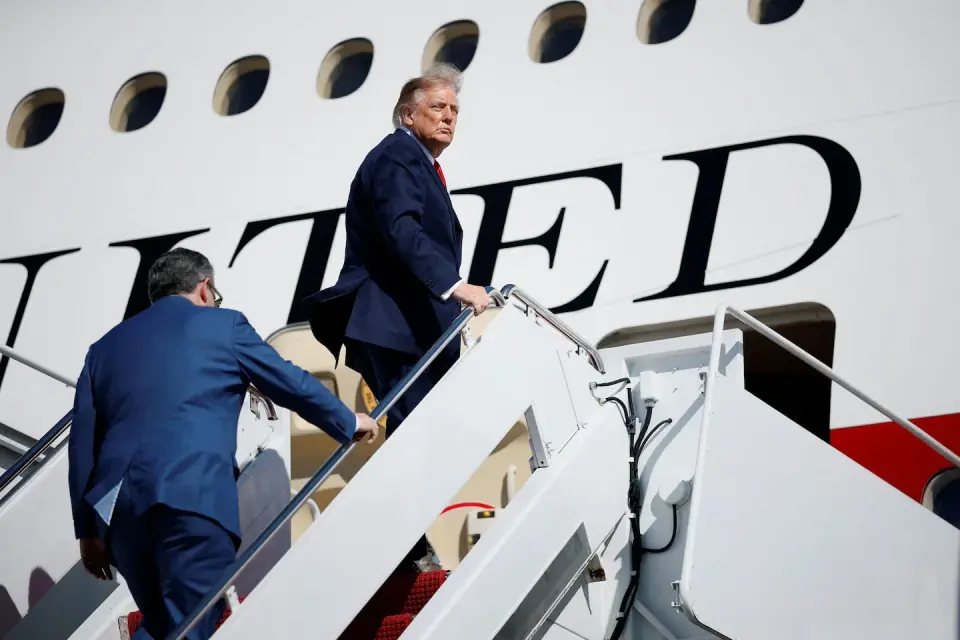
President Trump is conducting a rapid tour of deep-red states to mobilize base support for the 2026 midterms, despite record-low approval ratings. While strategists aim to boost turnout in safe Republican areas, the itinerary avoids competitive battlegrounds like Maine and New Hampshire. The campaign faces challenges from an unpopular Iran war and high energy costs, yet Trump continues to prioritize rallies in conservative enclaves to counter Democratic enthusiasm.
Key points
- Trump has completed 14 out-of-state stops since Labor Day, focusing on deep-red locations like Oklahoma, Tennessee, and Nebraska to energize core supporters.
- The itinerary avoids competitive states; no trips are scheduled for Maine or New Hampshire, where GOP candidates face tight races, despite public mentions of Maine.
- Recent stops included Syracuse, New York, to support gubernatorial candidate Bruce Blakeman, who trails by double digits, and Clarksville, Tennessee, near a military base.
- A planned trip to Alabama for a football game was canceled due to Hurricane Isaias, highlighting logistical constraints and Trump’s preference for entertainment over standard rallies.
- Pew Research data shows Democrats lead among 'extremely motivated' voters by 59 percent to 35 percent, a significant shift from the 2022 midterms.
- Advisers argue that rallies in safe Republican areas generate national media coverage and mobilize voters who may not typically participate in midterms.
Background
This tour follows a period of intense polling trouble for the GOP, where approval ratings hit record lows and Republicans trailed in previously safe states like Iowa and Texas. The White House recently shifted to 'triage mode,' considering policy reversals such as diesel export bans to lower energy prices, a departure from usual ideological consistency. Additionally, the ongoing conflict with Iran has raised fuel and grocery costs, linking foreign policy directly to domestic voter concerns. Earlier coverage noted that while Trump dominates messaging, his low approval ratings risk hurting vulnerable candidates, prompting the administration to allow 'safe spaces' for candidates to criticize specific policies without attacking the president personally.
Why it matters
The effectiveness of Trump’s roadshow is critical for the GOP’s survival in the 2026 midterms. With Democrats showing higher motivation to vote, the party relies on Trump’s presence to turn out base supporters in safe areas. However, the strategy risks alienating moderate voters in competitive districts, as seen in New York. The tour also highlights the tension between political necessity and personal preference, as Trump prioritizes venues that offer high energy and entertainment, such as football games, over strategic political gains. This approach may mitigate some losses but fails to address the core issues driving voter dissatisfaction, such as the Iran war and rising living costs.
What to watch
Trump is scheduled to visit Youngstown, Ohio; Wasilla, Alaska; Bullhead City, Arizona; and Kalispell, Montana. These stops target conservative strongholds to maximize turnout and media coverage. The itinerary may adjust based on early voting data, particularly regarding Michigan, where the Senate race is competitive. The campaign will continue to leverage rallies to mobilize supporters who may not vote in midterms, while advisers monitor the impact of the Iran conflict on voter priorities. Future decisions will likely balance the need to avoid competitive battlegrounds with the goal of energizing the base in safe Republican areas.
Want the full story? Read the original reporting
Read on The Washington Post