
Whistleblower Alleges Trump Administration Predetermined Anti-Semite Probes at Ivy League Schools
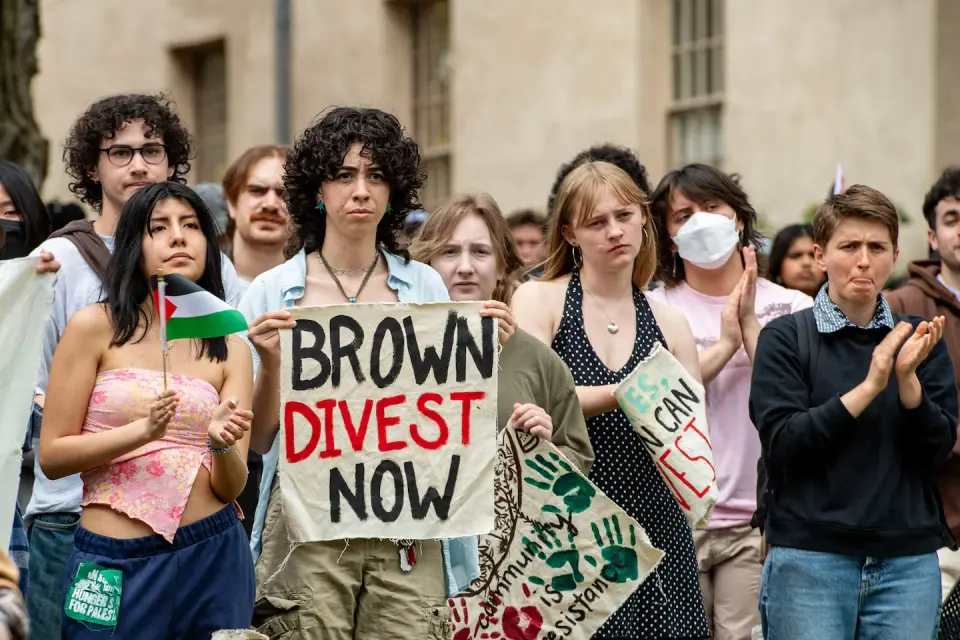
A former Justice Department attorney alleges that the Trump administration’s task force investigating anti-Semitism at Ivy League universities ignored evidence to force punitive settlements with Harvard, Brown, and Columbia. The whistleblower, Haley Van Erem, claims the probes were politically motivated, with outcomes predetermined before investigations were complete. While Brown and Columbia settled for $50 million and $200 million respectively, Harvard won in court. The DOJ defends its actions, but critics call the process a 'pre-baked frame-up.'
Key points
- Haley Van Erem, a former DOJ civil rights attorney, filed a whistleblower complaint alleging that the administration’s anti-Semitism task force ignored evidence and standard procedures to punish universities.
- The complaint states that outcomes for Harvard, Brown, and Columbia were predetermined, with funding suspended before investigations were complete.
- Brown University settled in July 2025, agreeing to spend $50 million on workforce development without admitting wrongdoing, after the administration blocked over $500 million in funding.
- Columbia University settled for over $200 million in July 2025, restoring nearly $400 million in frozen research grants, despite Van Erem’s concerns that claims involved protected speech.
- Harvard fought the administration in court and won; a federal judge dismissed the lawsuit, calling the incidents 'too isolated and episodic' to support systemic violations.
- Van Erem alleges that officials instructed investigators to interview Muslim professors to find potential anti-Semitic statements, and that she was admonished for raising legal objections.
Background
This development follows a broader campaign by the Trump administration to crack down on anti-Jewish bias and diversity, equity, and inclusion (DEI) programs at elite universities, which began after pro-Palestinian protests on campuses following the October 2023 Hamas attacks. The administration has cut billions in research funding to pressure universities, leading to legal battles and settlements. Brown University President Christina Paxson is set to step down at the end of the 2026–27 academic year, having guided the university through the 2025 settlement. The Pentagon has also realigned military education partnerships, canceling fellowships at Ivy League schools. These actions have divided the Jewish community, with some supporting the administration’s push against anti-Semitism and others criticizing it as a pretext to undermine academic freedom.
How outlets are covering it
The Washington Post and The New York Times emphasize the whistleblower’s claim that the administration ignored its own investigators’ findings to force settlements, highlighting the political nature of the probes. ABC News focuses on the predetermined conclusions and the lack of factual predicate, noting that the complaint does not question the seriousness of anti-Semitism but rather the impartiality of the investigations. MS NOW frames the probes as ploys to harass and strip millions from universities, with Rep. Jamie Raskin calling the actions a 'pre-baked frame-up.' The DOJ, however, defends the integrity of the investigations, stating that Van Erem did not work on university probes. The perspectives differ in their emphasis: some outlets focus on the procedural irregularities and political motivations, while others highlight the financial impacts and legal outcomes. The DOJ’s stance contrasts sharply with the whistleblower’s allegations and the criticism from Democrats, who view the probes as a targeted assault on academic institutions.
Why it matters
The whistleblower’s allegations raise serious questions about the legality and ethics of the administration’s approach to anti-Semitism on college campuses. If the probes were indeed predetermined and ignored evidence, it could undermine the credibility of the government’s efforts to combat discrimination and set a precedent for using civil rights laws as a tool for political retribution. The financial settlements and funding freezes have significant implications for the universities’ research missions and educational quality, potentially affecting students and faculty. The legal victories by Harvard and the ongoing scrutiny of other universities could influence how institutions respond to future government investigations, potentially leading to increased resistance and litigation. The controversy also highlights the tension between free speech and anti-discrimination efforts, with the administration’s actions potentially chilling academic discourse and research. The outcome of these probes and the whistleblower’s complaint could have broader implications for the relationship between the government and higher education institutions, as well as for the protection of civil rights in academic settings.
What to watch
The whistleblower complaint may lead to further congressional investigations into the administration’s anti-Semitism task force and its methods. The DOJ and HHS may face increased scrutiny over their handling of the probes, particularly if the allegations of predetermined outcomes and ignored evidence are substantiated. Universities still facing scrutiny, such as the University of California at Berkeley, may be more cautious in their interactions with the government, potentially leading to more legal challenges. The administration may continue to pursue settlements or funding freezes with other universities, but the legal victories by Harvard and the whistleblower’s allegations could make it harder to justify such actions. The controversy may also influence public opinion and political discourse around anti-Semitism, free speech, and the role of the government in higher education. Future developments will depend on the response of Congress, the courts, and the administration to the whistleblower’s allegations and the legal challenges from universities.
- Politics drove antisemitism probes against Ivy League schools, DOJ whistleblower says The Washington Post
- Trump Officials Ignored Their Own University Investigators, Lawyer Says The New York Times
- DOJ investigations into alleged antisemitism at Ivy League universities had predetermined conclusions: Whistleblower ABC News - Breaking News, Latest News and Videos
- Whistleblower says probes into antisemitism at colleges were ploys to harass and strip millions MS NOW
- Whistleblower alleges political pressure, lack of evidence in antisemitism probes targeting schools TribLIVE.com
Want the full story? Read the original reporting
Read on The Washington Post