
California Exhausts 46-Year License Plate Sequence, Switching to Mirrored Format
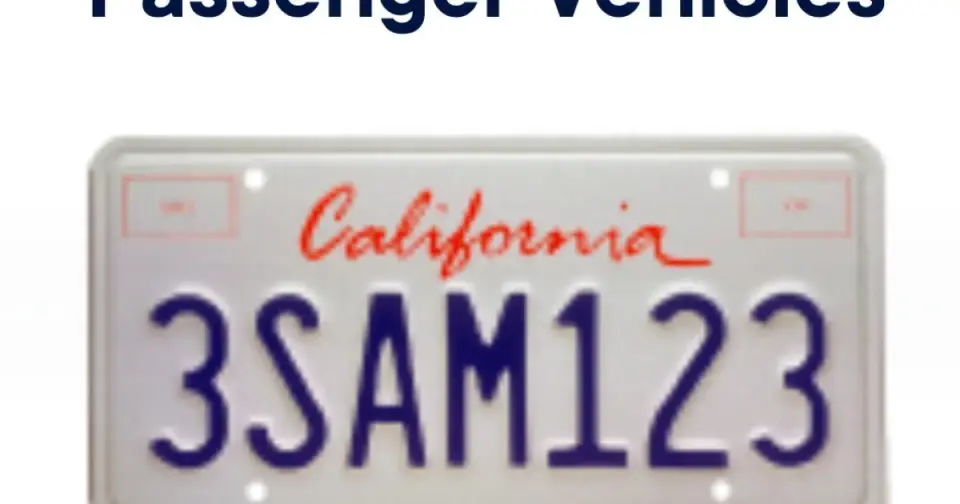
California has officially exhausted its standard license plate sequence, which began in 1980, and is transitioning to a new format. The previous system, consisting of one number, three letters, and three numbers, reached its final combination, 9ZZZ999, earlier this year. The state is now introducing a 'mirrored' configuration of three numbers, three letters, and one number. While new plates are being produced, over 110,000 old-format plates remain in storage for issuance. The change is expected to last 40 years, with manufacturing continuing at Folsom State Prison.
Key points
- The 1980-era plate sequence (1 number, 3 letters, 3 numbers) ended with the production of plate 9ZZZ999.
- The new sequence reverses the order to three numbers, three letters, and one number (e.g., 000AAA1).
- More than 110,000 plates of the old format remain in DMV and auto club offices across the state.
- The new configuration is projected to last 40 years, offering over 100 million combinations.
- Plates are manufactured by inmates at Folsom State Prison, with daily output around 45,000 units.
Background
California last changed its plate format in 1980, moving from a six-character to a seven-character sequence. Prior to that, the state used a different format from 1956 to 1980. The current transition follows a 46-year period of consistent numbering. Recent developments include the state allowing digital license plates on phones and exploring Disney-themed plates for children's hospitals, but the current change is strictly due to numerical exhaustion rather than policy or design preference.
How outlets are covering it
The Los Angeles Times and ABC7 Los Angeles emphasize the administrative transition, noting that while production of new plates has begun, they have not yet been issued to vehicles. The Mercury News highlights the 'mirrored' nature of the new format and notes that plates starting with 9Z were still on the road in summer 2026, with social media reports confirming the new sequence's appearance. All sources agree on the 40-year lifespan of the new format and the manufacturing location at Folsom State Prison, though the Mercury News provides specific daily production figures of 45,000 plates, a detail not included in the other reports.
Why it matters
This change ensures the continuity of vehicle registration for all passenger and commercial vehicles in California. The transition is logistical rather than disruptive, as the state maintains a large buffer of old-format plates. The new system will support the state's registration infrastructure for the next four decades, avoiding the need for another format change until the 2060s. It also highlights the ongoing role of prison labor in state manufacturing, providing work for over 100 inmates daily at Folsom.
What to watch
Drivers will continue to see the old format for some time as the 110,000 remaining plates are distributed. The new 'mirrored' plates will gradually appear as the old stock is depleted. The DMV expects the new sequence to remain in use for approximately 40 years, with no immediate changes to plate design or material, which remains aluminum with reflective sheeting.
- California is changing its license plate sequence for the first time since the 1980s Los Angeles Times
- California to change license plate sequence for first time since 1980 SFGATE
- California to change license plate sequence for 1st time in 40 years due to shortage of combinations ABC7 Los Angeles
- PREVIOUS COVERAGE: Steve Hilton announces plan to abolish California DMV FOX 11 Los Angeles
- California has run out of license plate numbers. Here’s what happens now. The Mercury News
Want the full story? Read the original reporting
Read on Los Angeles Times