
Pike Survival and Hasan Livestream Spark National Death Penalty Crisis
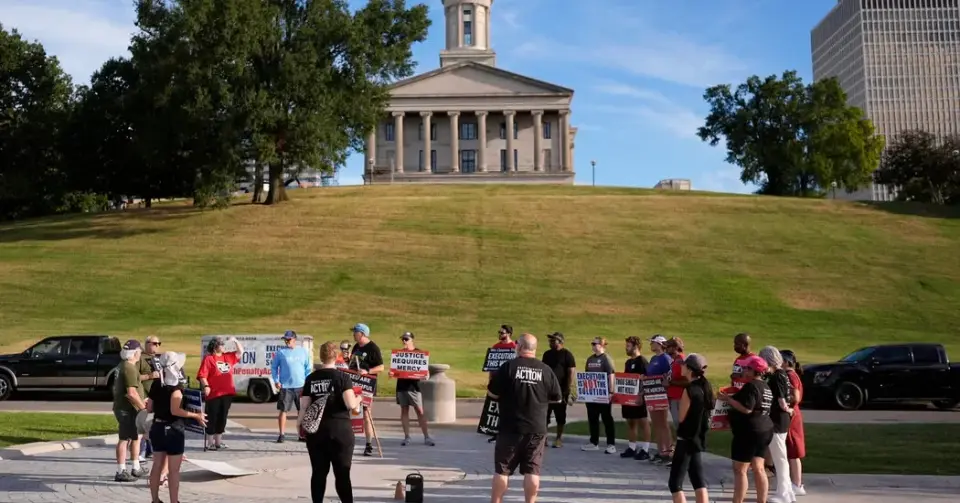
A botched execution in Tennessee and a planned public firing squad in the U.S. military have reignited fierce national debate over capital punishment. Christa Pike survived a lethal injection in September, while Defense Secretary Pete Hegseth announced plans to livestream the execution of Nidal Hasan by firing squad in December. These events have polarized public opinion and legal experts, with opponents citing the Pike case as evidence of the death penalty's brutality, while supporters view the Hasan execution as a necessary deterrent. The controversy coincides with a rise in executions and declining public support for the practice.
Key points
- Christa Pike survived a botched lethal injection in Tennessee on September 30, 2026, becoming the first person in the modern U.S. era to live after receiving lethal chemicals. She is recovering from severe arm injuries, pneumonia, and a blood clot.
- Tennessee Governor Bill Lee has paused executions for the remainder of 2026 and ordered a third-party review, but has not commuted Pike's sentence, leaving open the possibility of a second attempt. Pike's attorneys argue a second execution would violate the Eighth Amendment.
- U.S. Defense Secretary Pete Hegseth announced that the military will execute Nidal Hasan via firing squad on December 3, 2026, and livestream the event. This would be the first public execution by the U.S. government since 1936 and the first military firing squad since 1961.
- Hasan was convicted of murdering 13 people and wounding dozens at Fort Hood, Texas, in 2009. The planned livestream has drawn criticism from some Republicans, including Senator Thom Tillis, who called it a 'spectacle' akin to authoritarian regimes.
- Public support for the death penalty has declined to a 50-year low of 52% according to Gallup, though a Pew Research Center poll found two-thirds of Americans support it for murder convictions. Executions rose to 47 in 2025, up from 25 in 2024, largely driven by Florida.
Background
The death penalty has been a contentious issue in the U.S. for decades, with support peaking at 80% in 1994 and declining steadily since. In 2025, former President Joe Biden commuted the sentences of 37 federal death row inmates, but President Donald Trump issued an order in January 2025 calling capital punishment an 'essential tool.' The Pike case is the second botched execution in Tennessee in six months, and the first recorded case of someone surviving the drug pentobarbital. The legal precedent for a second execution attempt dates back to the 1947 Supreme Court case of Willie Francis, who survived a botched electrocution and was executed a second time.
How outlets are covering it
The New York Times emphasizes the polarized political landscape, noting that death penalty opponents are using the Pike case to push for abolition, while the Pentagon's announcement of a public execution exemplifies the administration's stance. ABC News highlights the legal questions surrounding a potential second execution attempt on Pike, citing the 1947 Supreme Court case of Willie Francis. The Australian Broadcasting Corporation (ABC) focuses on the global context, noting that the U.S. is among countries leading a global increase in executions, and that the planned livestream reflects an 'authoritarian' shift. The Christian Science Monitor (CSMonitor) notes that the debate is about morality and justice, with some experts arguing that public executions could fuel anti-death penalty sentiment, while others view them as a deterrent. All sources agree that the events have brought the death penalty back into the public eye, but they differ in their emphasis on the legal, political, and moral implications.
Why it matters
The Pike and Hasan cases have brought the death penalty back into the public eye, amplifying divisions in a nation already split politically and culturally. The controversy coincides with a rise in executions and declining public support for the practice, and could influence the upcoming midterm elections. The legal questions surrounding a potential second execution attempt on Pike and the planned public execution of Hasan have raised new constitutional and moral issues, with experts debating whether these actions will fuel anti-death penalty sentiment or serve as a deterrent. The cases also highlight the ongoing debate over the morality and effectiveness of capital punishment in the U.S. justice system.
What to watch
Tennessee Governor Bill Lee has paused executions for the remainder of 2026 and ordered a third-party review, but has not commuted Pike's sentence, leaving open the possibility of a second attempt. Pike's attorneys are urging the governor to commute her sentence to life without parole, arguing that a second execution would violate the Eighth Amendment. The U.S. military is expected to execute Nidal Hasan via firing squad on December 3, 2026, and livestream the event. The outcome of the Pike case and the public reaction to the Hasan execution could influence the national debate over the death penalty and potentially impact the upcoming midterm elections.
- Executions, After Christa Pike, Are on the Minds of a Divided Public The New York Times
- 'Accidents happen': What the Supreme Court has said about survivors of botched executions ABC News - Breaking News, Latest News and Videos
- A firing squad, a lethal injection, and a 'disturbing' shift in the US ABC News & Headlines – Australian Broadcasting Corporation
- Botched execution and talk of livestream reignite death penalty debate Christian Science Monitor - CSMonitor.com
- Are Firing Squad Executions Seeing a Revival in the U.S.? Time Magazine
Want the full story? Read the original reporting
Read on The New York Times