
Ancient Visual Systems May Explain Why Brain Hemispheres Control Opposite Body Sides
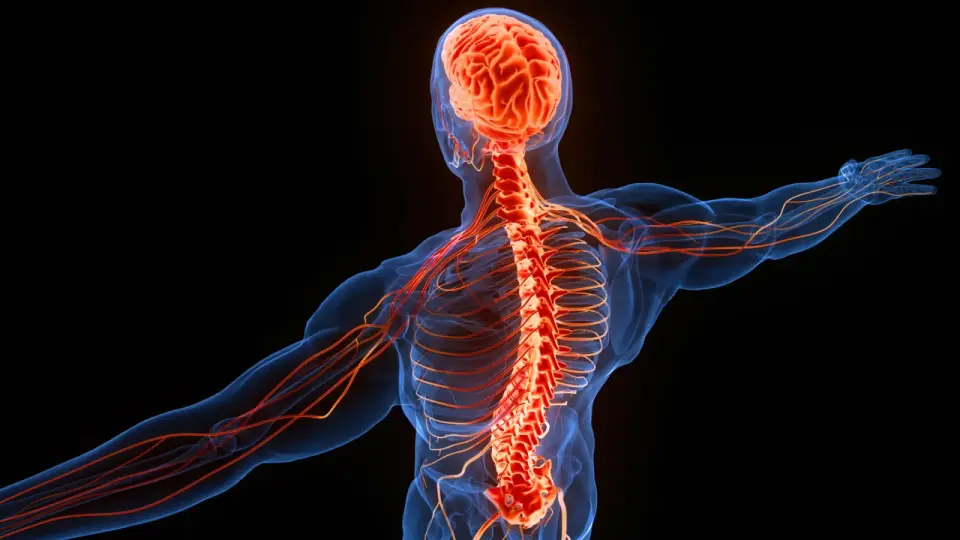
Researchers propose that the brain’s crossed wiring, where the left hemisphere controls the right body, stems from ancient visual systems rather than direct survival advantages. Published in Frontiers in Neuroanatomy, the study suggests that early vertebrates developed optic chiasms and tectums over 500 million years ago. Later sensory and motor pathways, such as those for touch and movement, likely evolved around this existing crossed template to minimize biological costs. This hypothesis challenges the idea that contralateral control is an adaptive advantage, framing it instead as an evolutionary inheritance from primitive jawless fish.
Key points
- Dr. Martin Wessendorf and Daniel Wang from the University of Minnesota published a hypothesis in Frontiers in Neuroanatomy explaining contralateral brain-body connections.
- The study argues that the optic chiasm and optic tectum, which process visual information across the midline, are the oldest crossed neural structures in vertebrates.
- Researchers suggest that later sensory and motor pathways, including the dorsal column and spinothalamic tracts, evolved around the ancient visual map to avoid the high energy and structural costs of uncrossed wiring.
- The hypothesis traces this arrangement back to jawless fish during the Cambrian Period, approximately 538 to 486 million years ago, predating modern mammals by hundreds of millions of years.
- The authors note that the corticospinal tract, crucial for human fine motor control, may have repurposed an older sensory pathway rather than developing a new uncrossed system.
Background
This research builds on long-standing anatomical debates regarding brain lateralization, previously discussed in contexts of brain health and neurodegenerative diseases. While earlier archive coverage focused on funding cuts affecting US researchers and fungal brain infections, this study addresses a fundamental evolutionary question about nervous system architecture. It provides a historical perspective on how ancient biological constraints shape modern human neurology, distinct from current clinical or policy-driven scientific challenges.
How outlets are covering it
ScienceDaily and Sci.News emphasize the evolutionary efficiency argument, highlighting that crossed wiring likely persisted because it was the most economical path for evolution to build upon existing structures. The Times of India adds a developmental perspective, noting that crossed wiring may reduce errors during brain growth, though it clarifies that this is distinct from left-right brain specialization. All sources agree that the hypothesis is based on comparative anatomy rather than direct fossil evidence, with Sci.News specifically pointing out that the authors list testable predictions, such as examining Cambrian fossils for optic tectum structures. The outlets differ in emphasis: ScienceDaily focuses on the specific neural pathways like the rubrospinal and corticospinal tracts, while The Times of India broadens the scope to include general developmental reliability.
Why it matters
Understanding the evolutionary origins of brain wiring helps explain why human nervous systems are structured the way they are, offering insights into neurodegenerative diseases and motor control. If the hypothesis is correct, it suggests that many modern neural functions are not optimized for efficiency but are instead constrained by ancient biological templates. This perspective could influence future research into brain development, injury recovery, and the evolution of sensory processing across species.
What to watch
Researchers plan to test the hypothesis by examining fossilized skulls of Cambrian-era jawless fish for anatomical evidence of an optic chiasm and tectum. They also intend to study crossed telencephalic tracts in crocodilians and birds to verify if the pattern holds across diverse tetrapods. Future work may compare the efficiency of crossed versus uncrossed wiring models to determine if the ancient visual template truly provided a biological advantage or simply imposed a constraint.
Want the full story? Read the original reporting
Read on Science Daily