
Cyprus’s Akrotiri Peninsula: Ancient Ocean Floor Meets Modern Cat Population
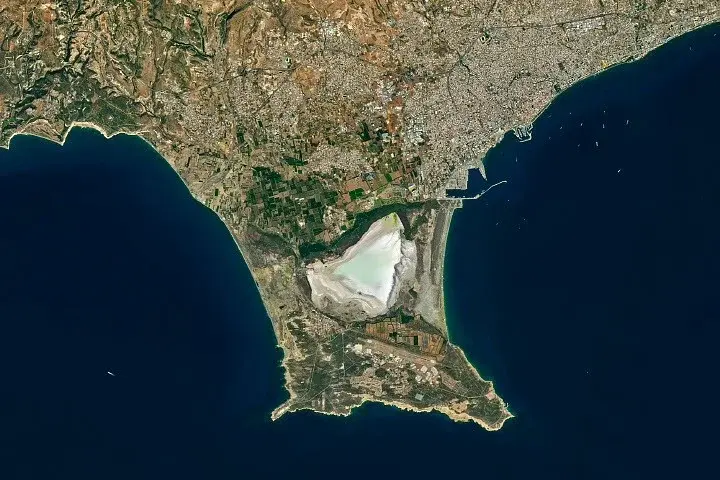
NASA’s Earth Observatory highlights Cyprus’s Akrotiri Peninsula, a landmass formed from ancient oceanic crust and river sediments. The region features the Troodos Mountains, composed of green ophiolite rock, and Akrotiri Salt Lake, which supports flamingos but faces population declines. The area is also historically linked to a legend about Roman Empress Helena importing cats to control snakes, a practice that persists today with over one million cats on the island.
Key points
- Cyprus began forming 90 million years ago from molten rock that solidified into oceanic crust, later uplifted to form the island.
- The Troodos Mountains consist of ophiolite, a green rock resembling snake skin, while younger marine sediments formed a second island to the south.
- River sediments created two land bridges, or tombolos, joining the islands into the Akrotiri Peninsula, with the eastern tombolo forming within the last 2,000 years.
- Akrotiri Salt Lake, a coastal lagoon, experiences seasonal water level changes, filling in winter and drying in summer.
- Flamingo populations at the lake have declined significantly, dropping from an average of 4,000 birds to just 30 in 2025.
- Cyprus is known as 'land of snakes' due to blunt-nosed vipers, leading to a legend that Roman Empress Helena imported cats from Egypt in the fourth century.
Background
This article provides background on the geological and ecological history of Cyprus, focusing on the Akrotiri Peninsula. It details the formation of the island from ancient oceanic crust and the subsequent development of land bridges. The narrative connects geological features with wildlife history, specifically the decline of flamingos and the long-standing presence of cats, which are linked to historical efforts to control snake populations. The information is derived from NASA Earth Observatory imagery and historical accounts, offering a comprehensive view of the region's natural and cultural heritage.
Why it matters
The story illustrates how geological processes shape landscapes and influence wildlife habitats, as seen in the seasonal changes of Akrotiri Salt Lake and the decline of flamingo populations. It also highlights the intersection of history and ecology, where ancient legends about cat imports have led to a modern reality of a large cat population on the island. Understanding these dynamics is crucial for conservation efforts and managing human-wildlife interactions in the region.
What to watch
Monitoring the recovery of flamingo populations at Akrotiri Salt Lake and assessing the impact of the large cat population on local ecosystems and wildlife will be important. Further geological studies may provide more insights into the formation of the tombolos and the uplift of the ophiolite rocks. Conservation efforts may also focus on balancing the needs of native species with the presence of introduced species like cats.
Want the full story? Read the original reporting
Read on NASA Science (.gov)