
Mars Volcanoes May Be Sleeping, Not Dead, as New Gas Data Suggests Subsurface Activity
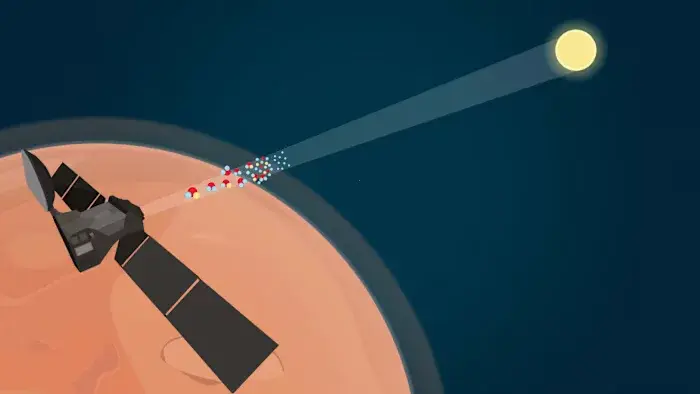
A new study published in Science Advances suggests that Mars' volcanoes may still be active. The European Space Agency's ExoMars Trace Gas Orbiter detected hydrogen chloride gas seeping from fissures in the Alba Mons region. This finding, combined with previous seismic data, implies that magma may still exist beneath the surface, potentially creating environments suitable for microbial life.
Key points
- The ExoMars Trace Gas Orbiter detected unusual spikes of hydrogen chloride gas in the northern hemisphere of Mars during summer, a time and location where such gas is not typically expected.
- The gas appears to be seeping from specific fissures on the flanks of Alba Mons, the largest volcano on Mars by surface area.
- Researchers suggest the gas could originate from hot magma beneath the surface, similar to volcanic vents on Earth.
- The findings add to previous evidence from NASA's InSight lander, which detected marsquakes suggesting fluid movement underground.
- If active, these subsurface environments could provide the energy and ingredients necessary for microbial life to develop.
Background
Mars has long been considered geologically dead, with its massive volcanoes, such as Olympus Mons, thought to be extinct. However, recent discoveries, including seismic activity detected by NASA's InSight lander and orbital imagery suggesting recent lava flows, have raised questions about the planet's current volcanic status. This new study adds another piece of evidence to the debate over whether Mars is still volcanically active.
How outlets are covering it
The Financial Times and Space.com emphasize the potential implications for the search for life on Mars, noting that active volcanic environments could provide the necessary conditions for microbial life. National Geographic focuses on the scientific debate surrounding the source of the hydrogen chloride gas, highlighting that while the evidence is intriguing, it is not definitive proof of ongoing volcanism. Live Science underscores the complementary nature of the new atmospheric data with previous seismic findings, suggesting a stronger case for subsurface activity. All sources agree that the findings are significant but caution that more research is needed to confirm the presence of active magma.
Why it matters
The discovery of potential volcanic activity on Mars has significant implications for our understanding of the planet's geology and its potential to support life. If Mars is still volcanically active, it could mean that the planet has retained enough internal heat to sustain such activity, which could also create environments suitable for microbial life. This finding could influence future missions to Mars, potentially focusing on areas with active volcanic features to search for signs of life.
What to watch
Future missions, including a European rover scheduled to launch in 2028, will likely focus on investigating the Alba Mons region and other areas with potential volcanic activity. These missions will aim to gather more data on the presence of magma and the potential for microbial life on Mars. Additionally, ongoing analysis of data from the ExoMars Trace Gas Orbiter and other spacecraft will help to confirm or refute the findings of this study.
- Martian volcanoes once thought to be extinct show possible signs of life Financial Times
- Something Weird is Seeping Out of Mars National Geographic
- Mars isn't dead — recent volcanic activity reveals it's just sleeping Space
- Mars may host an environment similar to hydrothermal vents on Earth, where life first arose Live Science
- Mars may not be dead? ‘Smoking gun’ suggests life on Red planet Community Newspaper Group
Want the full story? Read the original reporting
Read on Financial Times