
Mars Volcanoes May Be Sleeping, Not Dead, as New Gas Data Suggests Subsurface Activity
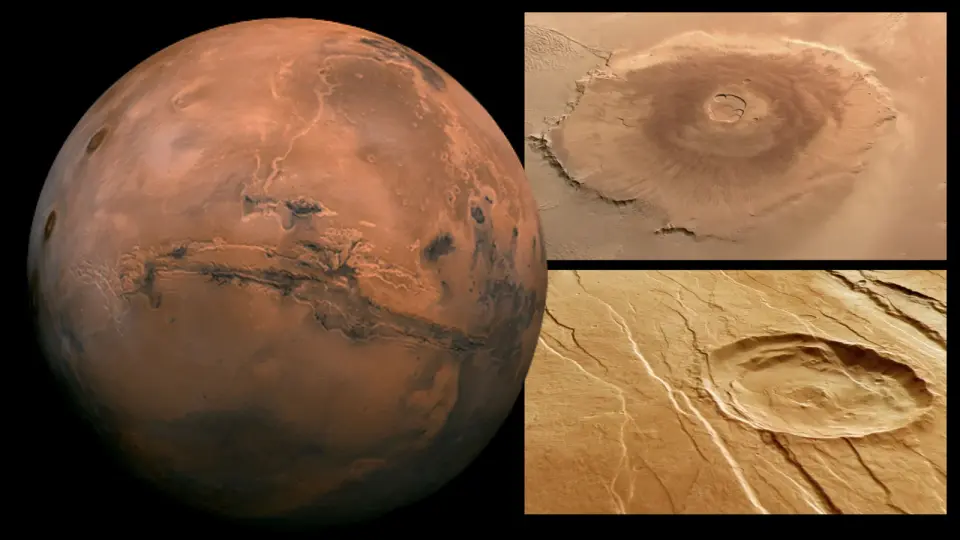
New data from the European Space Agency’s ExoMars Trace Gas Orbiter suggests Mars may still possess internal heat capable of supporting dormant volcanism. Scientists detected hydrogen chloride gas seeping from fissures in the Alba Mons region, a signal typically linked to magmatic activity on Earth. This finding challenges the long-held belief that Mars is geologically dead and opens new avenues for searching for microbial life in subsurface hydrothermal environments.
Key points
- The ExoMars Trace Gas Orbiter detected unusual spikes of hydrogen chloride in the northern hemisphere during Martian summer, a period when such gas is typically absent due to seasonal ice cycles.
- Researchers linked these gas emissions to fresh fissures on the flanks of Alba Mons, the largest volcano on Mars by surface area, suggesting a connection to subsurface magma.
- The study, published in Science Advances, proposes that ice blocks gas release in winter, but sublimation in summer allows the gas to escape, indicating ongoing internal heat.
- While no active lava flows have been observed, the evidence supports the theory that Mars retains enough internal heat for dormant volcanic activity, potentially creating habitable niches for microorganisms.
Background
Mars has long been considered geologically inactive, with its massive volcanoes, such as Olympus Mons, believed to have ceased activity billions of years ago. Previous missions, including NASA’s InSight lander, detected 'marsquakes' that hinted at subsurface fluid movement, but definitive evidence of ongoing volcanism was lacking. Recent findings from the Perseverance rover also highlighted complex water histories in Jezero Crater, suggesting dynamic geological processes in the past. This new data adds to a growing body of evidence that Mars may not be entirely dead, but rather in a state of dormancy.
How outlets are covering it
Space.com and the Financial Times emphasize the potential implications for astrobiology, noting that magmatic gases could have created warmer, wetter conditions in the past suitable for life. National Geographic highlights the uncertainty, noting that while the hydrogen chloride detection is intriguing, it is not definitive proof of active magma, as the gas could also originate from chemical reactions with surface salts. The Community Newspaper Group focuses on the 'smoking gun' aspect of the discovery, framing it as a significant step toward understanding Mars' current state. All sources agree that while no active eruptions have been seen, the evidence suggests Mars may still possess internal heat and could support microbial life in subsurface environments.
Why it matters
This discovery reshapes our understanding of Mars' geological history and current state, suggesting that the planet may still harbor conditions suitable for life. It also informs future mission planning, as areas with potential hydrothermal activity could be prime targets for astrobiological exploration. The finding underscores the importance of continued monitoring of Mars' atmosphere and surface to uncover signs of ongoing geological activity.
What to watch
Future missions, including a European rover scheduled for launch in 2028, will likely focus on investigating the Alba Mons region and other areas with potential signs of volcanic activity. Scientists will continue to analyze data from the ExoMars Trace Gas Orbiter to refine their understanding of the gas emissions and their origins. Additionally, ongoing research will aim to determine whether the detected gases are linked to active magma or other subsurface processes, providing further insights into Mars' geological and potentially biological history.
- Mars isn't dead — recent volcanic activity reveals it's just sleeping Space
- Pungent gas above Martian fissures hints at ongoing volcanism Reuters
- Something Weird is Seeping Out of Mars National Geographic
- Martian volcanoes once thought to be extinct show possible signs of life Financial Times
- Mars may not be dead? ‘Smoking gun’ suggests life on Red planet Community Newspaper Group
Want the full story? Read the original reporting
Read on Space