
MeerKAT Telescope Confirms First Direct Radio Detection from Exoplanet Beta Pictoris b
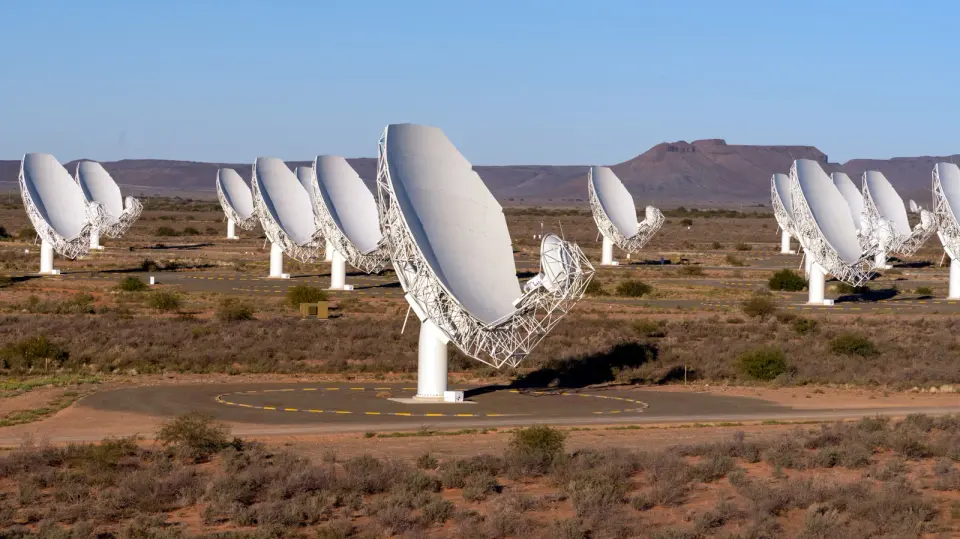
Astronomers have confirmed the first direct radio signal detection from an exoplanet, Beta Pictoris b. Using South Africa’s MeerKAT array, researchers identified auroral emissions indicating a magnetic field over 1,000 times stronger than Earth’s. This discovery provides a new method to measure planetary magnetism and assess habitability, distinct from signals attributed to intelligent life.
Key points
- The signal originates from Beta Pictoris b, a gas giant 63 light-years away, not its host star.
- The emission is caused by auroral activity linked to a powerful magnetosphere, not artificial intelligence.
- The planet’s magnetic field is estimated to be over 1,000 times stronger than Earth’s.
- This is the first time radio waves have been unequivocally localized to a single exoplanet.
- The finding offers a new tool to study exoplanet atmospheres and magnetic shielding.
Background
Previous coverage in September 2026 highlighted the initial detection of radio bursts from Beta Pictoris b using the MeerKAT array. Those reports noted the signal’s circular polarization and its implication for the planet’s rapid rotation and strong magnetic field. The current news confirms these findings through peer-reviewed analysis, solidifying the event as a milestone in exoplanetary science.
How outlets are covering it
BGR and CNN emphasize the scientific significance of measuring an exoplanet’s magnetic field directly, noting that the signal is natural auroral emission rather than evidence of alien life. CNN highlights the surprise of the detection, as the signal frequency was higher than expected for Jupiter-like planets. BBC Sky at Night focuses on the technical achievement of isolating the signal from the quiet host star. EarthSky contrasts this with a separate, likely terrestrial interference signal detected by China’s FAST telescope near exoplanet K2-155 d, underscoring the difficulty of distinguishing natural, artificial, and terrestrial radio noise.
Why it matters
This detection establishes a new observational method for characterizing exoplanets without relying on starlight. By measuring magnetic fields, scientists can better assess whether a planet’s atmosphere is protected from stellar wind, a key factor in determining habitability. It also challenges existing models of exoplanet magnetism, suggesting that some worlds may possess much stronger fields than previously assumed.
What to watch
Researchers plan to request additional telescope time to further study Beta Pictoris b and investigate why its magnetic field is so intense. The team aims to apply these techniques to other giant exoplanets as next-generation radio observatories come online, potentially identifying more worlds with protective magnetospheres.
- Astronomers Detected Radio Signals From An Alien Planet - Here's What We Know bgr.com
- Astronomers pick up first-ever radio signal from an exoplanet — but it’s not aliens CNN
- Radio Waves Coming From an Alien Planet May Be a Cosmic First The New York Times
- Scientists have detected radio signals from a planet beyond our Solar System BBC Sky at Night Magazine
- Is this an alien radio signal from a super-Earth exoplanet? EarthSky
Want the full story? Read the original reporting
Read on bgr.com