
NASA Advances PRIMA Far-Infrared Telescope to Phase B for 2033 Launch
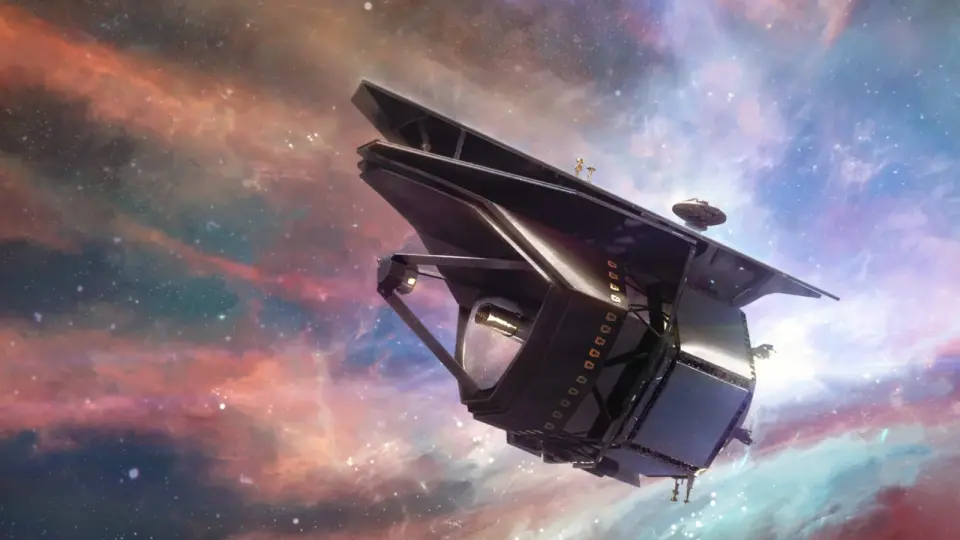
NASA has selected the PRIMA mission to advance to Phase B development, making it the first project in the new 'Probe Explorer' class. Targeting a 2033 launch, the $1.2 billion observatory will use a 1.8-meter telescope to survey the universe in far-infrared light, bridging the observational gap between the James Webb Space Telescope and radio telescopes.
Key points
- NASA announced the selection of PRIMA (PRobe far-Infrared Mission for Astrophysics) to move into Phase B, a critical step before final confirmation.
- The mission is the first in the new 'Probe Explorer' class, established based on the 2020 Decadal Survey recommendations.
- PRIMA features a 1.8-meter (5.9-foot) telescope designed to observe far-infrared wavelengths, filling a gap between near/mid-infrared and radio observations.
- The project cost is capped at $1.2 billion, excluding launch costs, with a target launch date of 2033 and a planned five-year mission duration.
- International partners including agencies from the UK, France, Italy, Germany, Canada, Korea, and Japan are contributing to the mission.
- The mission aims to study planet formation, black hole growth, and the origin of water on Earth using advanced detector technologies.
Background
NASA's Explorers Program has operated since 1958, launching various missions to study astrophysics and heliophysics. The 2020 Decadal Survey recommended the creation of a new 'Probe Explorer' class to address specific science goals. Previous archive coverage noted that PRIMA utilizes advanced detectors developed over three decades by Caltech and JPL, and potentially a modified cryocooler from the James Webb Space Telescope. The mission follows the success of the James Webb Space Telescope and the upcoming Roman Space Telescope, continuing NASA's cadence of premier-class observatories.
How outlets are covering it
Space.com emphasizes PRIMA as a historic first for the 'Probe Explorer' class, highlighting its role in unveiling the 'obscure' across cosmic time. Johns Hopkins University focuses on the human element, detailing the involvement of three faculty members in science operations, internship programs, and detector electronics. Universe Today provides a broader context of the mission's place in NASA's fleet, noting its collaboration with international partners and its role in bridging the gap between JWST and radio telescopes. UConn Today highlights the scientific potential, specifically regarding the role of water in planet formation and the use of the Hydrogen-Deuteride molecule for measurements. All sources agree on the $1.2 billion cost cap and 2033 launch target, but differ in emphasis: Space.com and Universe Today focus on the mission's novelty and scope, while Johns Hopkins and UConn Today highlight the contributions of specific academic institutions and the training of the next generation of scientists.
Why it matters
PRIMA represents a significant advancement in astrophysical observation capabilities, filling a critical gap in the electromagnetic spectrum. By observing in the far-infrared, the mission will provide new insights into the formation of planets, stars, and black holes, as well as the origin of water on Earth. The mission also serves as a testbed for new technologies and a platform for training the next generation of scientists through internship programs. Its success will determine the future of the 'Probe Explorer' class and NASA's ability to launch premier-class missions consistently.
What to watch
PRIMA must pass a confirmation review following Phase B to proceed to Phase C, where the $1.2 billion cost cap will be finalized. If confirmed, the mission will target a 2033 launch and a five-year operational period. The mission will be managed by NASA's Jet Propulsion Laboratory in partnership with Goddard and Marshall Space Flight Centers, along with international partners. The success of PRIMA will likely lead to the development of additional missions in the 'Probe Explorer' class, continuing NASA's cadence of premier-class observatories.
- NASA's new PRIMA 'Probe Explorer' mission is truly the 1st of its kind. Here's what it will do Space
- NASA space telescope project advances with three Hopkins team members Johns Hopkins University
- NASA's First Selection for a New Class of Mission: The PRIMA Far-Infrared Telescope Universe Today
- UToledo Connection to New NASA Mission UToledo News
- One Step Closer to a Fuller Picture of the Universe UConn Today
Want the full story? Read the original reporting
Read on Space