
New CRISPR platform maps essential gene interactions in tuberculosis bacteria
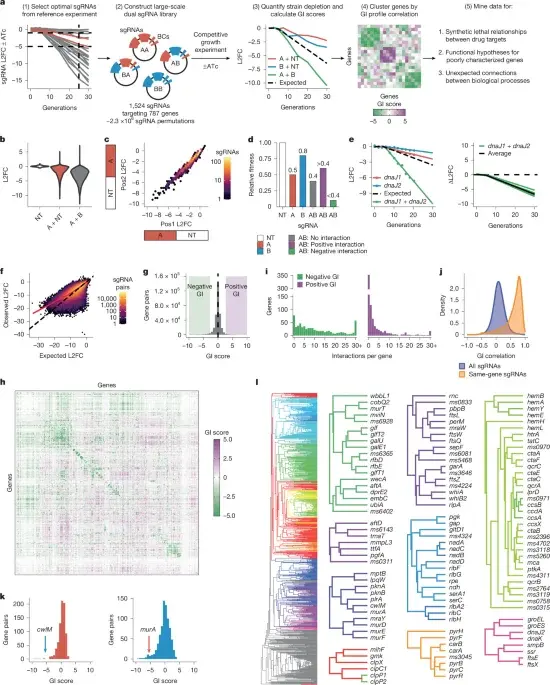
Researchers developed a high-throughput CRISPR-interference system to map genetic interactions among essential genes in Mycobacterium tuberculosis and Mycobacterium smegmatis. The study identified thousands of new functional connections, including potential synergistic drug targets, and validated these findings using AlphaFold3 protein structure predictions. This framework aims to improve the rational design of combination therapies for tuberculosis.
Key points
- A dual-sgRNA CRISPR-interference platform was created to enable high-throughput genetic interaction mapping in mycobacteria, overcoming previous technical barriers.
- The method generated comprehensive maps of essential genes in M. smegmatis and M. tuberculosis, revealing nearly 8,500 interactions in the model organism and a similar density in the pathogen.
- Analysis identified functional clusters related to cell wall synthesis, electron transport, and protein folding, linking known and uncharacterized genes.
- AlphaFold3 co-folding predictions confirmed that a subset of genetic interactions reflects physical protein-protein associations, providing mechanistic hypotheses.
- Validation of specific interactions, including drug-drug synergies and roles in the electron transport chain, supports the use of these maps for designing combination therapies.
Background
This work builds on earlier advances in genetic mapping, such as the development of 'phage Tn-seq' for viral engineering and yeast studies showing that genetic variation often acts through protein interaction networks rather than just gene expression. While transposon mutagenesis (TnSeq) previously allowed genome-wide mapping in mycobacteria, it was limited to non-essential genes, excluding many antibiotic targets. The new CRISPR-interference approach addresses this gap by enabling the study of essential genes, which are central to cellular processes and drug development.
Why it matters
Tuberculosis remains the world's deadliest infectious pathogen, yet many of its genes remain uncharacterized, hindering drug development. By mapping interactions among essential genes, this research provides a high-resolution view of the genetic foundations of tuberculosis. It identifies potential synergistic drug targets and functional connections between essential genes and known drug targets, offering a rational basis for combination therapies that could overcome resistance and improve treatment efficacy.
What to watch
The researchers will likely apply these genetic interaction maps to screen for new drug combinations and validate additional predicted interactions. The framework may also be used to annotate uncharacterized genes by placing them in the context of their network relationships, potentially revealing new biological functions and therapeutic opportunities.
Want the full story? Read the original reporting
Read on Nature