
New Egyptian Ape Fossil Challenges East African Origins of Human Ancestors
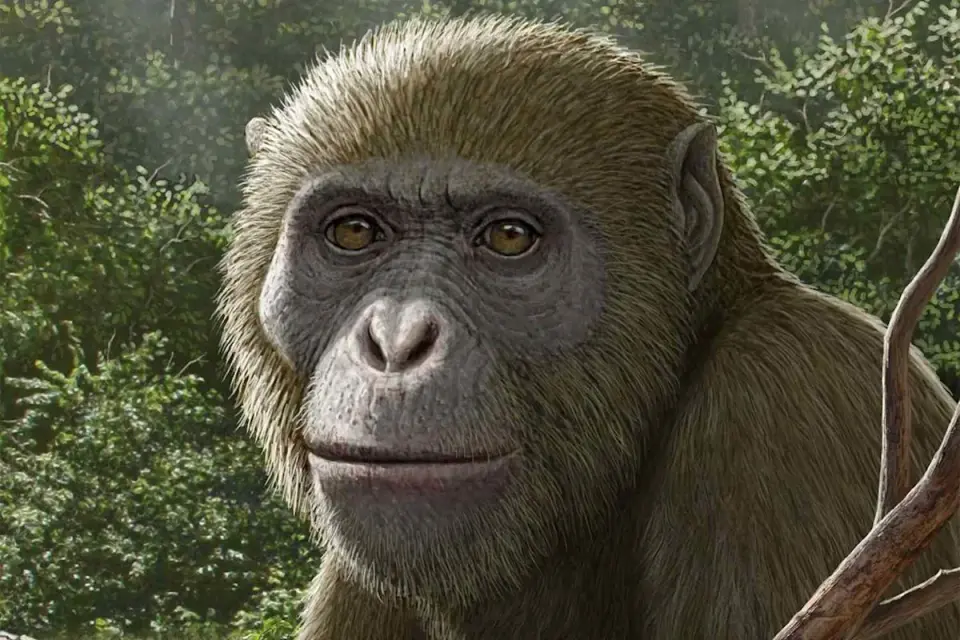
Researchers identified a new 17- to 18-million-year-old ape species, Masripithecus moghraensis, from a jawbone found in northern Egypt. This discovery, the first definitive ape fossil from North Africa in this era, suggests the common ancestor of all living apes may have originated in the Middle East and North Africa rather than East Africa, challenging long-held evolutionary theories.
Key points
- A fossilized jaw discovered in Wadi Moghra, northern Egypt, belongs to a previously unknown species named Masripithecus moghraensis, dating to 17-18 million years ago.
- The species features a sturdy jaw, large canines, and rounded molars, indicating a diet of fruit supplemented by tougher foods like nuts and seeds.
- The find is the first definitive ape fossil from North Africa during the Early Miocene, whereas previous finds in the region were monkeys.
- Analysis suggests the Egyptian species is more closely related to living apes than any known Early Miocene ape from East Africa.
- Researchers conclude that the common ancestor of all living apes likely originated in North Africa and the Middle East, not East Africa.
Background
Recent paleontological discoveries have frequently revised the geographic origins of major animal groups. For instance, a 120-million-year-old fossil in China recently suggested Asia, rather than North America, was the primary center for early marsupial diversification. Similarly, molecular clock studies have pushed animal origins back by 200 million years. This new Egyptian find adds to a pattern of shifting biogeographic models based on new fossil evidence.
Why it matters
The discovery challenges the prevailing scientific consensus that the common ancestor of humans and other living apes evolved in East Africa. By placing the origin in North Africa and the Middle East, it reshapes the understanding of human evolutionary history and highlights the importance of North African fossil sites in reconstructing the early ape family tree.
What to watch
Researchers hope to find additional fossils in North Africa and the Middle East to determine the full anatomy and locomotion of Masripithecus moghraensis. Further studies will aim to confirm the biogeographic model that places the origin of living apes outside of East Africa.
Want the full story? Read the original reporting
Read on Yahoo News New Zealand