
New Geological Data Confirms Stonehenge’s Altar Stone Origin in Scotland, Deepening Transport Mystery
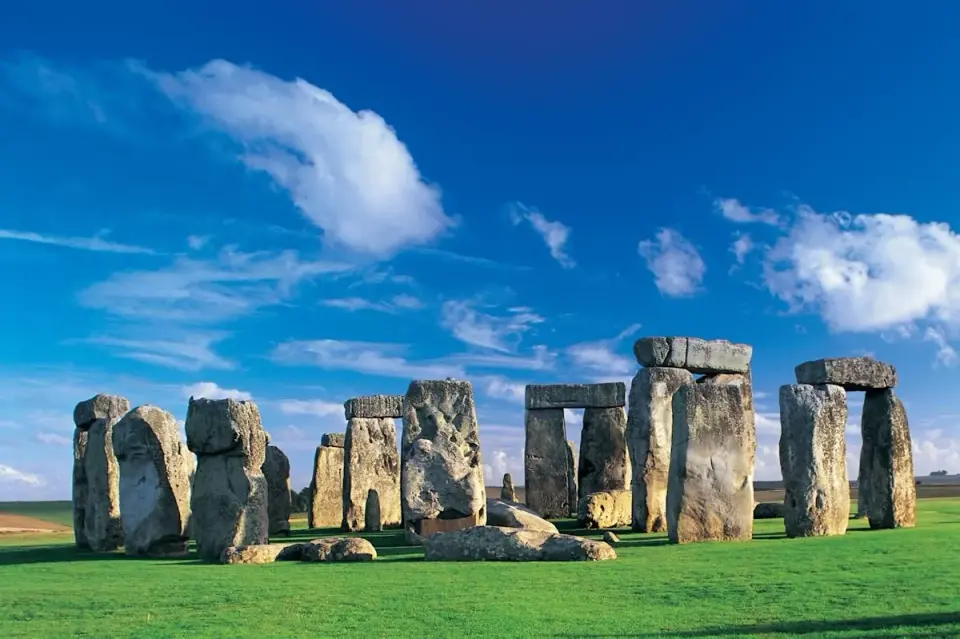
New research confirms Stonehenge’s Altar Stone originated in northeast Scotland, not Wales, as previously believed. While the stone’s mineral fingerprint points to the Old Red Sandstone of the Orcadian Basin, specifically near Caithness, the method of transport remains unresolved. Two recent studies suggest glaciers likely did not carry the six-tonne slab to southern England, leaving human transportation as the primary explanation. This implies a massive logistical effort by Neolithic communities, potentially involving maritime routes, to move the stone across hundreds of kilometers.
Key points
- A 2024 study by Chris Kirkland and colleagues overturned the long-held belief that the Altar Stone came from Wales, identifying its origin as northeast Scotland.
- The stone’s mineral grains, dated by uranium-lead decay, match the Old Red Sandstone of the Orcadian Basin, with the closest match located near Sarclet in Caithness.
- Two studies published in 2026, including one in Communications Earth & Environment, found no evidence that glaciers transported the stone, as modern stream sediments near Stonehenge lack the distant mineral traces glacial delivery would leave.
- A separate study in the Journal of Quaternary Science modeled ice flow and found glaciers could only have carried the stone to Dogger Bank, not to Salisbury Plain.
- Kirkland argues that human transport is the most plausible explanation, requiring significant organization and cooperation between distant Neolithic communities, possibly involving a combination of sea and land routes.
Background
Previous assumptions placed the Altar Stone’s origin in Wales, but recent geological analysis has shifted the focus to Scotland. This development builds on earlier debates about the logistics of moving large stones in the Neolithic period. The finding aligns with broader evidence of long-distance connections across Neolithic Britain, suggesting that such projects required coordinated efforts across multiple communities. The unresolved question of how the stone was moved highlights the complexity of prehistoric engineering and social organization.
Why it matters
The confirmation of the Altar Stone’s Scottish origin challenges previous assumptions about Neolithic trade and transport networks. It suggests that the movement of such a heavy object required a level of coordination and communication that may have spanned generations or multiple communities. Understanding how and why this stone was transported could provide insights into the social structures, technological capabilities, and cultural motivations of Neolithic societies. The mystery of the stone’s journey underscores the importance of interdisciplinary research in archaeology and geology.
What to watch
Researchers aim to pinpoint the exact outcrop in Caithness from which the Altar Stone was cut, which could provide a starting point for reconstructing the transport route. Further studies may investigate whether the journey involved a single group or a relay of communities, and whether maritime routes played a role. The lack of archaeological evidence for the specific vessels or routes used means that future discoveries, such as new sedimentary data or artifacts, will be crucial to resolving the mystery.
Want the full story? Read the original reporting
Read on Yahoo