
Solar System Collapse Timeline Shortened to One Billion Years by Random Solar Mass Ejections
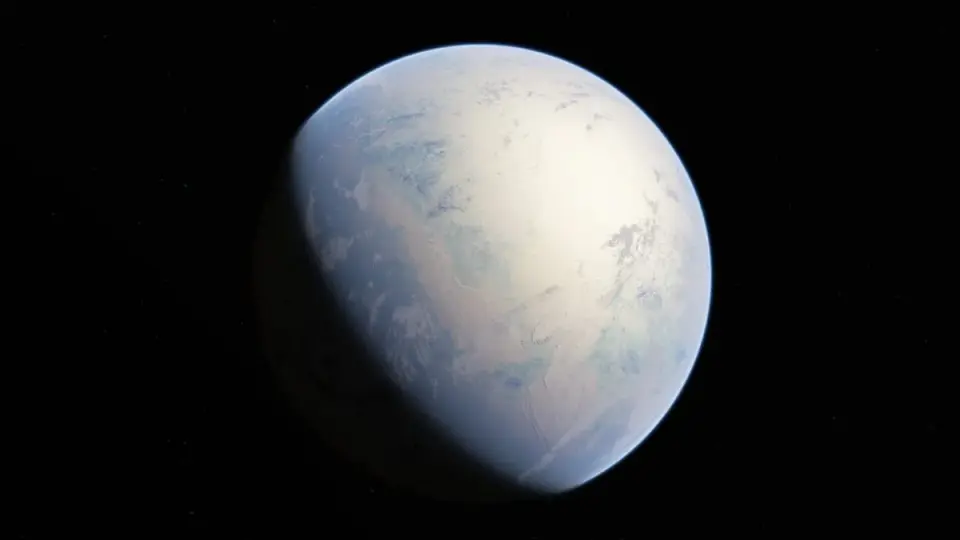
New simulations suggest the outer solar system will disassemble within one billion years after the Sun becomes a white dwarf, a timeline a billion times shorter than previous estimates. The instability is driven by random, directional mass ejections from the dying Sun, which destabilize planetary orbits far sooner than smooth mass loss models predicted.
Key points
- The solar system's outer planets are expected to be ejected within one billion years after the Sun becomes a white dwarf, a timeline a billion times shorter than previous estimates.
- The instability is driven by random, directional mass ejections from the dying Sun, which destabilize planetary orbits far sooner than smooth mass loss models predicted.
- Previous models assumed smooth mass loss, predicting stability for over 10^18 years, but new simulations account for stochastic ejections with masses around 10^-4 solar masses.
- About 40% of simulations lead to disruption or violent scattering while the Sun is in its red giant phase, and roughly 90% break down within 3 billion years.
- The study was led by Konstantin Batygin of the California Institute of Technology and published in The Astrophysical Journal Letters.
Background
Recent studies have focused on the long-term stability of the solar system as the Sun evolves. Previous models assumed smooth mass loss, predicting that the outer planets would remain stable for over 10^18 years, far longer than the age of the universe. However, new research suggests that random, directional mass ejections from the dying Sun could destabilize planetary orbits much sooner. This finding contrasts with earlier assumptions that the outer planets might survive for up to 100 billion years after the Sun's transition to a white dwarf.
How outlets are covering it
404 Media emphasizes the dramatic shortening of the solar system's lifespan, highlighting the role of random mass ejections in destabilizing planetary orbits. AAS Nova provides a detailed analysis of the simulations, noting that the instability is driven by stochastic kicks from mass ejections, with about 40% of simulations leading to disruption during the red giant phase. The Independent and Inbox.eu report on the findings, emphasizing the significant reduction in the solar system's expected lifespan from 10^18 years to one billion years. All sources agree on the key finding that random mass ejections from the dying Sun are the primary cause of the accelerated collapse.
Why it matters
The finding that the solar system's outer planets will be ejected within one billion years after the Sun becomes a white dwarf has significant implications for our understanding of the long-term stability of planetary systems. It challenges previous assumptions that the outer planets would remain stable for over 10^18 years and highlights the importance of accounting for random, directional mass ejections in models of stellar evolution. This research could inform future studies on the fate of other planetary systems and the long-term evolution of the solar system.
What to watch
Further research will likely focus on refining the models of stochastic mass loss and its impact on planetary orbits. Scientists may also investigate the specific mechanisms by which random mass ejections destabilize planetary orbits and whether similar processes could affect other planetary systems. Additionally, the findings could inform future missions to study the outer solar system and the long-term evolution of the Sun.
- Our Solar System Is Terminally Unstable and Will Be Completely Destroyed, Study Finds 404 Media
- The Solar System Has a New Life Expectancy, and It’s a Billion Times Shorter AAS Nova
- The solar system could be destroyed much sooner than we thought, scientists say The Independent
- The solar system will fall apart far sooner than anyone thought, scientists say Inbox.eu
- Solar system may have a much shorter lifespan than we thought The News International
Want the full story? Read the original reporting
Read on 404 Media