
Southern Taurids Peak Tonight with Rare Fireball Activity
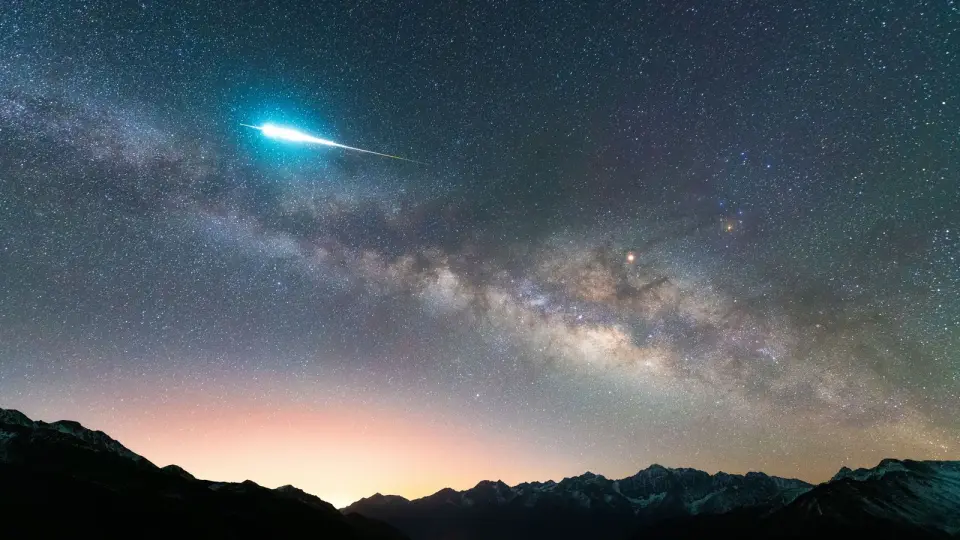
The Southern Taurid meteor shower reaches its second peak overnight on November 4-5, offering a chance to see bright 'fireballs' despite low overall meteor rates. While the shower produces only about five meteors per hour, these events are notable for their brightness and slow speed. The Northern Taurids will follow with a peak on November 11-12. Both showers originate from debris left by Comet 2P/Encke. Observers are advised to look away from the Taurus constellation for better visibility and to allow eyes to adjust to darkness.
Key points
- Southern Taurids peak overnight Nov. 4-5; Northern Taurids peak Nov. 11-12.
- Meteor rates are low (approx. 5 per hour) but feature bright, slow-moving fireballs.
- Debris originates from Comet 2P/Encke, which orbits the sun every 3.3 years.
- Best viewing occurs around midnight when the radiant is high in the southeastern sky.
- Waning crescent moon provides favorable dark skies for observation.
Background
The Taurid meteor showers have been active since late September, with the Southern Taurids first peaking on October 14. Previous coverage noted favorable conditions due to minimal moon interference. The current peak is the second of two for the Southern branch, while the Northern branch remains active through December. These showers are distinct from the upcoming Leonids (Nov. 17-18) and Geminids (Dec. 13-14), which offer higher meteor rates but different characteristics.
How outlets are covering it
Space.com and Live Science emphasize the 'fireball' aspect, noting that while the shower has a low meteor count, the bright, slow-moving events are its primary attraction. Live Science cites NASA’s definition of fireballs as meteors at least as bright as Venus. Patch highlights local conditions in New Jersey, noting partially cloudy skies but favorable predawn viewing times. USA Today provides practical advice for observers, suggesting that while naked-eye viewing is possible, binoculars or telescopes can enhance the experience, though it contradicts Space.com’s advice against using telescopes for wide-field meteor hunting. All sources agree on the peak dates and the origin from Comet 2P/Encke.
Why it matters
The Taurid showers offer a unique stargazing opportunity in November, distinct from the high-volume but less spectacular showers like the Geminids. The 'Halloween fireballs' nickname reflects their cultural timing and visual impact. Understanding these low-rate, high-brightness events helps astronomers and enthusiasts appreciate the diversity of meteor showers, which are not always defined by frequency but by intensity and color. The waning moon provides optimal conditions for these faint but bright events.
What to watch
The Northern Taurids will peak overnight on November 11-12, offering another chance to observe fireballs. The Leonid meteor shower will peak on November 17-18, followed by the Geminids in December. Observers should continue to monitor dark sky locations for these events. The full Beaver moon on November 24 will be the first of four consecutive supermoons, potentially affecting visibility for later events.
- The Taurid meteor shower peaks tonight — and fireballs could steal the show Space
- Southern Taurid meteor shower could bring fireballs this week — when and where to look Live Science
- The Sky Could Suddenly Light Up With ‘Fireballs’ Tonight Forbes
- Taurid Meteor Showers Could Bring Brilliant Fireballs To NJ Skies Patch
- Look up! Fireballs from Southern Taurids could streak across the sky tonight USA Today
Want the full story? Read the original reporting
Read on Space