
Study Identifies Infant-Like Shyness in a Specific Subset of Cats
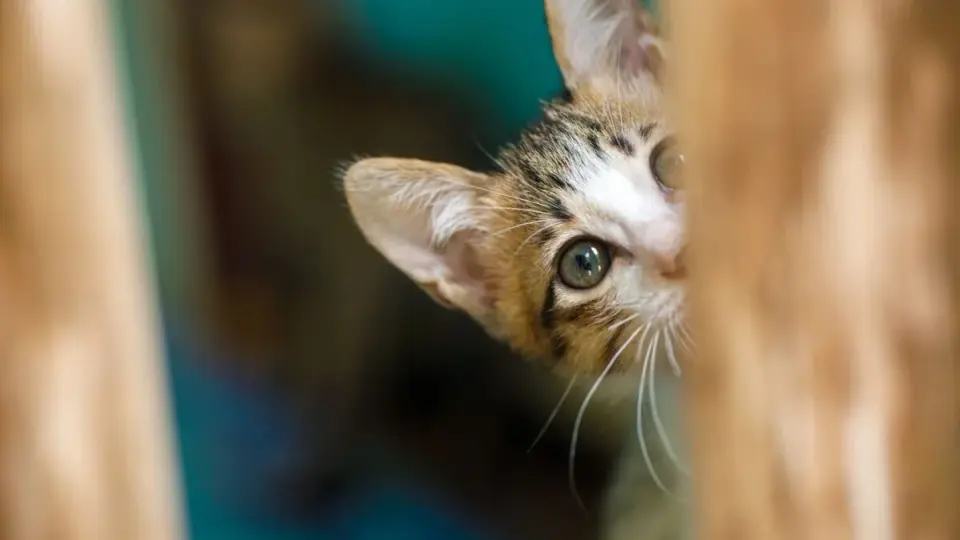
Researchers at Kyoto University have identified a specific subset of cats that exhibit a 'curious shyness' similar to that of human infants. By surveying over 300 cat owners, the team found that while many cats are either fearful or sociable, a distinct group displays high fearfulness but remains willing to approach strangers. This behavior mirrors the ambivalent reactions of babies around nine months of age, who are spooked by new people yet remain curious. The study suggests that feline personalities are more diverse than common stereotypes imply, challenging the simple dichotomy of cats being aloof and dogs being friendly. Lead author Madoka Hattori notes that male cats and those born as strays are more likely to display this specific trait. The findings, published in PLOS One, highlight the need to view each cat as an individual with complex social behaviors rather than relying on broad species-wide labels.
Key points
- A study by Kyoto University researchers surveyed more than 300 cat owners to analyze feline dispositions toward unfamiliar people and objects.
- The research identified four distinct personality groups among cats, with one group showing high fearfulness but still approaching strangers, a trait comparable to infant shyness.
- Male cats and those with a history of being strays were found to be more likely to exhibit this specific curious-shy behavior.
- Lead author Madoka Hattori argues that these findings challenge stereotypes that label all cats as aloof or all dogs as friendly, emphasizing the diversity of animal personalities.
- The study was published in the journal PLOS One and suggests future research should involve citizen science approaches to observe cats in their natural home environments.
Background
This research builds on a broader trend in animal behavior studies that seeks to understand the complexity of pet personalities. Recent findings, such as those regarding crows' visual decision-making, have highlighted how different species process information in ways that defy human assumptions. Similarly, this study moves beyond generalizations about feline temperament to identify specific behavioral patterns. While previous studies have focused on health metrics like parasite prevalence in cats, this work addresses social and emotional dispositions, offering insights that could improve shelter outcomes and human-pet interactions by recognizing individual differences.
Why it matters
Understanding the nuances of cat behavior can lead to better care practices for pets and more effective strategies for animal shelters. Recognizing that cats have diverse personalities, including a subset that behaves like human infants, helps owners and caretakers tailor their interactions to individual needs. This research also encourages a shift away from broad species stereotypes, promoting a more personalized approach to animal welfare and human-animal bonding.
What to watch
The researchers plan to conduct further studies that observe cats' actual behavior directly, rather than relying solely on owner surveys. They propose a citizen science approach where owners help collect behavioral observations at home to avoid the stress that lab settings or researcher presence might cause. This next phase aims to validate the survey findings and explore how these personality traits can inform better raising and sheltering of cats.
Want the full story? Read the original reporting
Read on Gizmodo