
Beyond the Finish Line: How Chicago Marathon Spectators Turned the Course into a Community Stage
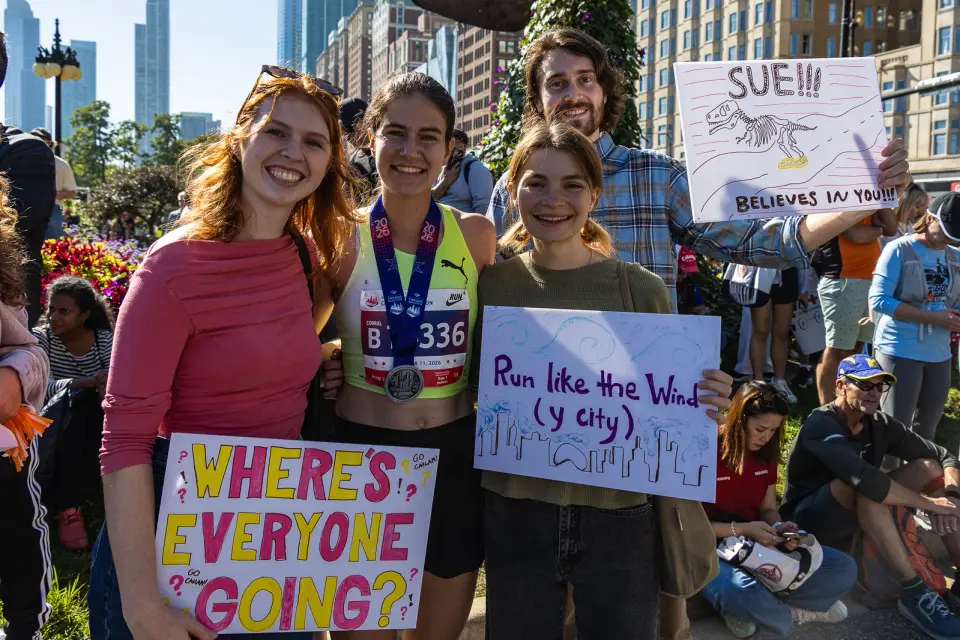
The 2026 Chicago Marathon drew over 55,000 runners, but the story on the sidelines was defined by creative, cause-driven spectator support. While elite athletes like Amos Kipruto and Hawi Feysa Gejia secured victories, the race was equally shaped by thousands of supporters holding signs, raising funds for rare disease research, and representing cultural communities. Outlets highlighted the diversity of these interactions, from charity block parties to cultural flags, showing how the event served as a platform for local advocacy and community solidarity.
Key points
- The 48th Bank of America Chicago Marathon featured a record-breaking field of over 55,000 participants from 129 countries, with Amos Kipruto winning the men’s division in 2:01:09 and Hawi Feysa Gejia the women’s in 2:13:33.
- Spectators engaged in creative support, including signs referencing local sports figures like Mike Ditka and Pope Leo XIV, as well as humorous messages like 'Pain is just French for bread.'
- The Angelman Syndrome Foundation raised $350,000 through 68 runners, including six 'duo teams' where one runner pushed another with a physical disability.
- Cultural representation was prominent, with the Mexican Consulate and The Network Advocating Against Domestic Violence setting up a stage to cheer Latin American runners, while the Muslim Run Club supported participants under a Palestinian flag.
- Some spectators, like retired runner Liz Coffey, focused on supporting the general crowd in less crowded stretches, highlighting the physical and emotional effort of spectating.
Background
The 2026 Chicago Marathon took place on October 11, following a weekend that included Chicago Fashion Week and Oktoberfest. Previous coverage noted the event’s record turnout and extensive broadcast coverage, with NBC 5 and Telemundo Chicago utilizing over 35 cameras. The race route spanned 29 neighborhoods, with dedicated cheer zones and live streaming options for spectators.
How outlets are covering it
Block Club Chicago and NBC 5 Chicago focused on the visual and creative aspects of spectator signs, highlighting the humor and personal touches that defined the race atmosphere. The Chicago Sun-Times emphasized the motivational aspect of the crowds, particularly at Mile 22, where supporters helped runners reach the finish line. The Chicago Tribune provided a deeper look at the social and charitable dimensions, detailing how organizations like the Angelman Syndrome Foundation and The Network Advocating Against Domestic Violence used the race to raise funds and visibility. While all outlets agreed on the event’s scale, the Tribune’s coverage uniquely highlighted the intersection of cultural representation and social advocacy, contrasting with the more lighthearted focus of the other sources.
Why it matters
The 2026 Chicago Marathon demonstrated how large-scale sporting events can serve as platforms for community engagement, cultural representation, and charitable fundraising. The diverse and creative support from spectators highlighted the event’s role beyond athletics, fostering a sense of solidarity and advocacy for various causes and communities within Chicago.
What to watch
The Chicago Marathon organizers and participating charities will likely analyze the fundraising results and community engagement metrics from the 2026 event. The Angelman Syndrome Foundation and other organizations may use the raised funds to advance research and prevention efforts. Additionally, the cultural and social initiatives, such as the Mexican Consulate’s stage and the Muslim Run Club’s support, may inform future strategies for inclusive community engagement in large-scale events.
- PHOTOS: The Best Signs We Saw At The Chicago Marathon Block Club Chicago
- Chicago Marathon supporters encourage runners at Mile 22 to get to the finish line Chicago Sun-Times
- ‘Marathon Maxxing': Best signs from along the 2026 Chicago Marathon course NBC 5 Chicago
- Chicago Marathon spectators cheer for charity, culture and support for the running community Chicago Tribune
- Opinion: Chicago Marathon spotlights the best of this city and its resilience Crain's Chicago Business
Want the full story? Read the original reporting
Read on Block Club Chicago