
Midseason Audit: High-Spending College Football Teams Face ROI Crisis
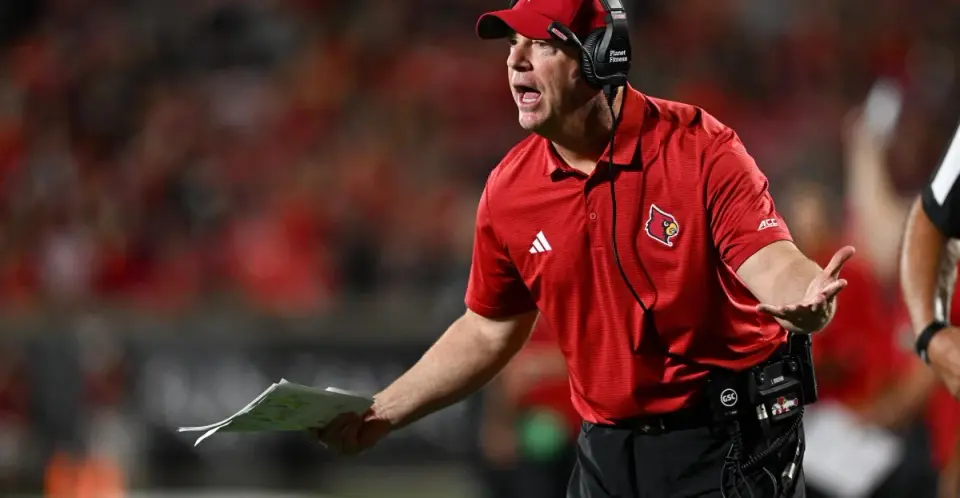
At the halfway mark of the 2026 college football season, several high-budget programs are failing to deliver competitive results, sparking debates about the return on investment for massive NIL and coaching expenditures. While top teams like Georgia remain dominant, programs such as Texas A&M, Penn State, and LSU are struggling despite significant financial backing. The season has also seen a notable decline in upsets, with only six ranked-versus-unranked surprises recorded in 76 games, suggesting that financial resources are increasingly determining outcomes. Coaches at struggling programs are facing intense scrutiny, with some blaming fan media for poor performance, while others cite roster cohesion issues. The data indicates that money alone does not guarantee success, as teams with lower budgets are outperforming their wealthier counterparts in several instances.
Key points
- Texas A&M is 3-3 with a $45-50 million roster budget, suffering from a drop in quarterback efficiency and a lack of defensive pass rushers after losing key players to the NFL.
- Penn State is 3-3 with a $29-32 million budget, struggling after a delayed hiring process for coach Matt Campbell that missed National Signing Day, resulting in a talent deficiency.
- Louisville is 3-3 with a $22-25 million budget, losing three close games due to penalties and turnovers despite having one of the most talented rosters in the ACC.
- Tulane is 2-3 with a Group of 6 budget, failing to replicate previous playoff success after replacing head coach Jon Sumrall with Will Hall, who has a poor record as a head coach.
- Washington is 3-3 with a $21-25 million budget, struggling with offensive line issues and defensive coverage problems, including a 41-point loss to Iowa.
- LSU is 3-2 with a $50 million roster, losing to Kentucky in overtime despite a $13 million annual coaching budget for Lane Kiffin, who is facing criticism for strategic decisions.
Background
The 2026 college football season has been marked by significant financial investments in rosters and coaching, with programs like LSU and Texas A&M spending over $45 million on their rosters. The season has also seen a decline in upsets, with only six ranked-versus-unranked surprises recorded in 76 games, suggesting that financial resources are increasingly determining outcomes. The Protect College Sports Act, passed by the Senate in September 2026, has also raised questions about the future of college football, with some schools asking Congress to change realignment rules. The season has also been impacted by weather, with Hurricane Isaias threatening the Georgia-Alabama game in October 2026.
How outlets are covering it
SB Nation emphasizes the 'wasted opportunity' aspect of the disaster, focusing on teams that have declined from previous seasons or failed to meet expectations despite high budgets. Fox News highlights the 'return on investment' crisis, focusing on the financial aspects of the season and the frustration of fans and donors. Sports Illustrated provides a detailed analysis of the 'busts' at midseason, focusing on the specific reasons for each team's failure, including coaching decisions, roster issues, and strategic errors. USA Today focuses on the decline of upsets, arguing that NIL and roster raiding have made the sport less competitive, with only six upsets in 76 ranked-versus-unranked games. The outlets disagree on the primary cause of the disasters, with SB Nation and Fox News focusing on coaching and financial issues, while Sports Illustrated and USA Today focus on the structural changes in the sport that have made upsets less likely. The outlets also differ in their tone, with SB Nation and Fox News being more critical of the teams and coaches, while Sports Illustrated and USA Today are more analytical and focused on the broader trends in the sport.
Why it matters
The midseason struggles of high-budget college football teams highlight the growing disconnect between financial investment and on-field performance, raising questions about the sustainability of the current model. The decline in upsets suggests that the sport is becoming less competitive, with wealthier programs dominating the landscape. The coaching controversies and fan backlash indicate that the pressure to win is intensifying, with coaches facing increased scrutiny for their decisions. The Protect College Sports Act and realignment rules may also impact the future of the sport, with some schools seeking to change the rules to maintain their competitive advantage. The season's outcomes may influence future decisions on NIL spending, coaching contracts, and conference realignment, with the potential to reshape the landscape of college football.
What to watch
The next few weeks will be crucial for the struggling teams, as they face key games that could determine their playoff chances. Texas A&M will face Alabama, Tennessee, and Texas, while Penn State has a soft schedule but must improve its performance. Louisville will face Miami in the conference championship game, while Tulane must find a quarterback and improve its scoring. Washington will face Indiana, Purdue, Nebraska, and Michigan State, while LSU will face Mississippi State, Alabama, Texas, and Tennessee. Oregon will face Northwestern and Ohio State, while Michigan will face Indiana, UCLA, and Ohio State. The outcomes of these games will determine the final standings and playoff picture, with the potential to reshape the landscape of college football. The season will also be impacted by weather, with Hurricane Isaias threatening the Georgia-Alabama game in October 2026.
- The five biggest disasters of this college football season SB Nation
- College football’s mega rosters aren’t delivering a return on investment as LSU, Texas A&M and Oregon prove | OutKick Fox News
- College football winners and losers: Oregon and Texas A&M headline the most disappointing teams of the first 6 weeks Yahoo Sports
- Forde-Yard Dash: College Football’s Nine Biggest Busts at Midseason Sports Illustrated
- College football's biggest casualty isn't tradition. It's the upset | Opinion USA Today
Want the full story? Read the original reporting
Read on SB Nation