
Apple to Scan Public iCloud Links for Harmful Content in iOS 27.3
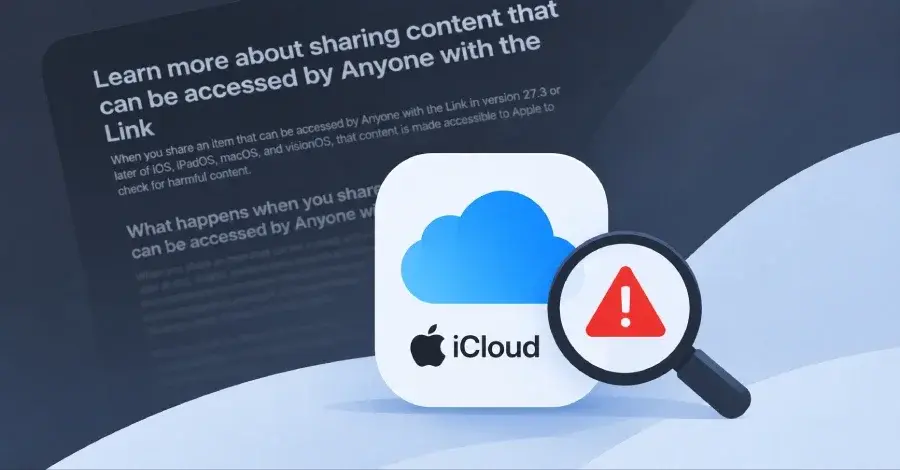
Apple will scan publicly shared iCloud links for harmful content starting with iOS 27.3. This change disables end-to-end encryption for 'Anyone with the link' shares, allowing Apple to review material and potentially disable accounts or involve law enforcement.
Key points
- Apple announced that starting with iOS 27.3, iPadOS 27.3, macOS 27.3, and visionOS 27.3, content shared via the 'Anyone with the link' option in iCloud Photos and Drive will be scanned for harmful content.
- The company stated that sharing content this way disables end-to-end encryption, even if Advanced Data Protection is enabled, making the material accessible to Apple.
- Apple warned that it may remove or delete harmful content at any time and could take action against user accounts, including blocking or disabling them, or involving law enforcement.
- The update is currently in beta and is scheduled for public release in December 2026.
- It remains unclear what specific criteria Apple uses to define 'harmful content' or whether the scanning will apply retroactively to links created before the update.
Background
This development follows recent enhancements to the iOS 27 Photos app, which introduced robust slideshow creation tools and cross-platform shared album features. The new scanning policy contrasts with Apple's previous emphasis on end-to-end encryption for iCloud data, particularly with the introduction of Advanced Data Protection.
Why it matters
This policy shift significantly impacts user privacy by removing end-to-end encryption for public links, allowing Apple to monitor shared content. It raises questions about the definition of harmful content and the potential for account penalties, affecting how users share files and photos publicly.
What to watch
The iOS 27.3 update is expected to roll out in December 2026. Users should monitor Apple's support documentation for specific definitions of harmful content and guidelines on account actions. The company may clarify whether existing public links are subject to retroactive scanning.
Want the full story? Read the original reporting
Read on The Hacker News