
Windows 11 26H2 cuts idle RAM by 1.2GB on 8GB laptops, but heavy multitasking still lags
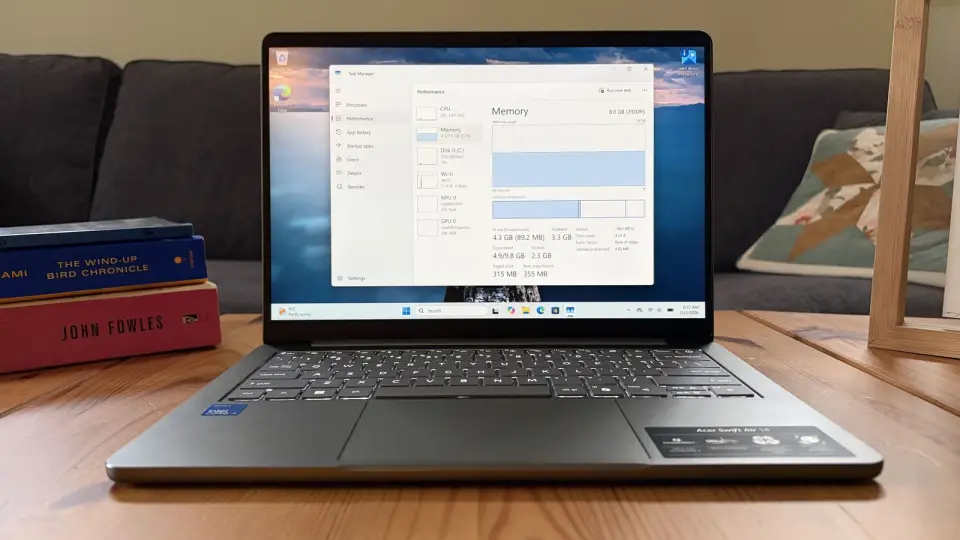
Microsoft’s Windows 11 26H2 update significantly reduces memory usage on 8GB laptops, with idle RAM dropping from 5.3GB to 4.1GB in independent tests. While the OS is now up to 20% more responsive for basic tasks, heavy workloads still cause performance issues, though improvements are better than a year ago.
Key points
- Windows 11 26H2 reduces idle RAM usage on 8GB systems from 5.3GB to 4.1GB, leaving 3.5GB free compared to 2.3GB on the previous 25H2 build.
- Microsoft claims the update makes Windows up to 20% more responsive and 40% faster at multitasking on 8GB PCs, based on internal lab tests and telemetry data.
- Key optimizations include smarter memory compression, which keeps up to 2GB more active data in RAM, and faster launch times for Edge (up to 33% faster) and Teams (up to 20% faster).
- Heavy workloads, such as 20 browser tabs plus multiple apps, still cause performance issues on 8GB systems, but 26H2 handles them better than 25H2 with lower committed RAM usage.
- Microsoft is working with PC manufacturers to set memory budgets for bloatware and reduce firmware memory reservations, aiming to free up more RAM for Windows and user apps.
Background
Microsoft has been focusing on memory optimization for Windows 11 since July 2026, with the 26H2 update released in October 2026. Previous coverage noted that while 26H2 reduced idle RAM usage by 2-3GB on some systems, user reports varied, with some noting no change or even increased memory usage on specific configurations. The update also expanded the 'Low Latency Profile' feature to nearly all applications, significantly speeding up app launches on older or lower-powered hardware.
How outlets are covering it
Windows Central tested Windows 11 26H2 on an Acer Swift Air 14 with 8GB RAM, finding that idle RAM usage dropped from 5.3GB to 4.1GB, and heavy workloads were handled better than on 25H2. PCMag’s Chris Hoffman noted that while Windows 11 on 8GB RAM feels noticeably better than a few months ago, it’s still not perfect for heavy multitasking or professional apps. The Register highlighted that Microsoft’s improvements come amid a memory crunch fueled by AI infrastructure demand, with RAM prices climbing and Windows OEM and devices revenue down 22% in fiscal Q1 2027. Microsoft’s blog post emphasized that 8GB is a great fit for everyday tasks, but demanding workloads like 3D modeling and advanced video editing still benefit from 16GB or more.
Why it matters
As RAM prices climb and PC manufacturers reintroduce 8GB models to offset costs, Microsoft’s memory optimizations make Windows 11 more viable for budget-conscious consumers. The improvements ensure that 8GB laptops can handle everyday tasks more smoothly, though heavy workloads still require more memory. This shift reflects Microsoft’s effort to adapt to market realities while maintaining performance standards for a wider range of users.
What to watch
Microsoft plans to further improve memory compression efficiency, share common parts between Windows features and apps (e.g., Search and Widgets sharing one web engine), and optimize WinUI 3 apps to open faster and use less memory. The company is also working with PC makers and silicon partners to reduce memory reserved for hardware, leaving more available for Windows and user apps. Third-party app developers are being encouraged to adopt memory-efficient practices, with examples like WhatsApp seeing double-digit memory improvements.
- Is 8GB of RAM finally enough for Windows 11? I ran tests on an old version to compare — I'm a lot more convinced than I used to be Windows Central
- Raising the bar for 8 GB Windows 11 PCs: what’s improved and how to get it Windows Blog
- I Told You Not to Buy an 8GB Windows Laptop. I Was Wrong PCMag
- The PC upgrade cycle is stuck, but Microsoft seems to have an answer — keep using your old hardware until things level out Windows Central
- Microsoft improves Windows 11 performance on 8 GB PCs as RAM prices keep climbing The Register
Want the full story? Read the original reporting
Read on Windows Central