
Trump’s South Korea Cost-Sharing Claims Debunked as US Curtails Joint Drills
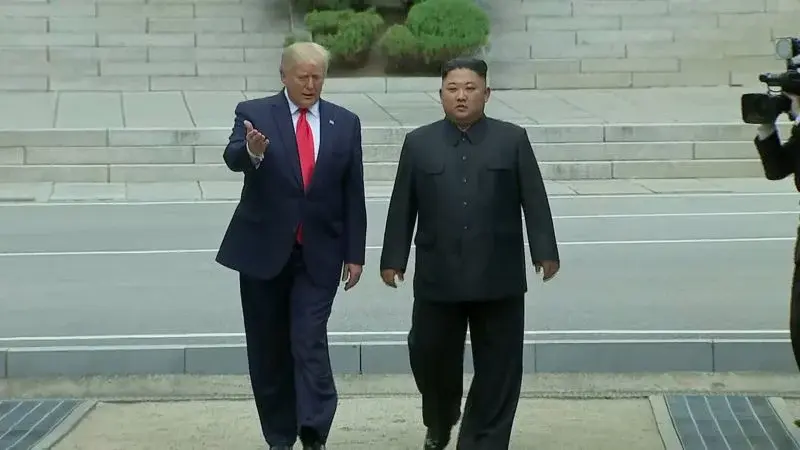
President Trump’s recent assertions regarding South Korea’s military cost-sharing are factually incorrect, according to CNN. While Trump claims Seoul paid nothing before his first term and agreed to a $3 billion annual payment that Biden later rescinded, records show South Korea has paid for decades, with the 2019 deal totaling under $1 billion. Simultaneously, Trump ordered a reduction in joint military exercises, citing his relationship with North Korea and Seoul’s refusal to aid in the Iran conflict, a move analysts link to broader frustrations over delayed $350 billion investment pledges.
Key points
- CNN fact-checks Trump’s claim that South Korea did not pay for US military presence before 2017, noting cost-sharing agreements began in 1991.
- The 2019 Trump-era agreement involved an 8.2% increase, totaling less than $1 billion, not the $3 billion Trump cited.
- Biden did not rescind any Trump deal; the 2019 agreement expired, and new agreements with spending increases were signed in 2021 and 2024.
- Trump ordered a substantial reduction in joint US-South Korea military exercises, citing his relationship with Kim Jong Un and Seoul’s refusal to assist in the Iran war.
- Politico reports the move is also driven by frustration over South Korea’s slow progress on a $350 billion investment pledge and a $400 million fine on Coupang.
Background
This dispute follows a pattern of Trump challenging the value of US alliances, as seen in earlier fact-checks regarding vaccine claims and grocery prices. The current tension mirrors previous frictions over trade and security commitments, where Trump has frequently conflated economic and military relationships to exert leverage.
How outlets are covering it
CNN focuses on the factual inaccuracies of Trump’s financial claims, debunking the narrative that South Korea paid nothing before 2017 or that Biden reversed a $3 billion deal. Politico emphasizes the economic context, highlighting that the military reduction is linked to frustrations over the pace of South Korea’s $350 billion investment pledge and the Coupang fine, describing Seoul as 'the slowest negotiators ever.' Vox and The Atlantic frame the move as a return to Trump’s 'bromance' with North Korea, with The Atlantic arguing the action punishes a loyal ally to mask the US’s struggles in the Iran conflict. While CNN and Politico agree on the factual errors and economic drivers, The Atlantic interprets the policy as an irrational reaction to the Iran war, whereas Vox highlights the diplomatic signaling to North Korea.
Why it matters
The reduction in joint military exercises and the public dispute over cost-sharing threaten to destabilize the US-South Korea alliance, a cornerstone of US strategy in the Indo-Pacific. The conflation of trade disputes with security commitments risks undermining deterrence against North Korea and could embolden adversaries by signaling US unreliability to allies.
What to watch
Commerce Secretary Howard Lutnick is meeting with South Korean trade officials to discuss the stalled investment pledges. South Korea aims to announce new investment projects by late August or early September, though working-level issues remain. The Pentagon is also considering withdrawing approximately 4,500 troops from South Korea, a move opposed by Congress, which could further strain the alliance.
- Fact check: Every single part of this Trump story about South Korea is wrong CNN
- ‘Not the way it works’: Korea’s miscalculation on trade may cost them on security Politico
- The Trump-Kim Jong Un bromance comes roaring back vox.com
- Trump Will Make South Korea Pay for His Iran Humiliation theatlantic.com
- Trump says North Korea's Kim has responded to his overtures Reuters
Want the full story? Read the original reporting
Read on CNN