
Dan Driscoll’s First Interview: Hegseth’s Focus on Fitness Over Tech Doomed Army Modernization
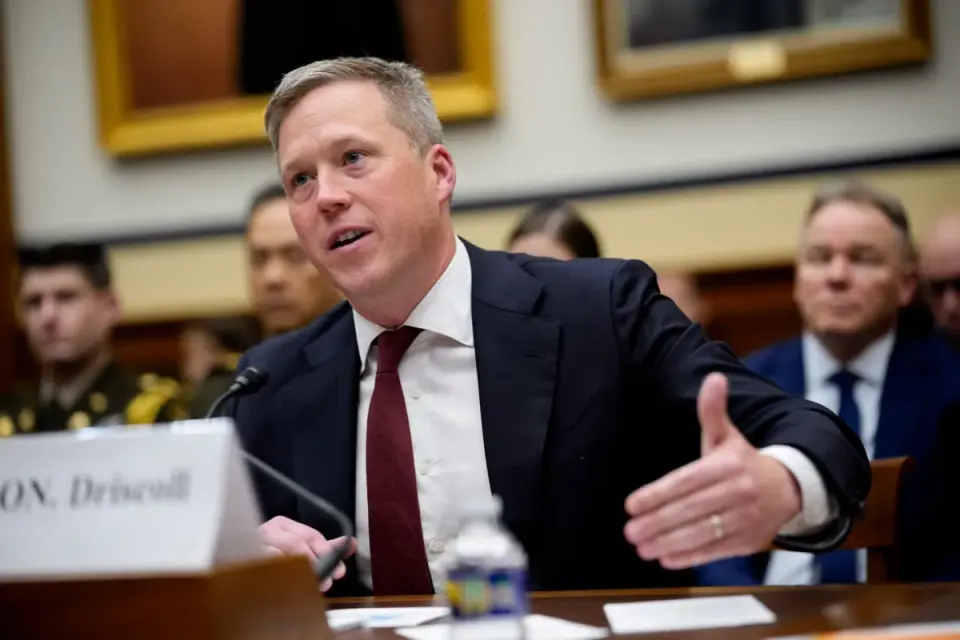
Former Army Secretary Dan Driscoll has broken his silence in a Rolling Stone interview, detailing his August 2026 resignation after clashing with Defense Secretary Pete Hegseth over military priorities. Driscoll, the youngest person to hold the post, argued that Hegseth prioritized physical standards and grooming over critical technological upgrades needed for modern warfare. The departure followed a broader purge of modernization-focused leaders and a failed attempt to implement market-based procurement systems.
Key points
- Driscoll resigned in August 2026 after informing President Trump that Hegseth had fired the generals leading the Army's modernization efforts.
- The former secretary criticized the Pentagon for focusing on 'window dressing' like fitness and testosterone screening instead of investing in counter-drone technology and AI.
- Driscoll’s tenure included an attempt to create an 'Amazon for war' marketplace to streamline procurement, which he argued was blocked by legacy contracting interests.
- The resignation followed the firing of Army Chief of Staff Gen. Randy George and occurred during an unpopular war with Iran that exposed gaps in the military's interceptor capabilities.
- Driscoll, confirmed in February 2025, was replaced by acting Secretary Adam Telle, marking a significant leadership vacuum in the Department of Defense.
Background
Driscoll’s departure was first reported in late August 2026, following months of friction with Hegseth. Previous coverage noted that his resignation sparked Democratic warnings that Hegseth had hollowed out the Army’s senior ranks. The White House had previously lauded Driscoll’s work on Russia-Ukraine negotiations, but concerns persisted regarding the Army’s modernization and the shift away from drone-focused strategies. His exit was part of a broader leadership shake-up that included the departure of Navy Secretary John Phelan.
How outlets are covering it
Rolling Stone provides the most detailed account, featuring Driscoll’s direct quotes and his specific critiques of Hegseth’s priorities, including the focus on physical fitness over technological modernization. The Independent frames the story as a high-profile departure within a series of Pentagon purges, emphasizing the clash between Driscoll’s innovative vision and Hegseth’s traditionalist approach. The Washington Times covers the event as a significant political development, highlighting the tension between the administration's leadership and the military's need for adaptation. All sources agree on the core facts of the resignation and the conflict with Hegseth, but Rolling Stone offers the most granular insight into Driscoll’s specific policy proposals, such as the 'Amazon for war' procurement model, which the other outlets mention only briefly or not at all.
Why it matters
Driscoll’s resignation highlights a fundamental strategic disagreement within the Trump administration regarding how to prepare the U.S. military for 21st-century conflicts. The clash between modernization and traditional standards has left the Army with a leadership vacuum and stalled critical procurement reforms. As the U.S. faces ongoing conflicts in Iran and potential future engagements, the failure to implement rapid innovation and market-based procurement could compromise the military's effectiveness against emerging threats like cheap drones and AI-driven warfare.
What to watch
The Pentagon must now navigate the leadership vacuum left by Driscoll’s departure and the firing of Gen. Randy George. Acting Secretary Adam Telle will likely face pressure to either continue Driscoll’s modernization efforts or fully align with Hegseth’s traditionalist priorities. The outcome of this internal conflict will determine whether the Army can successfully implement counter-drone technologies and streamlined procurement systems before the next major conflict. Additionally, the political fallout from these departures may influence congressional oversight and funding for military modernization in the coming months.
- Army secretary who quit Pentagon after clashes with Hegseth breaks silence The Independent
- He Wanted to Modernize the Military. Pete Hegseth Forced Him Out Rolling Stone
- Pentagon Pete’s Wild Meltdown Over ‘Gift’ Revealed The Daily Beast
- Driscoll speaks out for first time since ouster by Hegseth as Army secretary Washington Times
Want the full story? Read the original reporting
Read on The Independent