
Aldabra Atoll hosts 180,000 giant tortoises, marking historic conservation milestone
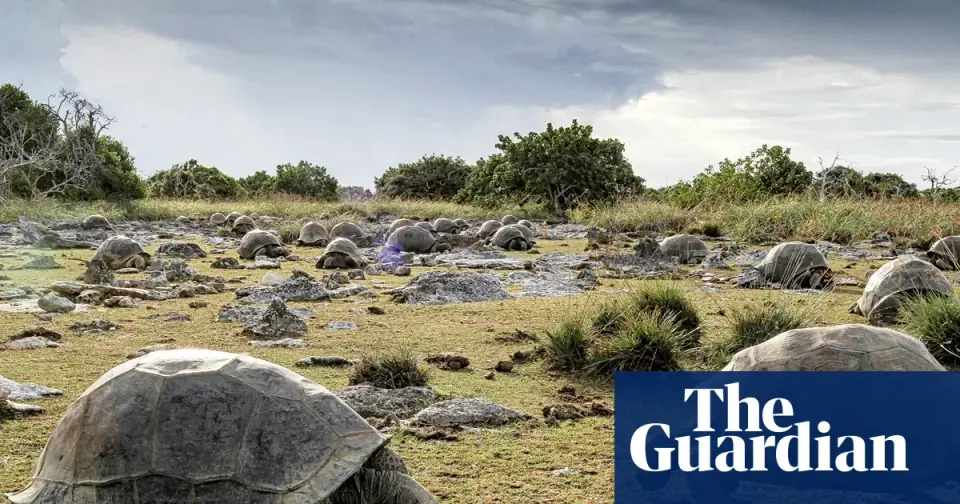
A new survey reveals that the Aldabra giant tortoise population in Seychelles has reached approximately 180,000 individuals, a record high that confirms the species' recovery from near-extinction. The study, published in Ecology and Evolution, analyzes data from 2018 to 2022 and highlights the success of long-term conservation efforts. However, researchers warn that climate change, rising sea levels, and invasive mammals pose ongoing threats to this thriving population.
Key points
- The population of Aldabra giant tortoises on Aldabra Atoll is estimated at 180,000, with a best estimate of 183,000 adults and sub-adults.
- This figure exceeds the human population of Seychelles and is the highest recorded for the species, surpassing the previous benchmark of 100,000 from the late 1990s.
- The data was derived from five years of counts between 2018 and 2022, using modeling to account for tortoises hidden by dense vegetation.
- The species was reduced to fewer than 1,000 individuals in the 19th century due to exploitation but recovered after Aldabra became a nature reserve in 1981 and a UNESCO site in 1982.
- Researchers emphasize that while the population is stable, it faces risks from changing climate patterns, including droughts and rising sea levels, as well as invasive mammals like feral cats and black rats.
Background
This development follows recent scientific interest in the longevity of Aldabra giant tortoises, including a 2026 study on the 194-year-old tortoise Jonathan that identified gene variants suppressing aging. It also complements conservation efforts in the Galápagos, where a lost lineage of giant tortoises was recently reintroduced to Floreana Island in 2026. These events highlight the broader global focus on preserving and restoring giant tortoise populations across their limited wild habitats.
Why it matters
The discovery of 180,000 giant tortoises on Aldabra Atoll represents a significant conservation success story, demonstrating the effectiveness of long-term protection strategies. It provides a crucial baseline for monitoring future population changes and underscores the need for continued vigilance against climate change and invasive species. This milestone not only benefits the tortoises but also serves as a model for other conservation efforts worldwide, illustrating how dedicated management can reverse the decline of endangered species.
What to watch
Conservation managers will use the new baseline to track population changes and implement early interventions against climate pressures. Efforts to eradicate remaining invasive mammals, such as feral cats and black rats, are planned to remove barriers to further population growth. Ongoing monitoring will focus on the impacts of increasing droughts and rising sea levels on the atoll's low-lying areas and the availability of shade and food for the tortoises.
Want the full story? Read the original reporting
Read on The Guardian